
Ache and Urinals
An Essay on Queer Encounters in Public Spaces
Makz Bjuggfält

for #V. ugly housing/housing aesthetics
Differens Magazine, summer 24

“The Homosexual world is in many ways a world of its own, but as so it infiltrates all aspects of common people’s lives. Every now and then in everyday life, one is confronted with phenomena, that are manifestations of the conditions of the homosexuality, but only those with great knowledge of these specific conditions will notice them.” These are the words of the Swedish Social Democrat MP Vilhelm Lundstedt in his 1933 parliament motion “’Sodomy’ Should it be punished?”
One could describe the queer history as a history of silence. The idea may originate from the voids – empty spaces – the historical absence where queerness seemingly must have existed, but where it has not been allowed to leave any traces in the records. Since a couple of decades ago, we have been living in a time where the non-queer history is challenged – the historical voids are filled with voices, noise and motion. From the silent depths, a choir of queer voices arise.
From the silent depths, a choir of queer voices arise.
Where silence resides, the human heart aches – a complex longing for something yet unspoken. A whispering, a light breeze, a subtle sensation of something within that still has not found its linguistic form; words that hold the potential to unleash an existence that is destined to flourish. Let us call it the force of the unspoken desire.
In his 2005 novel Lubiewo, Polish author Michał Witkowski allows the characters Lukretia and Patricia to awaken their memories of a urinal from their past. Wandering the parks of Wroclaw, they were looking for young men, preferably Russian soldiers. With their giggling voices, the lush bushes are painted green, the trees rise high above and their star formed palace stretches towards the sky, “for the faggots, what the contemporary shopping mall is for the middle class.”
The Copenhagen night makes my bones shiver and I am texting three different men I have been looking forward to meeting lately. Two of them respond and keep my feet moving. The screen lightens up every time I receive a new message, as the men are keeping me hanging. Perhaps are they finishing their beers at a bar, perhaps are they considering other options at the app. I am circling Nørreport station, 15 DKK for Coke at 7/11 and trying to keep my hands warm.
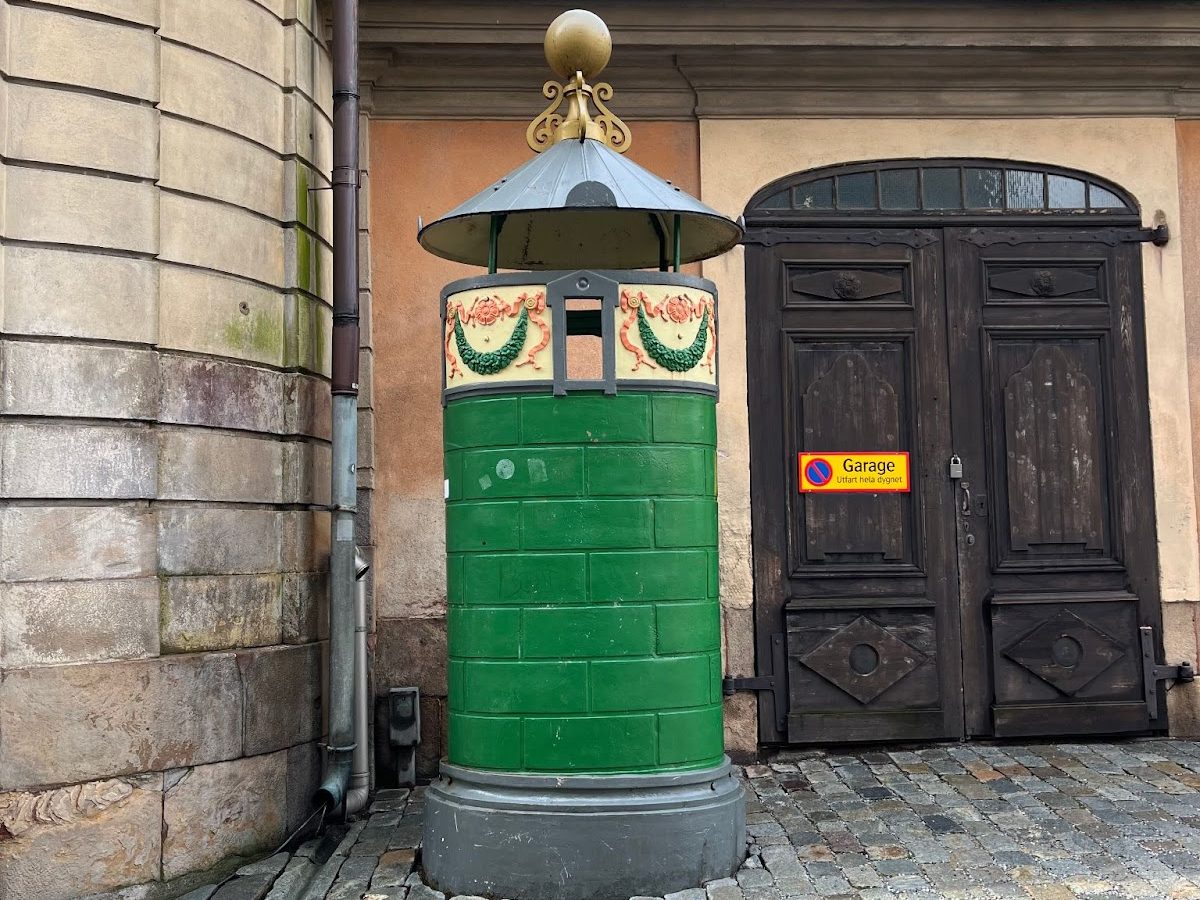
In the Old City of Stockholm, the capital’s oldest urinal still in use is preserved. It is a beautiful structure in a deep, rich green nuance, with a rounded roof and on top a golden knob, as if it belonged to a fairy-tale landscape. The space inside is narrow; I can barely move as my urine splashes on the gridded floor. The daylight shines in through the open space between the walls and the roof. In one direction, I can get a glimpse of the Royal Castle. In the other, the urinal structure leans toward Stockholm Börshuset, where The Swedish Academy meets every Thursday. Squeezed in between these two highly prestigious institutions it has been here since 1890; witnessing a poor and grimy 19th Century city, throughout the eventful and transformational 20th Century to what it is now.
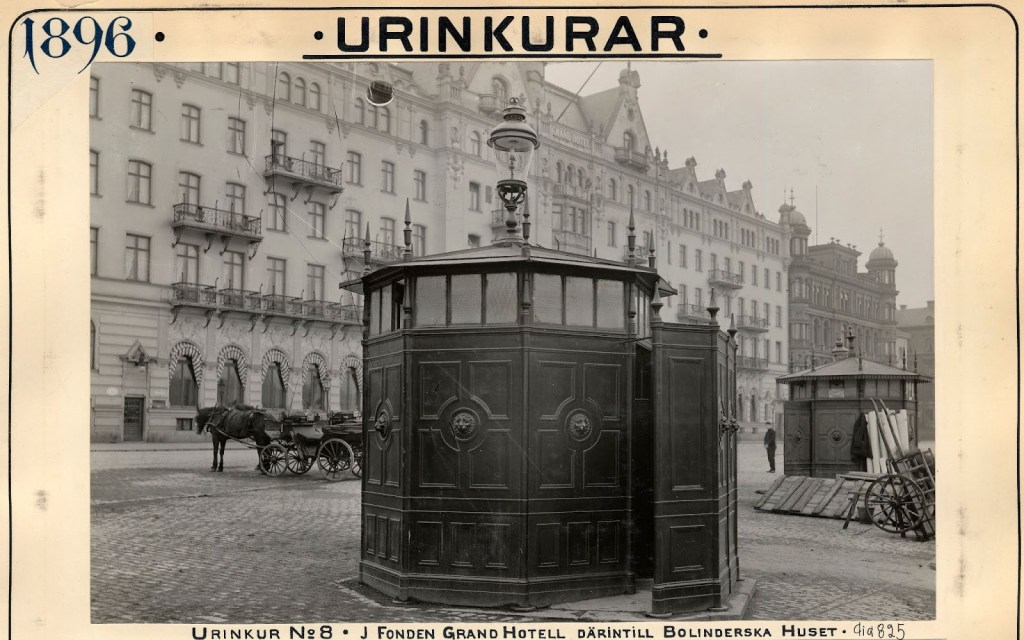
The modern urinal originates from the 1830s Paris, from where it quickly spread throughout Europe during the following decades. In the beginning, the urinals were simple, barely more than a wall with a small hole in the ground. Soon they were developed to greater establishments, with artful decorations and many of them with hired attendants, cleaning and providing hygienic items.
The bathroom attendant was the problem that winter night in 1941. Since the staff was concerned about the many recurring men visiting the urinals at the intersection of Engelbrektsgatan and Iversonsgatan, two civil police officers were assigned to keep the urinals under surveillance.
When I enter the urinals at the Stockholm pub Carmen in February 2024, the man next to me at the trough tells me about his restaurant. He is not shy. Contrary, he is actively seeking my company. I am trying to determine what kind of company he is aiming for.
When I enter the urinals at the Stockholm pub Carmen in February 2024, the man next to me at the trough tells me about his restaurant. He is not shy. Contrary, he is actively seeking my company. I am trying to determine what kind of company he is aiming for.
Swedish sociologist Tom Leissner stated in 2008 that the urinal trough was already disappearing in favour of more private solutions. He declared that the individualisation of the urinal is connected to a generally increased acceptance of male homosexuality, which in turn makes men more aware of the urinal as an arena with a sexual potential.
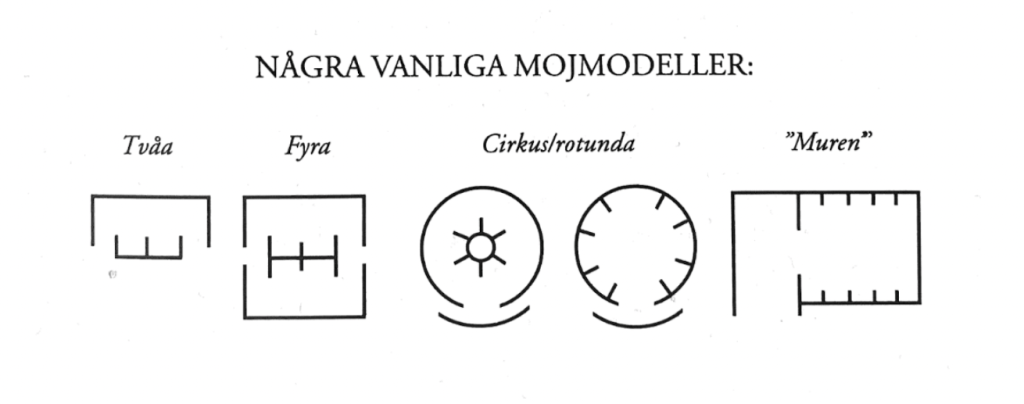
The appearance of the urinal has shifted throughout history, from individual stalls to more open spaces with less opportunities for secrets. The urinals in Gothenburg were built in five styles: ‘For Two’, ‘For Four’, ‘The Circus’, ‘The Rotunda’ and ‘The Wall’. When the city planned for new public bathrooms in the beginning of the 1910s they decided to build an underground building, under the interchange of Brunnsparken. The stairs were guarded by two bronze lion statues and for fifteen pennies one could use the bathrooms between 7am and 11pm every day, or visit the urinals with room for twelve pissing men simultaneously. The underground bathrooms at Brunnsparken were closed in 1989, but at the Gothenburg Central Station it is still possible to visit bathrooms underground.
Garth Greenwell’s 2016 novel What Belongs to You begins with a descending. The reader follows the narrator’s steps downstairs toward the bathrooms under the National Palace of Culture in Sofia, Bulgaria. A voice echoes upwards, attracting the narrator downwards. At the bottom of the stairs, he finds two men between the toilet stalls, but foremost he meets Mitko B., the man whose fate intertwines with the narrators throughout the novel. Underneath the cultural centre he meets not the silence of shyness, but of friendly interest, “free from predation or fear”. From that day, he will never forget how the attractive force of Mitko B affected him.

At the establishment at the intersection at Engelbrektsgatan and Iversonsgatan there is a little hole in the wall between the attendant’s room and the room for the urinals. Thanks to the hole in the wall, the two officers on duty could observe the men using the urinal.
In 2013, the ‘Urilift’ was installed in Gothenburg, a type of urinal that is elevated from the underground to the street level. The ‘Urilift’ holds no potential for secret encounters.
The time is 3.35 am and I am still on the streets of Copenhagen. I enter the code at the door and soon I am taking off my clothes in the apartment on the third floor to the left. It is both the first and the last time I am there. He takes a picture of my face when I am coming. I cannot remember his name or voice anymore.
The largest opera house in Scandinavia was built in Malmö 1944. The bathrooms are placed at the lower floor. The room has the form of a quarter of a circle and along the circled wall there are eight urinals. They start at the floor and go to about waist height. There is nothing that covers the pissing men, when you are in line you have a full overview of their backs.
The 12th of March 1941, two men enter the urinals at the intersection of Engelbrektsgatan and Iversonsgatan. The time is 6.45pm when Anders Starrbäck, reserve military officer and bank clerk, and Erik Vilhelmsson, postman, meet each other for the first time. For fifteen minutes, they exchange looks from different sides of the urinal room before Anders walks over to Erik. By then he has an erection. For four minutes they practice mutual masturbation, without saying a word.
A sign that urinals had begun to function as meeting places for men looking for sexual encounters with other men is seen at the urinals installed at Nybron in Stockholm in 1890. Between the ground and the walls there is an empty space that allows outside watchers to see what happens at the inside; it was, so to say, easy to count the number of legs. Another architectural answer to the supposed sexual activities at the urinals was the circular urinal where the pissing men could see each other, and in turn monitor what happened inside of the walls.
Another architectural answer to the supposed sexual activities at the urinals was the circular urinal where the pissing men could see each other, and in turn monitor what happened inside of the walls.
Every now and then, the authorities launched ”clean up” campaigns to get rid of the men looking for sexual encounters at public spaces. And it seems like the police officers often knew quite well who the men frequenting the urinals were, and the other way around. Some police officers, at least in Gothenburg, were well-known among the men at the urinals, and some of them even had male lovers themselves.
The police officers recognised bank clerk Starrbäck immediately. He was known to be seen around and inside of the urinal. That night he had already been there twice.
In 2015, I studied at University of Toronto and I got to know the city’s queer history through the course ”History of Sexuality”. During my interval training I ran lap after lap around Queen’s Park. They told me that the park turned into a cruising spot when night falls, I saw the shadows moving behind the trees. Later I heard about the crackdown in Marie Curtis Park, an hour bike ride from Queen’s Park. Seventy men were arrested and later registered in the Sex Offender Registry. If I would have been one of them I would no longer be able to work as a teacher. Later, the Canadian lawyer Marcus MacCann noted that many of the men arrested by the police authority may have had their lives ruined; they were men that normally did not have access to other arenas to meet men for sex, many of them were married with kids.
In 1968, American sociologist Laud Hauphreys published his dissertation Tearoom Trade: A Study of Homosexual Encounters in Public Places. By acting as a watch queen, he observed sexual encounters between men at public bathrooms around Saint Louis, Missouri, USA. Through follow-up interviews he was able to confirm that 54 % of the men were leading heterosexual lives with a clear conservative moral perception, with Humphreys words: they put on a “breastplate of righteousness”.

The wife of Anders Starrbäck told the prosecutors that their marriage was the “most harmonious and happy marriage one could imagine”. His special interest was genealogy, and the exposure of his perversion was shocking for everyone. Anders and Erik were sentenced to three months of hard labour.
I have so much to tell you about the urinals. About the stickiness and the stinging odour, about the splashing water, about the sounds from hesitating footsteps and the whispering voices from within. About how the shadows move around the urinals, like flies around lights at sunset. Equal parts a pillory and a spot to just… exist. For teenagers to whom their parent’s silence has become unbearable, for those who seek comfort in all their loneliness and for those who are just out and about for some gossip.
I have so much to tell you about the urinals. About the stickiness and the stinging odour, about the splashing water, about the sounds from hesitating footsteps and the whispering voices from within. About how the shadows move around the urinals, like flies around lights at sunset. Equal parts a pillory and a spot to just… exist.
Somewhere and somehow, all of us need to find just a corner for ourselves. Where would we otherwise find someone who could clean a wound, put bandage on a broken nail or wipe a silent tear? Where else would Lukretia have picked up Patricia, saving her from the piss filled floor? Where would she otherwise have whispered “This too shall pass” in her ear?
Oxytocin is a hormone crucial for social bonding, reproduction, the upbringing of a child and the ability to adapt to social norms. An onset of oxytocin increases the sensation of trust as well as decreases aggression, stress and anxiety.
Erik had always known he was attracted to men. “Women had no influence on him in any erotic regard.” Nevertheless no one in his family had noticed any of his perverted tendencies. Ever since he was young he had been an exemplary boy, interested in and eminent in all athletic activities. Every now and then the temptation grew too strong, his longing to find consonance and peace with that force within, all of that at once lured him to seeking company at the urinals. In front of the court Erik Vilhelmsson agreed to see a doctor to rectify his sexuality. The judge suggested a removal of the testicles, as it was considered an effective treatment at the time.
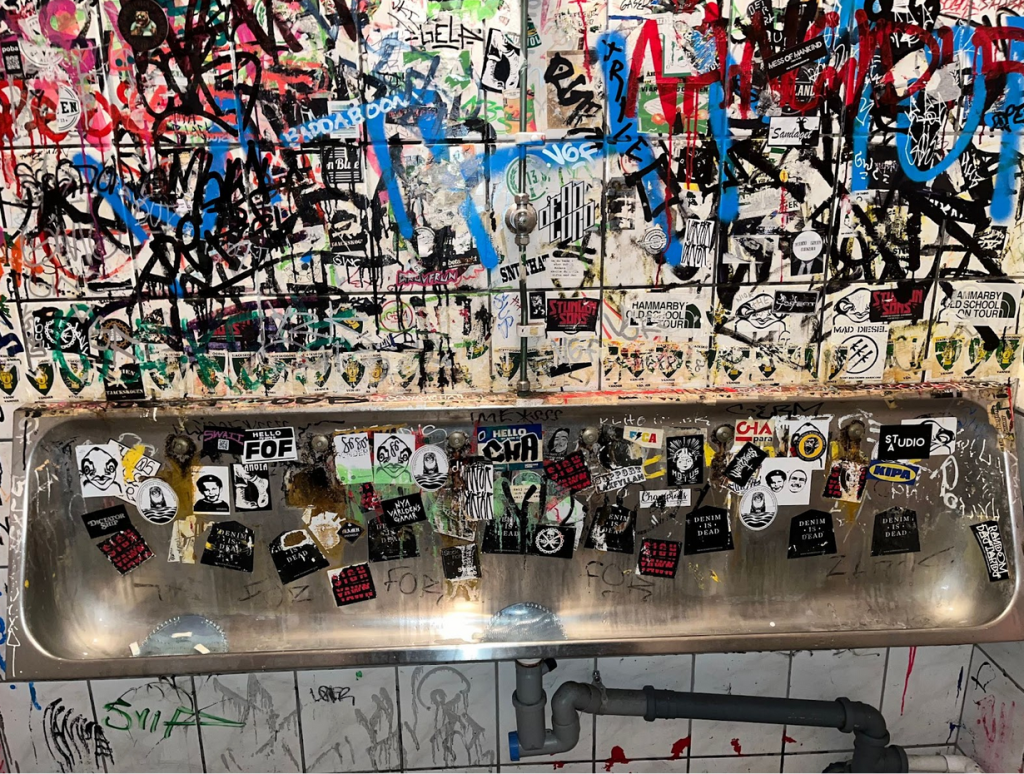
… a space in all its simplicity that still holds the potential for similar encounters, like a ticket for an imaginary trip to another time and place – perhaps a space where queer male subjects are intertwined over time periods that exceeds generations…
Every time Anders passed by the public bathrooms at the intersection at Engelbrektsgatan and Iversonsgatan, the anxiety suffocated him. Erik was carrying his secret longing as a weight around his neck. These short moments, seconds of touching skin, the warmth from the fingertips. The longing – the aching longing. Where would they otherwise have gone?
References
Fransson, Dag (2013-06-04). ”Pissoarerna ska lyfta Göteborg”, Göteborgsposten,
Greenwell, Garth (2016). What belongs to you. New York: Farrar, Straus and Giroux.
Heyman, Eva (2007-05-17). ”Pisserännan är på väg att försvinna”, Göteborgs-Posten, https://www.gp.se/nyheter/goteborg/pisserannan-pa-vag-att-forsvinna.57e7711e-61e5-483e-9db8-35c4fc4f2f66
Humphreys, Laud (1970). Tearoom Trade. A Study of Homosexual Encounters in Public Places. London: Duckworth.
Lundstedt, Vilhelm (1933). “’Otukt mot naturen’ Bör den vara straffbar?”, Bonniers små handböcker i vetenskapliga ämnen.
Nilsson, Arne (1998). Såna & riktiga karlar. Göteborg: Anamma.
Parikas, Dodo (1999). “Levnadsberättelser”, i Söderström, Göran (red.) Sympatiens hemlighetsfulla makt. Stockholms homosexuella 1860-1960. Stockholm: Stockholmia förlag.
Strapagiel. Lauren (2016-11-14). ”LGBT Activists Are Concerned After Dozens Of Men Were Charged By Police At A Cruising Park In Toronto”, BuzzFeed News,
Söderström, Göran (1999). “Tragedier på 1940-talet”, i Söderström, Göran (red.) Sympatiens hemlighetsfulla makt. Stockholms homosexuella 1860-1960. Stockholm: Stockholmia förlag.
Vikström, Suzanne (2008-10-03). “Soldatprostitution – en dold värld”, QX, https://www.qx.se/samhalle/8337/soldatprostitution-en-dold-varld/
Witkowski, Michal (2005). Lubiewo. Krakow: Korporacja Ha!art.
 differensmagazine.com