
MEANDERING
Emil Bäckström

for #V. ugly housing/housing aesthetics
Differens Magazine, summer 24
When I started my education as an architect, almost twenty years ago, I was drawn to architectural manifestos and dogmatic reasoning. I enjoyed the reduction of concepts and ideas down to their cores, forming arguments and frameworks to support and justify the creative process. It seemed appealing to have the conviction of a preacher in a set of architectural beliefs to help you walk along a straight path. “Man walks in a straight line because he has a goal and knows where he is going; he has made up his mind to reach some particular place and goes straight to it” As Le Corbusier writes in City of Tomorrow.
As a student of the field, I was exposed to plenty of bold statements, and the tradition of the dogmatic proclamation of an architectural vision is as old as the field itself; Vitruvius’ Ten Books on Architecture, John Ruskin’s The Seven Lamps of Architecture, Le Corbusier’s Toward an Architecture, Adolf Loos’ Ornament and Crime to name a few. As I gradually became exposed to the vastness and complexity of what can be seen as the realm of architecture, I came to slowly acknowledge that what actually interest me in the field of architecture is ambiguities, complexities and possibilities. Today, my only architectural ideology is to renounce any ideology. I prefer to meander instead of walking the straight path. When discussing architecture, I look for nuances instead of division and polarization.
A few years into my architectural education, I was visiting Oslo and borrowed the writing studio of a Norwegian poet. In the small apartment completely lined with books, I first encountered a small, paperback book with the eye-catching title Architecture Without Architects: A Short Introduction to Non-pedigreed Architecture. The book written by Bernard Rudofsky, an eccentric writer, architect, collector, teacher, designer and social historian, was published together with a popular travelling exhibition that started at the MoMA in New York in 1963. With the help of 75 illustrations and photographs, at best in decent quality, accompanied by short and witty captions, Rudofsky attempts to expand the horizon of the canonized architectural history, both in terms of time, geography and function, and at the same time paint a dire picture of the urban modern lifestyle. The book exemplifies its thesis through examples such as amphitheaters in Peru, Subterranean dwellings in north eastern china and small granaries in the Ivory coast. By flipping a few pages, you can travel great distances in both time and place. Rudofsky starts the preface of the book: “Architectural history, as written and taught in the Western world, has never been concerned with more than a few selected cultures.”
The quite limited curriculum of architecture history that I was exposed to during my education, which included both ‘classical’ and ‘modern’ architecture was primarily concerned with a version of the history of architecture as read and written from a European perspective. In the polarized debate between old/classical and new/modern, the book proposes indirect answers that goes beyond this dichotomy. The examples shown are indeed very focused on the concept of tradition, the continuation of cultural expressions and building cultures, but to me, the examples first and foremost show us architectural inventions centered on functionality, frugality and simplicity – concepts that we normally associate with the ideas of modernism rather than of classicism. Questions around concepts like harmony, proportions and ornamentation does not seem to be relevant in the context of the book. The examples show us architecture where topography, climate, availability of local materials together with a great portion of human ingenuity create a universal beauty and coherence, despite the heterogenous contexts.
Around the time of the publication of Architecture Without Architects, there were strong and sometimes opposing currents in the modern architectural movement that I have long found interesting. In the early 1960’s, modernism or the international style had penetrated the construction industry and gotten aggregated with new industrialized forms of construction. In the Swedish context this era is manifested through the ‘Million Programme’, planned but not yet executed in the early 1960’s. At the same time, a reaction to this development had start to form, where architects in different parts of the world were finding new sensible ways of ordering space and material. Architects like Alvar Aalto, Louis Kahn and Sigurd Lewerentz, that had all been a part of the development of the modern movement, found ways to change the trajectory of contemporary architecture, with a greater presence and importance of the human senses, and a larger emphasize on local conditions and building methods.
No work might manifest my interest in this period more than Sigurd Lewerentz’s St Peter’s church in Klippan from 1962-1966, a monolithic maze, sculpted in the bond between a dark brick and a wide mortar that holds a deep spatial richness formed by an evidently non-dogmatic old man. In St Peter’s, Lewerentz follows none of the rules laid out by the pioneers of modernism, instead he seems to follow only a few rules created by himself; only standard bricks can be used, and no bricks can be cut. At a time when brick was seen as a common material, used for many public buildings, he manages to make us see it in a completely new way.
A range of tectonic details, from the minimal window detail to the undulating brick vaults can be analyzed and appreciated individually, but the greatness lies in the details connected. Together they form a whole, abundant with strangeness and mystique. Every detail in St Peter’s church acts like it was purposely designed for that exact place and time. Opposed to the dogmas of modernism and neo-classicism, that both can be described as universalist ideologies, St Peter’s is instead a manifestation of the specific. Sigurd Lewerentz was a famously quiet man when it comes to expressing architectural ideology, he never held lectures, taught at university or published any text that explained the idea behind his architecture – but according to the friend and collaborator Bernt Nyberg, Lewerentz was always eager to discuss design issues, details and solutions on his current projects.
The anthropologist Tim Ingold, in his book Making. Anthropology, Archaeology, Art and Architecture argues for the value of thinking and learning about the world through the process of making. Ingold questions the hylomorphic model, the five-hundred-year-old dominating notion that the forming of an artefact, or a house, is the process of imposing a predetermined idea onto a passive material. In the case of architecture, he writes:
“The architect would like to think that the complete building stands as the crystallization of an original design concept, with all its components finally fixed in their proper places. As with the jigsaw puzzle, should any components be added, or taken away, the entire structure would be reduced to incoherence. In the ideal case, once it is finished the building should hold for all eternity to the form the architect intended for it.”
With an allegory of how leaky roofs are never a part of the grand idea, but too often part of the reality, Ingold shows us that this is a narrow model that doesn’t work with reality, and leaves both architects and users dissatisfied. Instead, Ingold emphasizes the importance in the process of making, and proposes a model from the perspective of the maker, where no forming is separated from the material itself, and where an artefact or a house can be described as a temporary juxtaposition of materials. Forming is to apply forces onto materials, to be in correspondence with things of the existing world. The material is in constant flux, both before the building becomes architecture as well as after. A carpenter works with bending, cutting and weaving a fibrous material – on a wooden facade, the fibers in the wood will continue to react to the forces put on to them, bend, dry and chip.
While I find great purpose in the architectural idea and the forming of drawings, I do enjoy thinking about the finished project as an imaginary point in time, and the importance of the architecture before and after this point. If I were to describe beauty in architecture, it would in many cases be related to the traces and evidence of the forces between a material, a maker, and an idea. The work of both Ingold and Rudofsky interest me in their questioning the importance of the overarching architectural idea, and of the role of the architect itself. Rudofsky emphasizes the beauty of mankind’s ongoing struggle with its surrounding natural world to improve quality of life. Ingold emphasizes the inherent importance of the material, transforming it from a passive substance to an active subject that the maker has to work with rather than control. Lewerentz knew how to navigate the terrain between the predetermined idea and the complexities of the world, and through an interplay of intense drawing and frequent visits at the construction site, managed to create a great spatial richness that continues to inspire and wonder architects and non-architects, as evident in the many recent publications and exhibitions focused on his oeuvre.
In my daily practice as an architect, in the office of GIPP arkitektur that I run together with my colleague Petra Gipp, the use of plaster models is crucial. It combines two seemingly contradictory ambitions – to materialize ideas by the use of molding a material, and to reduce architecture to space in light. The process of making a plaster model requires indeed a lot of thinking, where you have to imagine a negative space, build a formwork around it, strong enough to withstand the pressure of the liquid plaster, seal it to prevent leakage. After the casting is done, you have to remove all the parts of the formwork without damaging the cast, which is initially very fragile. Despite having casted hundreds of plaster models, we still make mistakes, and in these very mistakes, it is the traces of the process and of the human hand, that make these models come to life. As opposed to the other side of our profession, filled with too many hours replying to emails or making spreadsheets, the act of building and making, help us think spatially, analyze spaces and communicate through space and material.
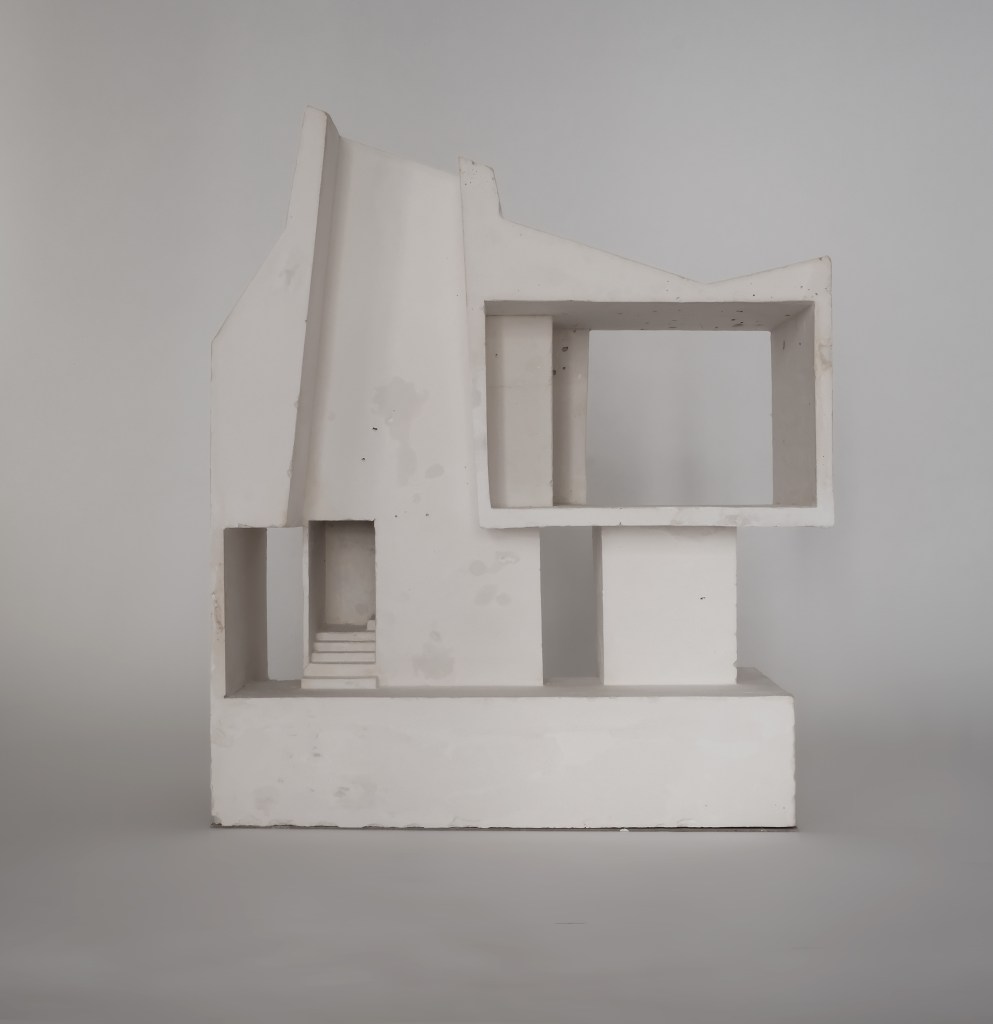
GIPP arkitektur – A Nature’s Place. Sectional plaster model
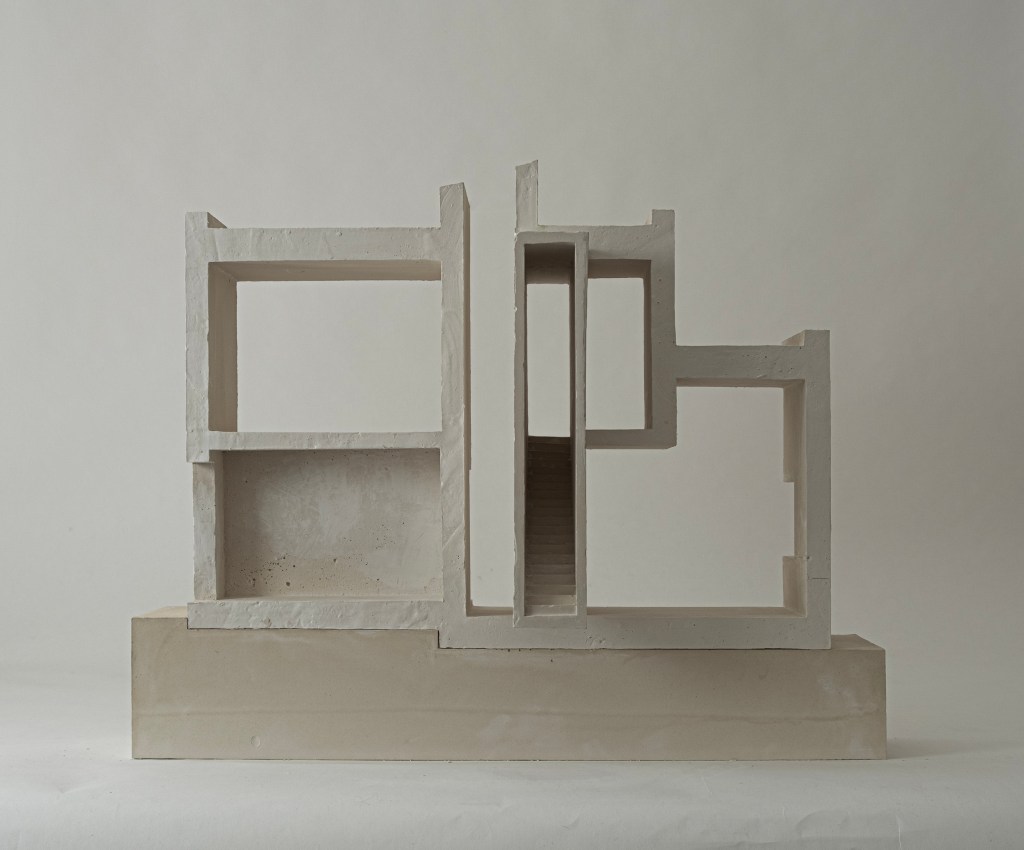
GIPP arkitektur – Sandvik. Sectional plaster model.
We also like to see talking as a creative tool, and as our most important tool. An architectural project is often formed in a conversation in the office, with and without the clients. Our conversations in the office can be greatly informal and messy, and often get interrupted by associative stories about something that might have happened the other day, or a comment on what is going on outside the window. If we use references in architecture, it is often filtered through a description of how one of us remembered the reference, rather than what it actually looks like. Through talking, thoughts get tested, processed and ordered, creating a communal base for what is important for the project and how to continue investigations. The conversation also gets extended as the most important tool to involve a larger group of specialists, builders and collaborators into the project, creating a communal idea and understanding for the project, its goals and challenges.
A few years ago, we did a project for a community hall for women and children in Kalobeyei, a refugee camp in northern Kenya. The project that was a collaboration in a group that included developers, timber manufacturers, engineers and us, was a gift to UN habitat. The building was small in size but with vast ambitions to improve public life and dialogue in the local community, to inspire sustainable construction in temporary settlements and to stimulate the Kenyan forest industry to produce timber for the building industry.

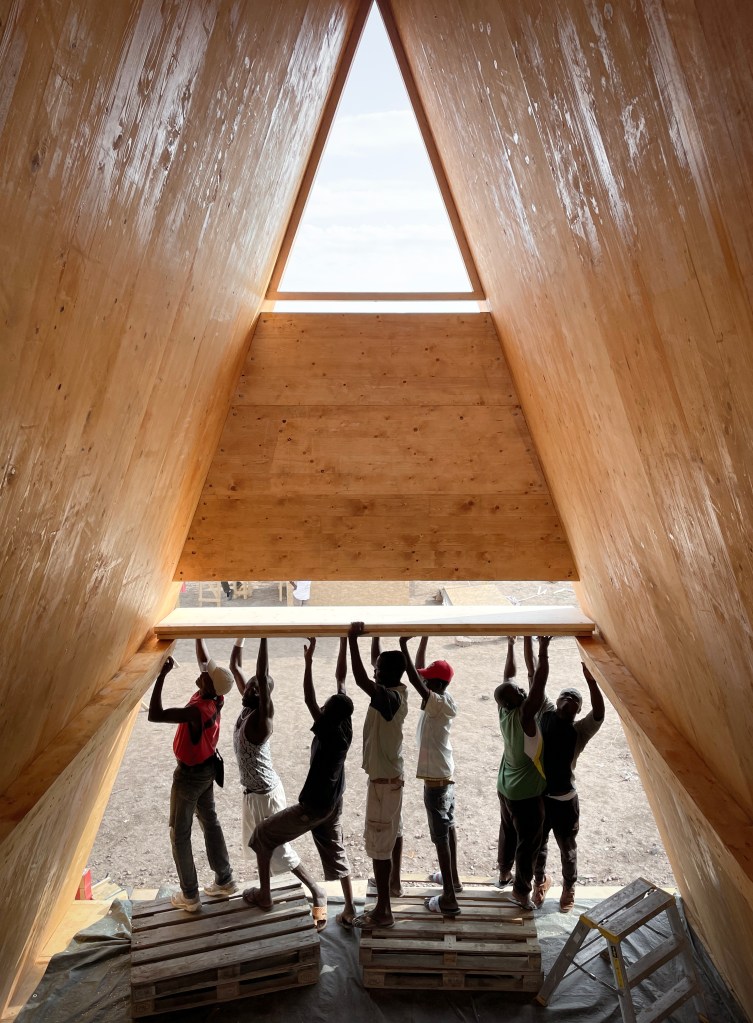
GIPP arkitektur – Refugium. A community hall for women and children in Kalobeyei, Kenya. Photo: Ivan Segato
For several reasons we were not able to visit the site before the building was constructed, an odd start of a project for us since we typically start each project with an analysis and interpretation of the site. Having accepted the precondition of a building that would, just like the refugees, be a sort of visitor in this context, for an unknown amount of time, we turned our focus to address the other very specific challenges and conditions of the project. With a triangular cross section that both create an efficient structural solution and a dynamic spatiality, the building was modelled into a building kit, with components appropriately sized for a team of local carpenters to construct using only hand tools. The building has a clear relationship to the many humble and small timber buildings that we know from the Swedish building heritage, buildings that often have been moved, rebuilt and repurposed through hundreds of years.
Each architectural project has a site, a context and a history manifested through buildings, landscape and traces. In the task of creating an addition to an existing building, especially in combination with a renovation/restoration, these contextual preconditions become highly visible, both in the design process as well as in the built result. It is a great task for the non-dogmatic, since having a too rigid of an idea can create more problems than solutions. For our project Bruksgården, an extension to a early 19th-century manor house in the town of Höganäs, we placed an addition in the back of the existing house, replacing a conglomerate of smaller additions added over the years. By adding rooms, spaces and functions missing or unable to achieve in the existing building, the extension function as an opportunity to bring the building a new life, and at the same time avoid making a too drastic intervention in the existing spatial arrangement. The difference of the spatial idea is visible in the extension, having a very different rhythm and scale in fenestration, but a volume that bears a kinship to the surrounding urban context. Both the existing and the new are in brick, but in the extension, the brick is visible. A dark brick is used together with a wide mortar, making the bricks appear as an aggregate in the mortar, a mortar that continues inside the building as plastered walls, tying together the old and the new.
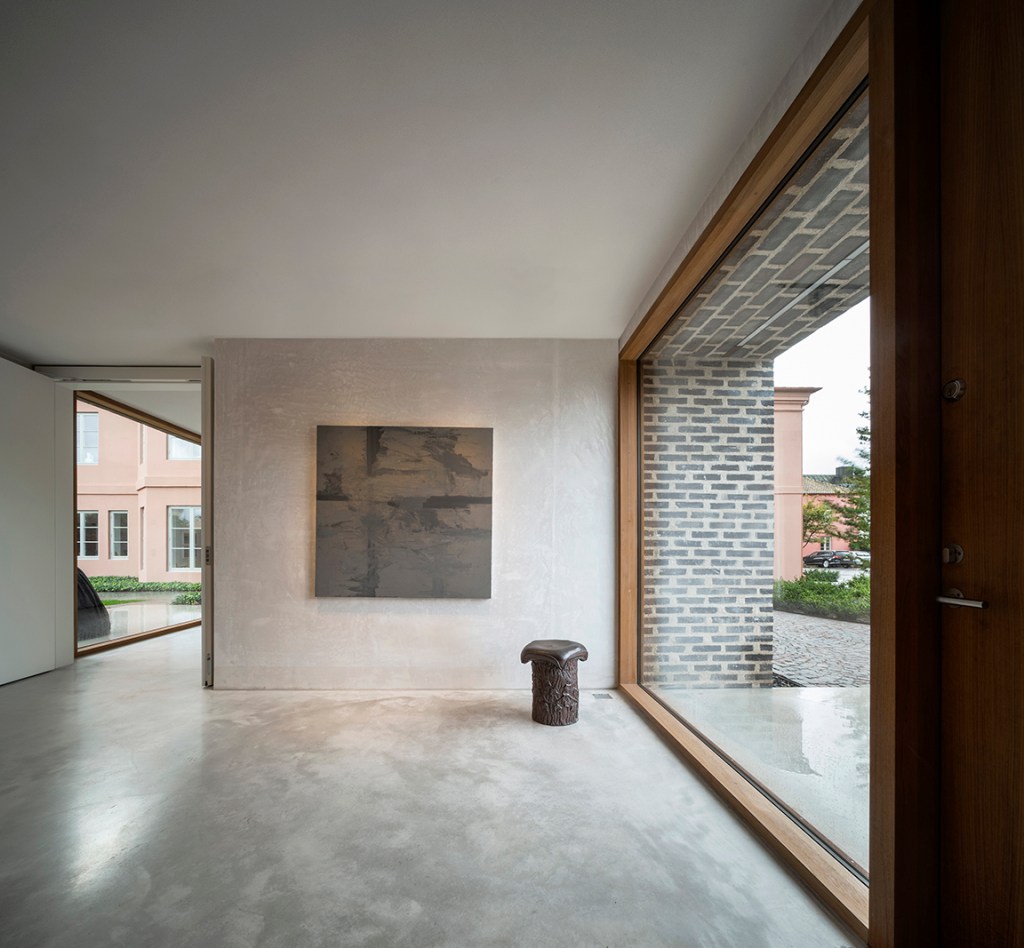
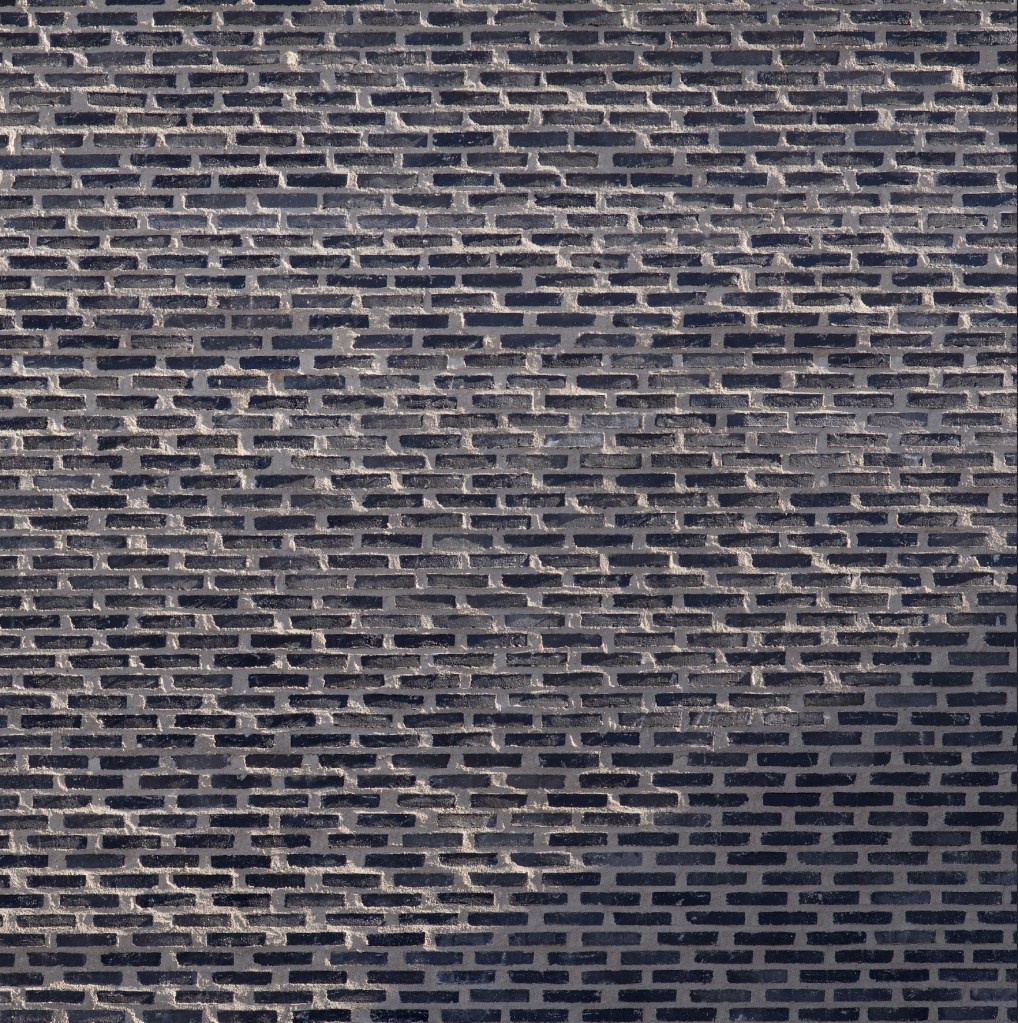
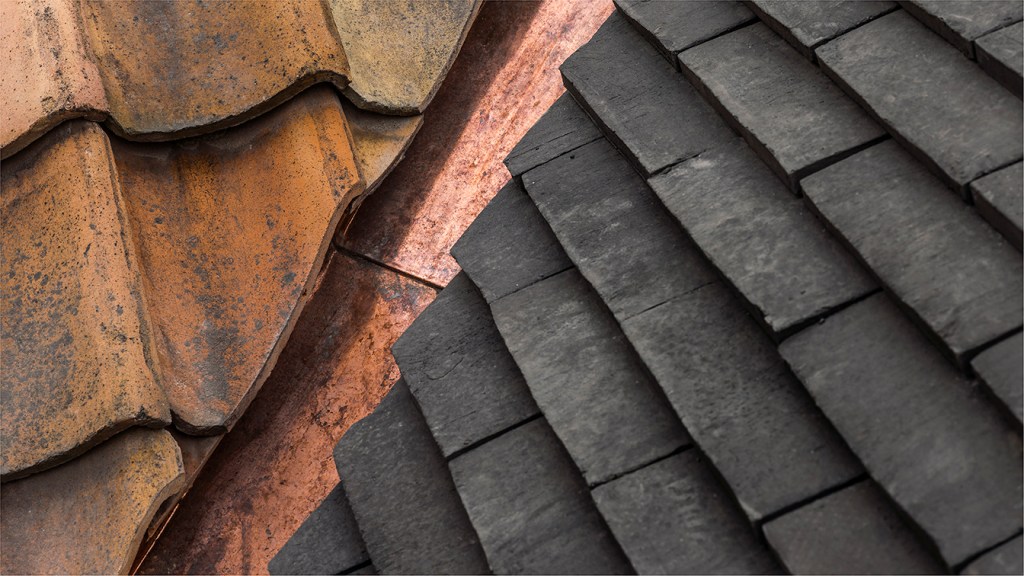
GIPP arkitektur – Bruksgården. An extension and renovation of a historic building in Höganäs. Photo: Jens Lindhe
In Rörbäck Forest retreat in the forest outside Varberg, an existing farm structure is reinterpreted through the interweaving of old and new structures. Here, the forest and the clearing form the basis of the project. The visitor is presented with a constellation of buildings in close kinship with the buildings and spaces of the past, in a landscape filled with traces of life and labor. Two wooden volumes create, together with historic drywalls in stone, a coherent constellation in both buildings and in the landscape with a distinct relationship to both the forest and to the constructed. The inner spaces are organized in relationship to the exterior, with an ever-central presence of the forest. In this meeting, each space defines a singularity of its own, and is simultaneously weaved together with the entirety. The forest and its trees are the material of the site; the volumes emerge as sculpted in wood, the inner rooms carved out and lined, the details kneaded, everything coming from an elementary idea of place and human.

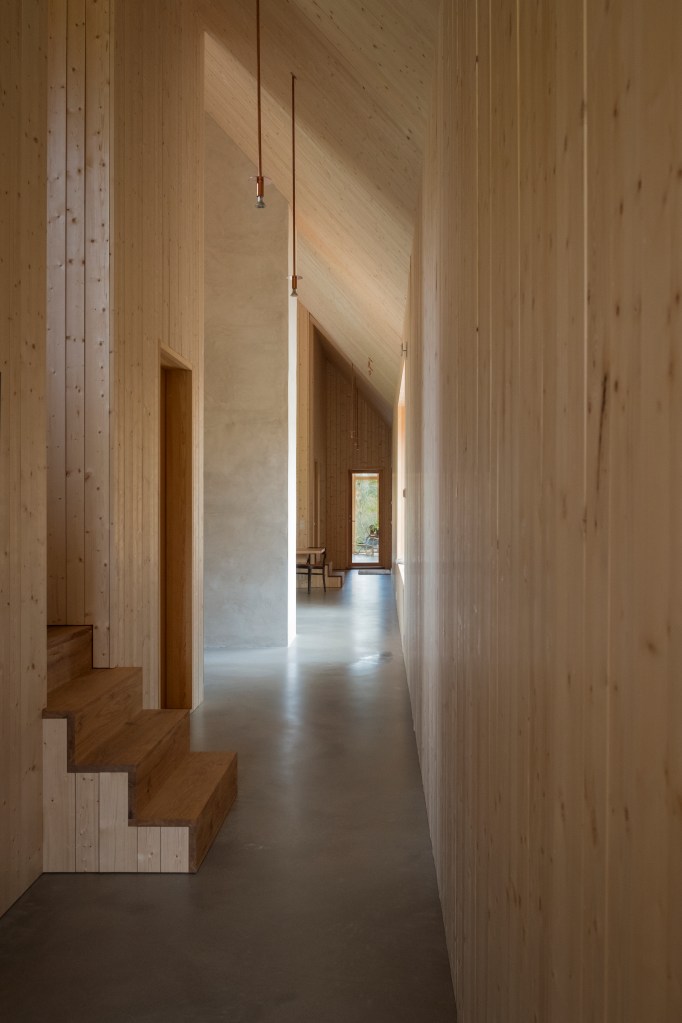
GIPP arkitektur – Rörbäck forest retreat. Buildings for dwelling in the forest of Halland. Photo: GIPP arkitektur
Creating architecture is a process surrounded by myths and images. Since the publication of Leon Battista Alberti’s book De re aedeficatoria in the 15th century, the image of the architect has remained largely according to his definitions of the architect as not being a builder. He praised architecture as work of the mind, separated from the craftsmen – hopefully skilled – whose job it is to execute the buildings. To me, creating architecture is instead to wade through a sea of forces driving the project in different directions, and to know how to navigate and manifest these complexities. Architecture is undoubtedly a teamwork including many professions other than architects, and a process that include a swath of material and societal currents that one cannot expect to control – merely take part in. Great architecture does not order life but interacts with life. It is mystical, created with multitudes and acknowledges the full emotional range and the complexities of humankind.
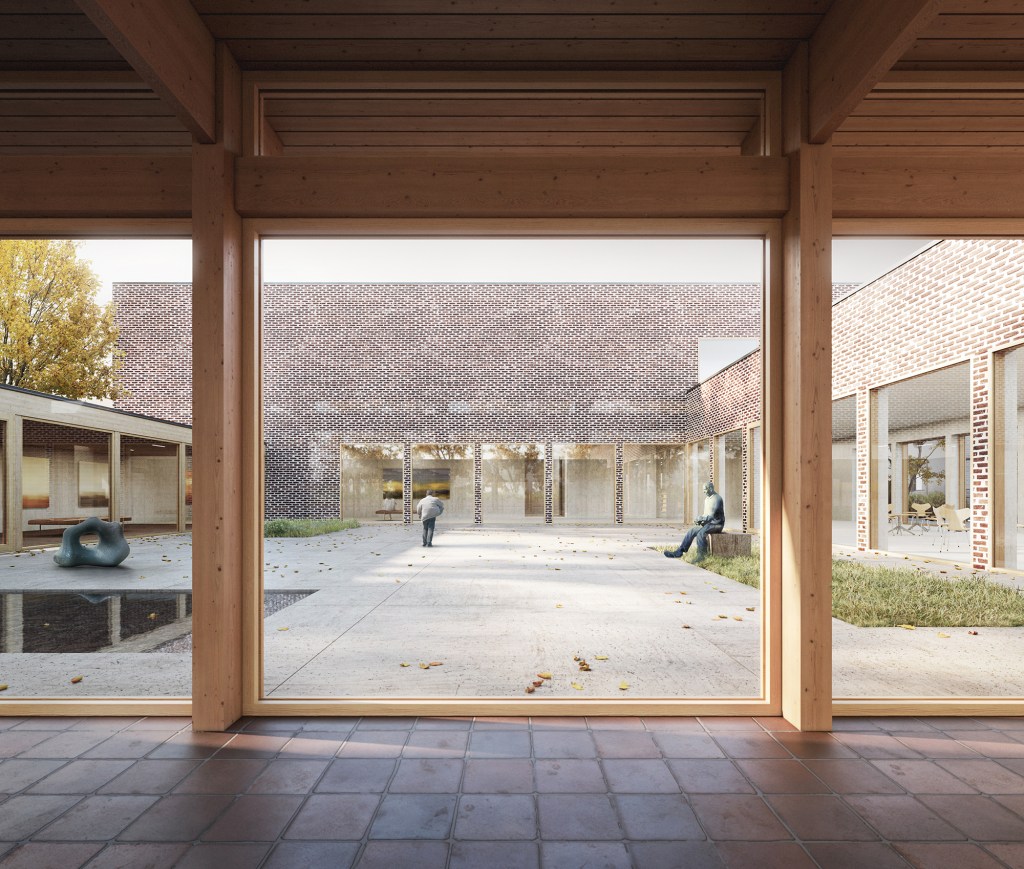
GIPP arkitektur – KKAM. An extension and renovation of a museum and gallery in Höganäs. Photo: Ivan Segato
References
Le Corbusier. The City of Tomorrow and Its Planning. 8th ed. New York: Dover publications, 1987.
Vitruvius. The Ten Books on Architecture. New York: Dover publications, 1960.
Ruskin, John. The Seven Lamps of Architecture. New York: Dover publications, 1989.
Loos, Adolf. Ornament and Crime. London: Penguin books, 2019.
Rudofsky, Bernard. Architecture Without Architects. New York: The Museum of Modern Art, 1964.
Hall, Matthew and Göritz, Hansjörg (eds.). Lewerentz’s St Petri at 50: context, fragments and influence. Klippan: The municipality of Klippan and the Klippan Parish of the Swedish Church, 2016.
Ingold, Tim. Making: Anthropology, archaeology, art and architecture. Abingdon: Routledge, 2013.
Alberti, Leon Battista. On the Art of Building in Ten Books. Cambridge: MIT press, 1991.
 differensmagazine.com