
Interview with Kareem Khubshandani about their book Decolonize Drag
Ale Låke
Differens Magazine, autumn 24
Kareem Khubchandani is an educator, scholar, and drag performer based in Boston, USA. They present their work as ”committed to uplifting the creative ways that minoritarian subjects live inside of oppressive structures,” especially the use of ”dance, fashion, and language to build something more beautiful for each other”. In Decolonize Drag, Khubchandani scrutinises the colonial origins of western gender norms, and how these are reproduced in the drag scene.
Ale Låke: Kareem Khubchandani, thank you for talking to us at Differens Magazine. In Decolonize Drag, which is an enlightening and entertaining book, you argue that when analysing gender, race has to be considered as well. How is that?
Kareem Khubshandani: The first couple of chapters in the book are trying to remind us that anytime we’re doing gender we’re in fact doing race as well, and we’re doing versions of race that have been instituted through forms of colonial occupation and violence. For example, the colonisation of South Asia was justified by stressing that the men and women were wearing the same kind of garment and they were questioned about why they weren’t differentiating their bodies properly. Also racial pseudo-science was being used to say that black male and black female bodies were not properly differentiated, and were too similar. One very ugly example of the gendering of raced bodies is when Native American kids were brought into boarding schools to assimilate them into whiteness, and the boys’ long hair was cut to bring them into gender conformity. When I teach my drag class, I invite my students to research the history of a gender technology—corsets, skirts, wigs, heels—and they will always come back with reports about how each of these items has deeply classed and raced histories, in addition to telling a story about gender. Always.
I leave my chest hair and my arm hair visible and it doesn’t produce a contradiction for me the way it used to, because I know how body hair has been used to racialise, suggesting that certain kinds of bodies are wild or dangerous.
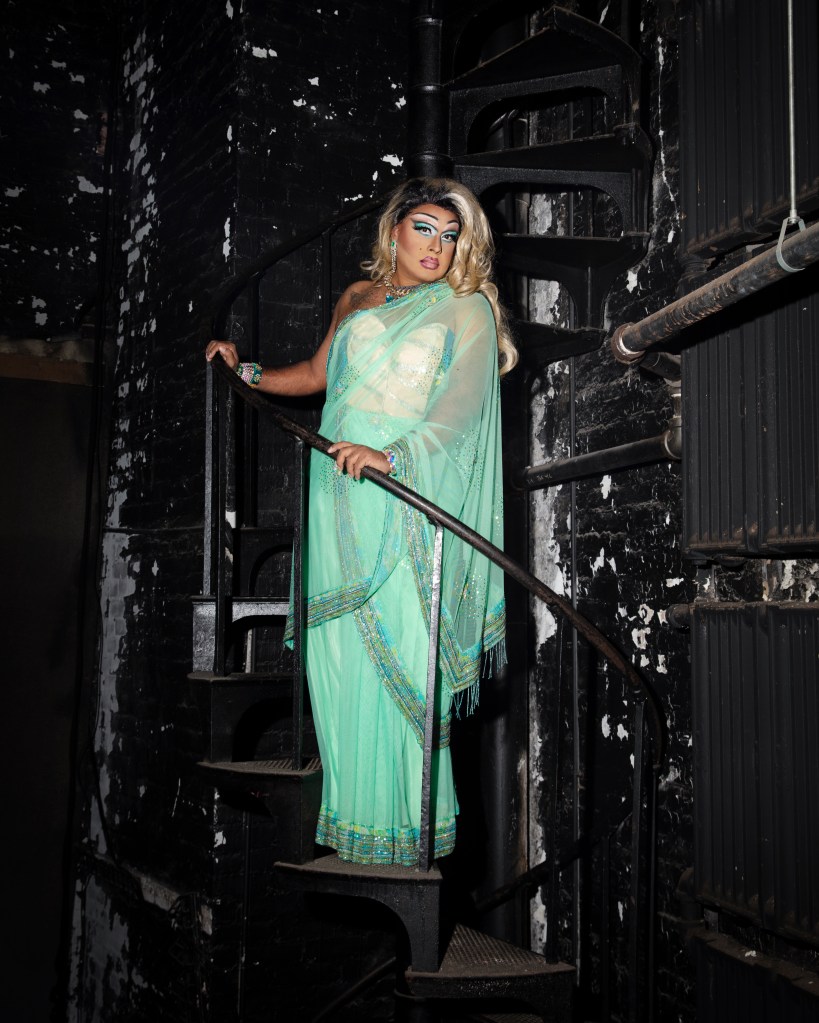
Photo: Metti Ostrowski
A.L: And how is this relevant for analysing drag?
K.K: Every time we’re doing drag, we’re performing very specific versions of gender. We need to get to know these gender formations better, the historical meanings of them, and make informed choices. At least for me, this kind of research releases me from the pressure to be a ”real” drag queen. I leave my chest hair and my arm hair visible and it doesn’t produce a contradiction for me the way it used to, because I know how body hair has been used to racialise, suggesting that certain kinds of bodies are wild or dangerous. I understand where my discomfort might come from in pairing femininity and hair, and I can let that go.
A.L: Speaking about ”real drag”, I want to ask you about a scene in the introduction of the book. You’re performing as your drag persona LaWhore Vagistan in a club and have invited your students to come and watch. At one point, a stranger interrupts your students’ applauding, saying: ”Don’t clap for them. They’re not real drag queens.” Can you say something about the context and impact of this event?
K.K: When I was a baby drag artist, I wasn’t wearing wigs because I couldn’t afford a wig. And even if I got a ratty wig, I didn’t know how to pin it in to keep it on or how to style it, so my drag looked crunchy and edgy and I was fine with that—I was having a good time. But it made me subject to certain kinds of policing of what drag is supposed to be. Many young drag artists can’t afford big wigs and expensive gowns and outfits that fit the body perfectly. But there are also so many more aesthetics than just the perfection that is often favoured in RuPaul’s Drag Race. So for someone to say that something is not ”real drag” demarcates a kind of taste hierarchy around this practice that has a history of being much more encompassing and edgy and strange than gender conformity allows for. There are a lot of excluding aspects to such a comment.
I wear heels that push my ass up and suddenly I feel beautiful, sexy, tall. I’ll grab my boobs and be like: ”What is this on me? I love it!” And I’ll put on lashes and then there’s the full transformation where I don’t even see myself in the mirror anymore.
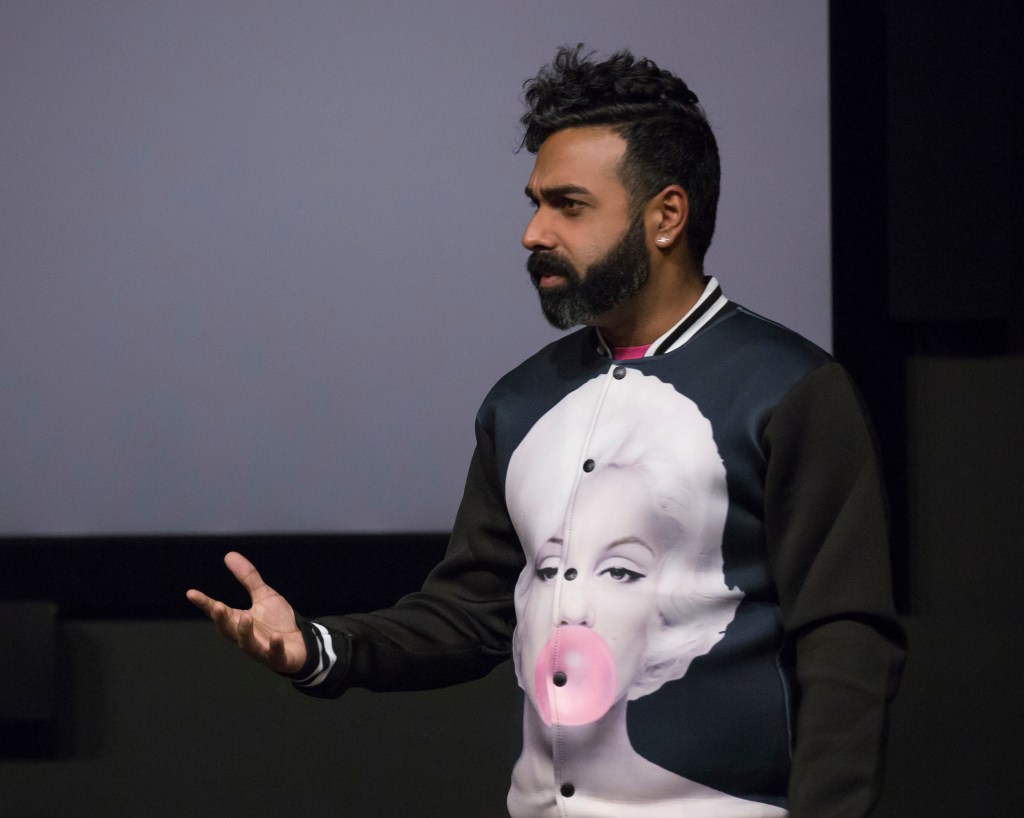
Photo: Tim Correira
A.L: You write that your LaWhore is just Kareem after two vodkas. So you’re basically the same?
K.K: Yeah, and I’m a cheap date, so two drinks make a difference. But putting on the clothes, having four layers of spandex holding my body in, does in fact transform me. I don’t have to rehearse a different posture because my posture is transformed by all of that clothing on me. I wear heels that push my ass up and suddenly I feel beautiful, sexy, tall. I’ll grab my boobs and be like: ”What is this on me? I love it!” And I’ll put on lashes and then there’s the full transformation where I don’t even see myself in the mirror anymore. It’s absolutely transformative and I think it’s in these moments that the material and the psychic really come together and choreograph us. I’m a bit lazy too, so I don’t have a choreography for LaWhore, but these materials are so powerful. When nails are long, a small gesture becomes twelve times larger because the nails are catching the lights in a different way.
A.L: It is fascinating—and you mention this in the book—how something that inhibits movement, like heels and nails and all of these feminine attires, can actually feel liberating. But I want to ask you about something else. You say that drag is collective work. What does that mean?
K.K: When I was living in Austin, Texas, I took part in this drag competition called Drag Class. I’d never worn hips before and the judges were encouraging me to try changing my silhouette. So my drag mentor Rhonda Jules took me to another drag queen’s house and this drag queen had an electric kitchen knife and pads of foam and she taught us how to carve pads. Rhonda was still a stranger to me, I’d known her for a couple of weeks, her friend was even more of a stranger and there I was in their house playing with their chihuahuas and cutting pads, which I never in my life had imagined doing. The communal work of drag where we’re giving gender possibilities to others, inviting them into our private spaces, lending folks money or jewelry or wigs. It’s a lot of mutual aid.
There’s a lot of violence and discomfort that can happen when you’ve got a lot of strangers in a room on a dance floor who don’t know each other. But those spaces of risk can also be spaces of beautiful formations and connections and love and sex and ecstasy.
A.L: In the editor’s preface, a rhetorical question is asked: ”Why spoil the party?” With RuPaul’s Drag Race, drag has become a huge industry, employing queer people all over the world. Did the risk of being perceived as a killjoy haunt you as you wrote the book?
K.K: My goal in all of my writing is never to be a killjoy but is to redirect where we get our pleasure. Before this book I was writing about queer nightlife and specifically dance floors. There’s a lot of violence and discomfort that can happen when you’ve got a lot of strangers in a room on a dance floor who don’t know each other. But those spaces of risk can also be spaces of beautiful formations and connections and love and sex and ecstasy. I never want to foreclose people’s joy, but I do want to redirect it.

Photo: Metti Ostrowski
A.L: You do write that you love RuPaul’s Drag Race. Still, your critique of the show is quite fierce?
K.K: I think it’s important to critique the things we love. Actually, it’s essential to be able to hold the things and people we love to higher standards. A lot of people are learning what drag is through RuPaul’s Drag Race and I think the show has a lot to do with delimiting what ”real drag” is. Neoliberalism champions free markets and individualism. The message is that if you are not finding mobility you are not working hard enough—it’s never a systemic problem. RuPaul talks almost obsessively about the ”inner saboteur”, meaning that it is you who has to overcome your problems in order to rise and succeed, as opposed to acknowledging the deep-seated, systemic racism, transphobia, homophobia and classism that the Drag Race contestants often narrate. It is seen as a mental blockage as opposed to a societal blockage. Also, you are expected to turn yourself into a product: write a song, make a chocolate bar, create a makeup palette. RuPaul is very proud of that, she loves thinking of herself as a marketing genius and that’s her gift to the performers as well. And at the end of the day, yes, these artists deserve to make money. But without acknowledging the systemic barriers to their success and saying it’s all about you and your individual problems, she buys into certain kinds of market ideologies that we need to be critical of.
A.L: A part of the book is about RuPaul herself, and her transformation from a kind of punk genderfuck drag queen to the more gender-conforming glamazon she is today. You write that she actually saw that this was necessary for her to make it commercially.
K.K: Yes. She often says drag is subversive but she’s not actually subverting it, she’s capitalising on the limited and highly capitalist desires of her audience rather than turning it on its head and reflecting it back to them to say: ”Do you see that you only want one version of me?” and: ”There used to be multiplicity and I had to leave it behind for you to like me.” She’s very smart, but I don’t think she’s educating her audiences on their own biases—even though she knows that they’re there.

Photo: Tim Correira
A.L: I’m curious about the element of parody so often present in the show. I wonder if it’s still possible for RuPaul’s Drag Race to claim that it is still doing parody now that the show is such a commercial success?
K.K: I think that’s a very hopeful definition of parody. Parody can commit a lot of violence as well. I also give examples in the book of where drag actively participates in colonialism and racism with rich white men lampooning the very destinations that they’re about to become emissaries to, in order to justify their colonisation of them. They’re dressed up in oriental garb and they are in blackface and all of that is parody too. It’s a colonial message of: ”Their genders are not proper over there. Let’s go and civilise them.” So parody has a long history of participating in and justifying colonial ideology. This is not to say that that’s exactly what RuPaul is doing, but I do think that parody is not necessarily subversive. Judith Butler and others teach us that we’re all engaged in parody every day because we’re all performing and replicating a version of gender every time we put on certain garments or act in certain ways.
A.L: Yes, and RuPaul says that too: ”We’re born naked and the rest is drag”. I also wonder about the significance of it being a reality show, thinking about what’s ”real” and what’s ”parody”. It is also a reality show parodying other reality shows. But for the contestants it’s very real. And the longer it is aired and the bigger the Drag Race empire gets, you can’t really joke about it anymore.
K.K: Yes, especially in those early seasons you see it playing with shows like Fear Factor,Project Runway, America’s Next Top Model, and Big Brother. But it has become its own economy and people are entering live drag performance with the hope and the goal of making it on the show, or they’re hosting live viewings of the show in their bars. So it has really become a livelihood for people, which is exciting and strange. But you’re right, we can’t joke about it and have to take seriously the consequences it places on people’s bodies and psyches. On the one hand we’ve got the vicious Drag Race fan base that often attacks performers who then don’t know how to manage it. And then there are artists who’ve gone into debt. They got famous by being on the show and are now signing contracts for performances that operate differently and get paid more than ever. But they don’t know how to file taxes as gig workers, so they probably have tax invoices coming in from hundreds of venues that they then have to process. Is the show preparing them for the kind of life that RuPaul comfortably leads?
A.L: The answer, which you give in the book, is that no, sometimes it doesn’t.
K.K: It doesn’t. But what I love is that some of the other Drag Race girls have actually stepped in to help manage finance and bookings.
The first version of Decolonize Drag that I sent to my editor did not have a RuPaul chapter. I didn’t want to do it. But my editor talked me into adding something about the show. I had to brace myself and be like, ”okay, I’m writing this chapter”
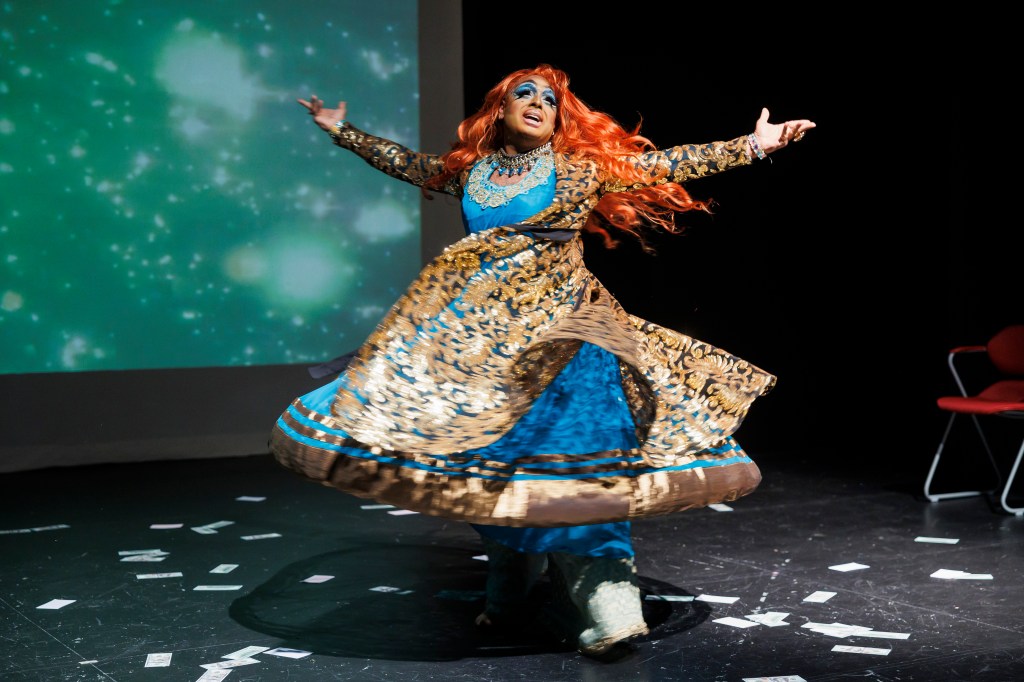
Photo: Tim Correira
A.L: RuPaul is a very powerful person. Was it scary to criticise her?
K.K: Haha! Yes, absolutely. The show has actually made people stop doing drag too, because of RuPaul’s criticism and the producers’ manipulation of story. Phi Phi O’Hara, Pearl, there are so many that, after the non-disclosure agreements have expired, go on podcasts and talk about how exhausting and traumatic it was to be on the show. It is career-ending for some folks, when they’re not in her good books. The first version of Decolonize Drag that I sent to my editor did not have a RuPaul chapter. I didn’t want to do it. But my editor talked me into adding something about the show. I had to brace myself and be like, ”okay, I’m writing this chapter”.
A.L: The book is a fierce critique not only of RuPauls Drag Race, but of norms in the drag world in general. Simultaneously, the critique is delivered with much care, it’s a gentle and loving critique. For example, while you ask for more ways to do gender, you also affirm the legitimacy of enjoying being successful in conforming to gender norms.
K.K: I’m a performer myself. I too get written about. I want to model a form of criticism that I could also handle myself. As an academic, we engage in peer review of other people’s writing and I’ve been burned before, I’ve gotten anonymous reviews of my work that are really painful. I don’t want to produce that kind of pain.
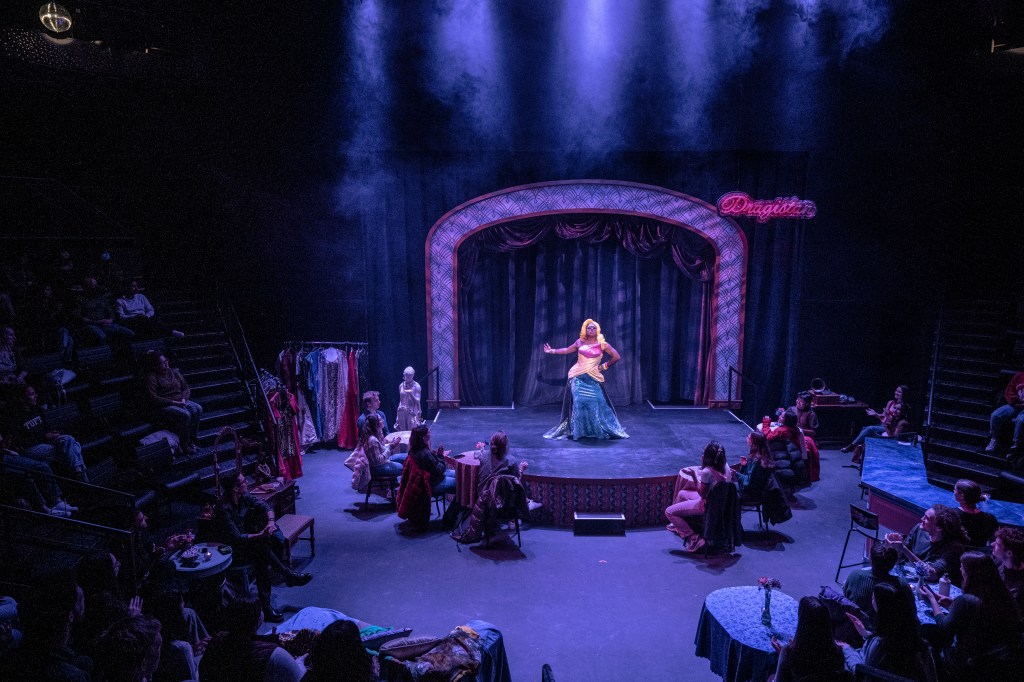
Photo: Nikki Lee
 differensmagazine.com