
Let Beauty be Your Guide: A New Look at Aesthetic Universalism
A conversation between Keren Gorodeisky and Axel Rudolphi
Differens Magazine, autumn 24
Keren Gorodeisky is professor of philosophy at Auburn University, in Alabama, USA. Her main focus is on questions concerning aesthetic value, aesthetic rationality, aesthetic agency, and the nature of feelings, but she also works on Immanuel Kant’s aesthetic theory, Romanticism, and, more recently, on Simone de Beauvoir’s view of understanding other people as well as her view of literature. These days, she is completing a book titled The Authority of Pleasure: Aesthetic Value, Rationality, and Agency.
Axel Rudolphi is a PhD student in philosophical aesthetics at Uppsala University, Sweden. He is currently working on a dissertation about social and political critiques of Immanuel Kant’s aesthetics, as part of the interdisciplinary research program Engaging Vulnerability at Uppsala University.

Kris Lemsalu, Immaterial Material Love 2012, Courtesy of artist & Temnikova & Kasela.
Axel Rudolphi: Hi Keren! I know you’re a defender of universalism in aesthetics, and so I was hoping to pick your brain about this topic. Aesthetic universalism is certainly an idea that has been out of fashion within philosophy for some time now. After all, beauty (or “aesthetic value”) can show up in so many different forms and our aesthetic tastes are so diverse. So why should we even begin to think that aesthetic universalism is true, or even desirable, for that matter?
Keren Gorodeisky: Hi Axel, lovely to hear from you! I am excited to talk to you about aesthetic universalism. Since the phrase itself (“aesthetic universalism”) is a mouthful, let’s start by saying a few words about what it is, before approaching your “why” question: why it stands for a view that is testified by everything around us, and why there are very good reasons to commit ourselves to it, in spite of its notoriety.
A.R: Sounds like a good plan. To start us off, then, what exactly is “aesthetic universalism”?
K.G: Excellent question. Let’s agree first that aesthetic goods (those things, activities, events, processes, etc. that are aesthetically valuable) are of all stripes: they come in very different colors and shapes, and appear in all corners of life. For the purposes of our conversation, we don’t need to know what is “aesthetic” about aesthetic goods, and what makes all of them, in spite of their great variety, aesthetically good. It is enough that we recognize that powerful hip-hop albums, moving short stories, majestic castles, haunted ruins, addictive tv-shows, mesmerizing mountain ranges, beautiful cloud formations, graceful dancer’s movements, jittery camera movements, delectable teas, crunchy tacos, elegantly wrapped gifts and many many other things that we find all around us can all be aesthetically good. Even “boringness” may be an aesthetically valuable quality, if, for example, it is one of the qualities that make a film, like Andy Warhol’s film, Empire, a great film. The defender of aesthetic universalism can and often does agree with her rivals—the aesthetic personalist and the cultural, sensibility or practice relativist—that aesthetic goods are to be found in art, culture, pop culture, nature, the everyday, people, bodies, and non-human phenomena. Their disagreement concerns the scope of the goodness of these goods, wherever they are to be found.
Aesthetic universalism is the view that aesthetic goods are neither personally good, nor culturally or communally good, but good period. It contrasts with views according to which aesthetic goods are personally good, communally good, culturally good, or good only if you have a certain kind of sensibility.
The aesthetic universalist holds that aesthetic goods are not valuable just for me, just for you, just for our crochet community, just for our Pokémon universe community, or just for our Greek folk dance community. Rather, their value qua aesthetic is not a value for someone or other, but value simpliciter, value period.
A.R: Could you tell us a bit more about those rival positions that you mention?
K.G: Absolutely. The aesthetic personalist, for example, holds that, if Kendrick Lamar’s music is aesthetically good, it is not good per se, but good for specific people; it is aesthetically good if it expresses my own aesthetic ideals—the kind of person I care to be, or my style. Some personalists hold that something is aesthetically good insofar as it calls on me personally to be responsive to it, just as my lover calls on me, but not on you, to love them back. Aesthetic goodness, on this view, is a matter of personal ideals, styles, or calling. You—having a different personal ideal, style, or calling—may have no reason to appreciate Kendrick’s music. Maybe you are just a Drake kinda dude. Surely, you should respect the fact that I appreciate Kendrick (presumably, this is, according to the personalist, an ethical or interpersonal requirement, rather than an aesthetic one), but given that the music expresses nothing of you, you have no reason to appreciate it.
The person who thinks that aesthetic goods are culturally or communally relative, or relative to a person’s sensibility, on the other hand, thinks that, if the Nok Culture terracotta sculptures are aesthetically good, their goodness is relative to people, cultures, or communities that have the same kind of sensibility that the Nok people had. The relativist would say that the sculptures must have been created to be appreciated by people with a certain sensibility, the sensibility particularly cultivated by the lifeform of Nok people (who lived around the area of contemporary-day Nigeria, approximately between 500 BCE to 200 CE). Of course, this relativist knows that those people no longer exist, and that it is still possible for us today to appreciate the sculptures (possible, at least for some of us, the relativist would say). But she thinks that, to appreciate the sculptures today, we must first cultivate the same kind of sensibility that the Nok people had. Perhaps we can do so by immersing ourselves in a comparative lifeform—perhaps we can join some terracotta sculpting or carving community or practice; perhaps we should live outdoors in Nigeria-like climates; perhaps we should eat certain foods. The goodness of any aesthetic good is relative to people with the kind of sensibility that is or was cultivated by the culture in which these aesthetic goods were created. Alternatively, it is relative to people whose sensibility is acquired and cultivated by the specific community or practice to which they have chosen to belong (say a terracotta studio). The Nok sculptures are aesthetically excellent for those people, but for no one else. Others have no reason to appreciate them (unless for some unclear reason they decide to acquire the relevant sensibility).
You might have been raised solely on classical music—your parents allowed you to listen only to pre-atonal classical Western music—so much so that listening to even only one track of Nevermind sounds like unbearable screeching to you.
A.R: How does the universalist view—the view that, as you said, aesthetic goods are “good period”—differ from these positions?
K.G: Well, the aesthetic universalist holds that aesthetic goods are not valuable just for me, just for you, just for our crochet community, just for our Pokémon universe community, or just for our Greek folk dance community. Rather, their value qua aesthetic is not a value for someone or other, but value simpliciter, value period. In this sense, aesthetic value resembles values and disvalues such as the admirability of an admirable person like Rosa Parks, the piteous nature of Oedipus’s plight, or the dignity of any person qua person. These are not values or disvalues for someone or other, but values period. Whatever your personal style, ideals, calling, upbringing, or communal commitments may be, you, like anyone else, have reasons to admire Rosa Parks, to pity Oedipus, and to respect any person qua person. Analogously, if Virginia Woolf’s To the Light House is a great novel, Nirvana’s album Nevermind is an excellent album, Wim Wenders’s Perfect Days is a beautiful film, and the Cinque Terra coastal area is gorgeous, then everyone has reasons to appreciate them, independently of anyone’s personal ideas, personal calling, cultural upbringing, and belonging to a specific community or a practice.
Of course, these reasons are (as philosophers say) defeasible. They may be overridden by other good reasons not to appreciate the novel, the album, the film, or the coastline—we might have various pragmatic or ethical reasons not to appreciate some things even if they are aesthetically good (and so things that, as such, give us reasons to appreciate them, just as they give everyone else). I might have been reading only comics and magazines throughout my life, and so putting myself in the position to appreciatively read To the Light House might take time and effort that I can’t afford. This gives me good pragmatic reason not to appreciate the novel, even though it merits my, yours, and everyone else’s appreciation (if it is aesthetically good). Or you might have been raised solely on classical music—your parents allowed you to listen only to pre-atonal classical Western music—so much so that listening to even only one track of Nevermind sounds like unbearable screeching to you. It might be too costly for you to cultivate the ear that is required in order for you to be in the position to appreciate the greatness of the album. Or it might come at a personal cost to you, if, for example, you may feel that appreciating any manifestation of Seattle Grunge is a betrayal of your parents. According to the universalist, these might be perfectly good reasons for you not to appreciate the novel or the album, even if they are aesthetically great. Still, the universalist holds that, even if you have these good reasons not to appreciate them, and even though you are not blameworthy or culpable for not appreciating them, if the novel, the album, the film and the coastline are aesthetically valuable, they merit everyone’s appreciation, not only the appreciation of those who already see themselves reflected in these goods, or feel culturally or socially attached to them or ready to appreciate them.
A.R: Alright, now I think we at least have a rough picture of the different commitments at play here. It seems, in your view, that the debate largely comes down to questions of the kinds of reasons we have for engaging with objects of aesthetic value, and the ranges and the sources of those reasons. Without getting too metaphysical at this point about the actual origins of such reasons, and also setting aside the question of what it means to “appreciate” something aesthetically, for a moment: do you think there are any pointers, rather from everyday experience, that give aesthetic universalism some additional support?
Given all these cross-fertilizations, motifs, and values, which are not just a matter of mere synthesis, but a response to an aesthetic problem, or a result of aesthetic evaluations, it seems that our world is not a world of merely personal or community-based rather than universal aesthetic values. It seems to be a world of cross-communities, universal aesthetic values.
K.G: Yes, I do! The basic question here is why we should think that aesthetic universalism is true—that aesthetic goods merit everyone’s appreciation, and not only a select few. Appealing to the phenomena—to our lives—is a good way to begin answering this question. Look around you, I say!
If you travelled anywhere this summer, or read some headlines (perhaps from the travel section of your favorite newspaper), you know well that travel is all the rage this summer. Americans, we are told, hit record high summer travel. All around us we see headlines like “Japan wants Tourists. Just not that Many.” Surely, people travel for many different reasons. Clearly, there are very different reasons why millions of Chinese, Philippines, French, Americans, and many others travel to see Kiyomizu-dera in Kyoto—the Yen is very low, influencers recommended it, friends look so great next to it on Instagram, the trip is an adventure, Japanese food is excellent. Yet, it’d be odd if these were the only reasons why many people invest so much money and time in order to see the temple. It’d be odd if they didn’t also think that the Kiyomizu-dera is a beautiful temple, worthy of their appreciation, even though they grew up in the midst of a very different style of architecture, and honed a very different kind of (perhaps Western-inflected) sensibility.
That many of us take goods like the Kiyomizu-dera to be worthy of everyone’s appreciation on account of their aesthetic value is reinforced by laws and policies surrounding different aesthetic and cultural goods around the world. Consider one of many of UNESCO declarations that “damage to cultural property belonging to any people whatsoever means damage to the cultural heritage of all mankind” (UNESCO, 1954; my italics). Debates about cultural goods and who has the right to own and display them are lively, even heated, not only among scholars, but also, primarily, among art and cultural institutions and in the courts of law. Even though there are great controversies regarding who should own and display cultural and artistic goods, there seems to be a great consensus underlying these debates: the consensus is that they are worthy of everyone’s valuing. Whatever we decide about ownership, we need to remember—the line of UNESCO, related organizations, and scholars goes—that these artistic and cultural goods are worthy of everyone’s valuing.
The domain of food suggests another indication that we regard many aesthetic goods as worthy of appreciation independently of our personal styles and our cultural and communal sensibilities. If we didn’t, it would be much harder to explain why so many people get out of their way to try (and to try to enjoy) foods that are very foreign to the ones they grew up eating, to the ones they gravitate towards for comfort, and to the ones they would cook while hosting dinner parties as expressive of their own style.
Notice too that if our world were more like the personalist’s or the cultural relativist’s world—a world of merely person-based or community-based rather than universal aesthetic values—it would be very hard to explain the extremely many fruitful and valuable syntheses of different aesthetic traditions, characteristics, motifs, and cross-communities’ values. For a drop in the bucket, consider, for example, the wide incorporation of the same musical motifs across history and culture (think of the incorporation of a similar melodic signature motif in the music of both Johan Sebastian Bach and Taylor Swift, among many other contemporary pop singers). Or think of the gazillions of cross-cultural and cross historical adaptations, such as Inua Ellams’s adaptation of Chekhov’s Three Sisters, which is set in Nigeria in the 1960’s, or Tayari Jones’s American Marriage, which draws inspiration and plot features from the Odyssey to tell a story grounded in the plight of American incarceration in the 21st century. Given all these cross-fertilizations, motifs, and values, which are not just a matter of mere synthesis, but a response to an aesthetic problem, or a result of aesthetic evaluations, it seems that our world is not a world of merely personal or community-based rather than universal aesthetic values. It seems to be a world of cross-communities, universal aesthetic values.
Our lives with aesthetic and cultural goods, then, suggest that aesthetic universalism is true; that many of us, most of us, assume that aesthetic goods are worthy of everyone’s valuing, and that we are willing to do quite a lot in order to value them, even if they don’t express our current styles or fit the sensibilities we have by dint of our cultural and communal upbringing.
In these scenarios, the universalist ideal seems to commit us to an equalizing of aesthetic differences, or it recasts objects of aesthetic value for easy and shallow appropriation and consumption.
A.R: I’m sure many people have experienced that sort of pull from aesthetic phenomena found to lie outside the ambit of one’s own cultural and social background or of one’s current personal taste, which you describe. And perhaps the universalist is better equipped to account for that kind of phenomenon than the personalist and the relativist are. However, the notion of universalism arguably comes with some additional baggage that people may be less inclined to readily accept in the case of aesthetics. You’ve already brought out the great diversity of aesthetic phenomena, and how that diversity, on your view, is compatible with the type of aesthetic universalism that you want to defend. But still, doesn’t the idea of universality (rather than some idea about, say, curiosity or openness for things that are novel or “other” to oneself) also entail the risk of a certain levelling-out of that diversity? At least, this seems to be the view of the philosopher Alexander Nehamas, who has described the universalist ideal of a world in which everyone appreciates the same aesthetic things, and all in the same ways, as a “nightmare,” bereft of any aesthetic differentiation and plurality. Moreover, a political critique of aesthetic universalism could hold that turning “aesthetic value” into some sort of common universal currency—available, in principle, to everyone —sets the stage not only for a rather shallow commodification of places like the Kiyomizu-dera, but also for a sort of undifferentiated surface-level response to all objects of aesthetic value, where, as a consequence, most of the object’s locally embedded meaning falls out of the picture.
In these scenarios, the universalist ideal seems to commit us to an equalizing of aesthetic differences, or it recasts objects of aesthetic value for easy and shallow appropriation and consumption.
Does your proposed version of aesthetic universalism manage to dislodge this type of baggage, which, I believe, may be partly responsible for the lack of appeal in universalism as a guiding ideal, to many people?
K.G: Yes, coming back to your original question, I realize that you didn’t ask only why the view endorsed by aesthetic universalism is true, but also why it is worthy, or desirable. Now, for one thing, what is true is to be believed, so we should all be committed to aesthetic universalism because it is true. But you are right to separate the questions since aesthetic universalism is also a better view to hold than personalism and relativism on various grounds.
First, if we lived by aesthetic universalism—if we would be guided by the thought that all aesthetic goods merit everyone’s appreciation, and give everyone, not only a select few, reasons to appreciate them—this would, arguably, allow us to be much more tolerant, much more open to others as others, and to value (not merely to respect) other people’s and cultures’ values and commitments than if we believed in, and were guided by aesthetic personalism or relativism. To connect this more tightly to your question, notice that aesthetic personalism and relativism do not give us any reasons to be curious and open to others—open not just to understand what they value and respect them, but open to possibly value what they do. Aesthetic universalism, in contrast, holds that to exercise taste is to be fundamentally open to others. If aesthetic universalism is true, and is our guide, we would be much more inclined to seek relationships with those whose tastes are at least initially different from ours. We may as well experience significantly less alienation from those different from us if guided by an aesthetic universalism, since it holds that the relevant goodness is not indexed to you, your culture, or community. Rather it holds that those who are very different from you may be better attuned to the relevant goodness, which would drive us to be open and vulnerable to other people, ways of life, and evaluative commitments. It thus encourages us both to be more self-critical and to seek ways of sharing our diverse evaluative landscape. In this respect, aesthetic universalism is analogous to the kind of love that Lily Briscoe (from Virginia Woolf’s To the Light House) thinks that Mr. Bankes shows to Mrs. Ramsay: “love that never attempted to clutch its object; but . . . was meant to be spread over the world and become part of the human gain. So it was indeed. The world by all means should have shared it” (47).
If we restricted aesthetic goods to the values of our own existing desires, cares, and current personal and cultural commitments (to what speaks to me, or to my upbringing), and even to our circumscribed communities, while forgoing any hope for cross-ideals, cross-styles, cross-personal, and cross-communal universal aesthetic values, how would our world be? Such a world—the world of the aesthetic personalist and relativist—would be a world in which persons pursuing a unified style, a unified ideal of being, or a personal calling as well as members of a specific community find no aesthetic reasons to value other people’s values. This seems deplorable.
A.R: It’s interesting that you mention the perils of “alienation” as a reason against anti-universalist theories. In the last fifty years or so of analytic philosophy, universalist theories of (especially) ethics have been criticized for neglecting the individual agent’s own perspective in matters of how to lead a good or worthy life. If moral (and aesthetic) reasons are universal and impersonal, then this will risk alienating people from their own individual life projects, the standard line of critique goes. But perhaps the pendulum has begun to swing back: focusing too heavily on the perspective of the individual agent in normative matters could equally result in other forms of alienation, this time from other people or from the world at large.
We risk being slaves to blind cares and commitments, which in fact do not express who we are (as the personalist thinks they do), but rather express currents in the market, in society, among our peers, or the cravings we don’t even take to be reflective of ourselves etc. This is nothing short of self-alienation.
K.G: Indeed—the focus on the appreciator’s own current cares, desires, and commitments, and on her culture’s or community’s current commitments in aesthetic personalism and relativism raises the risk of greater interpersonal alienation between us. This is the kind of alienation that aesthetic universalism has the built-in potential to undermine for reasons I just briefly introduced. Sadly for these anti-universalist views, they also (unwittingly) manifest self-alienation: aesthetic personalism seems to be grounded in (and to reaffirm) the way that people tend to be alienated even from their own (allegedly free) selves.
Recall the contours of aesthetic personalism. This rival view of aesthetic universalism—as defended by philosophers like Nick Riggle, Richard Moran and Alexander Nehamas—tells us that we should aesthetically value only those objects that express our current ideals. These ideals, they argue, concern the kind of person we wish to be (Riggle), the ones that we experience as a personal calling, as making a claim only on us individually just as our lovers do (Moran), or the ones that promise us happiness given our current styles, ideals, and personality (Nehamas). But the logic of this view, as literary scholar Michael Clune convincingly argues, mimics the logic of capitalist economy—the free market—in assuming that what is of utmost importance and most fundamental in human life is our own individual preferences, cares, commitments, ideals, or callings. The personalist tells us: what matters most fundamentally (and what you should care about, at least aesthetically) is what you already prefer, desire, care about, pursue, or are committed to, independently of whether it is in fact desirable, love-worthy, or care-worthy. Like the capitalist, the personalist ignores what is worthy as such (in the first case, in the name of capital, in the second, in the name of the self), and the personalist’s mantra echoes the common marketing ad: choose, care about, and pursue whatever you wish—it is a free world!
Why does this manifest self-alienation? The personalist urges us to focus on what we already care about and are committed to. As a view, personalism has no space for reflection on what is care-worthy or valuable as such. It does not give aesthetic appreciators enough elbowroom to ask whether what they are already committed to is indeed what they should be committed to and pursue. Without this reflective stance (which is built into aesthetic universalism), we risk ending up caring about things that other factors encourage—or push—us to pursue, without our notice or conscious endorsement. We risk being slaves to blind cares and commitments, which in fact do not express who we are (as the personalist thinks they do), but rather express currents in the market, in society, among our peers, or the cravings we don’t even take to be reflective of ourselves etc. This is nothing short of self-alienation.
Notice too that the personalist seems to be caring not only about personal authenticity and autonomy (yet fails cultivate them, as I just suggested), but also about equality. Yet, the personalist view only gives the impression of equality—everyone equally deserves to pursue what they want, whatever that might be. But, as Clune argues, this is a problematic notion of equality, which prevents us from being equally positioned with regard to what is genuinely good, not only with regard to what seems to each of us (and often mistakenly so) to be good. It robs us of the chance of achieving a robust kind of equality: achieving equal understanding of what is genuinely good, and being positioned equally regarding it. Clune—an aesthetic universalist—is right that this requires “the form of a value that calls to us, that calls us out of our current likes and dislikes” (In Defense of Judgment, 47), and I add, calls us out even of our current desires, commitments, aspirations, and styles. To achieve genuine equality and full-blown autonomy (which means to pursue freely what we freely understand to be worthy), we need aesthetic theories which, in opposition to aesthetic personalism and relativism, encourage the refinement, transformation, and enrichment of our current commitments. We need to acknowledge the universal nature of aesthetic value and the claim it makes on us, wherever and however it shows up. This is true, even if we have not been raised to recognize, enjoy, or desire its particular manifestations so far; even if we don’t find it speaking to us with necessity; even if it does not reflect the kind of person we currently care to be. Aesthetic theories that celebrate universal aesthetic value are to be preferred to personalism on this account too.
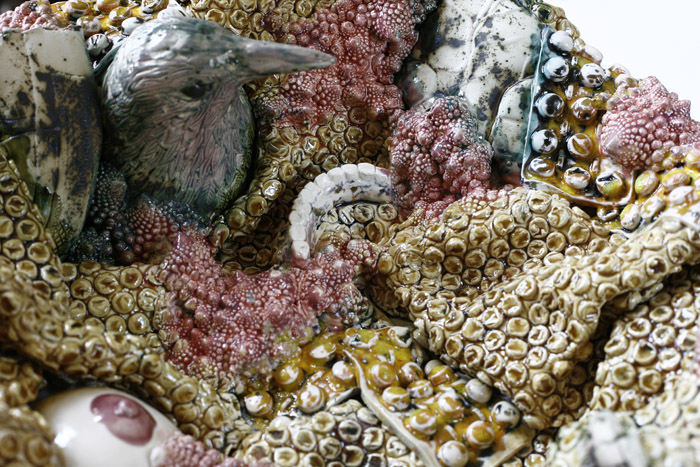
Kris Lemsalu, Immaterial Material Love 2012, Courtesy of artist & Temnikova & Kasela.
A.R: In any case, I think that any aesthetic theory that projects fewer opportunities to learn, must be regarded as less than ideal. For what it’s worth, it strikes me that your discussion bears certain parallels to debates about pedagogy and education today. At least in my country (Sweden), a basic tenet of educational pedagogy of recent decades (from elementary school to university level), has been to avoid alienating students by not starting from their own current interests and aspirations in the learning process. Rather, we hear that students must be “active learners” and that teachers must, as it were, meet the students where they currently are (instead of simply imposing some material top-down, or forging everyone into the same cast). I believe this idea has been important and, in many ways, beneficent in for how education is being conducted today. Yet, the basic idea of education as a process of development — of getting to acquire new fields of interest and knowledge which may previously have been unknown to you, but that are deemed to be of value independently of where you first find yourself—should, of course, not thereby get out of sight. At least not if we want to maintain the possibility of development towards what is actually true, good and beautiful.
Now, there are certainly historical precedents for this kind of problem in the aesthetic domain—I’m thinking, for example, of the 18th century philosopher Friedrich Schiller, writing on the “aesthetic education of man” as a way of connecting people, from where they stand in nature, with universal reason—but I’d like to press you to say more about how this connection between the individual and the universal gets made, and is maintained, in your aesthetic account. Especially since it’s such a great concern for both modern pedagogy and for the aesthetic personalist. How can we develop as plural individuals, in the face of universal aesthetic value?
K.G: You are completely right that, if it is to be cogent and attractive, aesthetic universalism must explain how the universality of aesthetic goods can account for the intuition that aesthetic appreciation, learning, and cultivation have a tight relation to the personal. This is often presented as a criticism against aesthetic universalism, which you nicely presented earlier as the worry that this view “levels out diversity.” Some indeed think that aesthetic universalism denies the diverse plurality of persons, and prevents us from forming and cultivating it. I can’t within the confines of this conversation explore what exactly the objectors (commonly the personalists) mean by “diversity,” “plurality,” and “personality” (I do so in my book, showing that the personalist’s conceptions of these are not viable). Instead, let me just explain, in great brevity, why and how, rather than levelling out personal diversity, aesthetic universalism is faithful to the important role of the personal and the personally diverse in aesthetics. For one thing, we need to recognize a distinction between what we are aesthetically engaged with and how we are engaged with it, a distinction that the personalist ignores. The aesthetic universalist holds that we constitute our diverse individual selves not only in appreciating the particular goods that we in fact appreciate, but also in the ways that we appreciate them, namely, through our diverse, albeit invariably responsive, manners of engaging even with the same goods. Consider the following example.
I love Lauren Groff’s short stories. I love her lavish language, the way nature comes to life in her stories, the way that even urban environment is presented as part of nature, as teeming in life. I devour the subtle interpersonal relationships in the stories, particularly between the reappearing protagonist—the mother-writer protagonist—and her children and her husband. I admire the way she expresses the subdued and subtle drama of being a mother and a writer. The stories are excellent, good as such, good universally. And yet, different appreciators may take in the value of her renderings of these relationships within the family, the value of Groff’s reimagining of the relationships between the human and the natural environments, and the value of the stories as such in different ways that would constitute and shape their personalities in diverse ways. I should have appreciated these stories for these reasons even if I weren’t a mother, even if I weren’t a writer—or at least not a philosopher. And yet reading these stories renders my vision of the world, my responsiveness to it, my understanding of nature, parenthood, and more, mine; my appreciation of them takes a particular shape that is embodied into how I see and am in the world. They are alive for me in the way I have come to live my life. My appreciation of them is part of who I am, while your appreciation of them, even when you appreciate them for the same reasons are yours—shaping how you see and are in the world.
While there’s much more to say about why aesthetic universalism even requires that different appreciators form their different personalities through the appreciation of the same universally valuable goods (I present these arguments in my book), suffice it to say now that the distinction between the “what” and the “how” of aesthetic appreciation, also includes a built-in answer to the political worry that you presented earlier in the conversation. Aesthetic universalism does not entail an “undifferentiated” kind of “surface-level response to all objects of aesthetic value,” as you put it. It does not even entail surface-level aesthetic response to the same objects of aesthetic value: each of us, necessarily, appreciates differently even the same aesthetic goods that merit everyone’s appreciation. And it is in and through these different ways that we (partly) constitute who we are as the specific persons who we are.
To achieve genuine equality and full-blown autonomy (which means to pursue freely what we freely understand to be worthy), we need aesthetic theories which, in opposition to aesthetic personalism and relativism, encourage the refinement, transformation, and enrichment of our current commitments. We need to acknowledge the universal nature of aesthetic value and the claim it makes on us, wherever and however it shows up.
A.R: I think the distinction between the “what” and the “how” of aesthetic appreciation is helpful in many respects. Yet, that distinction, of course, also raises the question regarding who knows or decides what is in fact “universally merited of everyone’s appreciation”. What’s your view on this?
K.G: Ah! This is of course an excellent question, but one that deserves more time, space, and careful attention than we can give it here. All I can hope to do on these pages is to help raising it properly. One thing important to recognize is that beauty is not a matter of “decision.” No one decides what is beautiful or not—things (and activities, and events, and relations etc.) just are either beautiful or not! Who knows which ones are? It might be Samira, it might be Aki, it might be Rahul, it might be Rivka, it might be you, or it might be me. It might be Samira in one case but not in another; it might be you in one case but not in another. This is not to deny that some people are better than others in recognizing and properly appreciating certain beauties. For the most part, those with the most experience with a certain kind of beauty, with a certain genre, tradition, or practice, will be better at recognizing (and properly appreciating) those things that are truly aesthetically great. For example, a pop music critic, an art critic, a sommelier, or a tango teacher tend to be better at recognizing (and properly appreciating) a great pop song, a beautiful painting, a fantastic harvest, or an excellent dancer respectively. But anyone can bring themselves to be in a position that allows them to recognize beauty where there is such (although there may be inhibiting practical conditions, such as discrimination and oppression, preventing a person from achieving this). We may never know who that person is; we may never know whether “we are it.” Just as we cannot “prove” that something is beautiful, but only try to show others how to appreciate it in the way that we do, how to see in it what we do, so we can never “prove” to ourselves or to others whether we or anyone else properly appreciates any particular beauty. We may never know. As the novelist and essayist Zadie Smith puts it, when introducing her essays on artworks: “My evidence—such as it is—is almost intimate. I feel this—do you? I’m struck by this thought—are you? Essays about one person’s affective experience have, by their very nature, not a leg to stand on. All they have is their freedom” (Smith 2018: xi).
A.R: There’s certainly more to be said about this topic, but I take your point to be the idea that engaging well with aesthetic value is, ultimately, a question of attuning ourselves and our responses in ways that are, as you say, “merited” by the object. On that note, I’d like to close by asking you about the kind of level of dedication you think is demanded of appreciators of beauty. This seems relevant, especially if we are to interpret this “appreciation-meriting” along the lines of seeing objects of aesthetic value as, in a way, owing something from us, while also remaining within a domain of freedom. Will a quick selfie by the Kiyomizu-dera do, as a merited response of the temple’s beauty? How thin could such an act of aesthetic appreciation be, while still counting as one merited by the object?
K.G: Well, very briefly: the defeasibility I mentioned above highlights the fact that aesthetic universalism is in no way a form of watering down the challenge and depth of aesthetic appreciation. The fact that what is genuinely aesthetically good is good per se, meriting everyone’s appreciation, does not mean that everyone is in the position to appreciate it, nor that everyone can appreciate aesthetic goods independently of much effort, work, study, wide and close interactions with others, and much more. Aesthetic universalism entails nothing about the level of challenge in proper aesthetic appreciation: appreciating most of these is indeed quite challenging. Yet, as the aesthetic universalist, personalist, and relativist all agree, it is also enormously worthy and rewarding. There is no reason to be deterred or scared either by the challenge or by the need to go beyond yourself to find genuine beauty and form your life accordingly. We just need to be open to all the beauty around us, and let it guide us. As the poet, Kahlil Gibran, puts it, “Where shall you seek beauty, and how shall you find her unless she herself be your way and your guide?”
Thank you so much, Axel, for the great questions! It was delightful to think through the universality of aesthetic goods with you.
A.R: Likewise, Keren—I really appreciated it!
REFERENCES
Clune, Michael W. A Defense of Judgment, Chicago University Press, 2021.
Gibran, Kahlil. “On Beauty,” The Prophet, Vintage Classics, 2013.
Gorodeisky, Keren. The Authority of Pleasure: Aesthetic Value, Rationality, and Agency, forthcoming.
Moran, Richard. “Kant, Proust, and the Appeal of Beauty,” Critical Inquiry 38(2): 398-329, 2012.
Nehamas, Alexander. Only A Promise of Happiness, Princeton University Press, 2007.
Riggle, Nick. This Beauty, Basic Books, 2022.
Schiller, Friedrich. On the Aesthetic Education of Man, Penguin Books, 2016.
Smith, Zadie. Feel Free: Essays, London: Penguin, 2018.
UNESCO, “Convention for the Protection of Cultural Property in the Event of Armed Conflict with Regulations for the Execution of the Convention,” 1954. https://www.unesco.org/en/legal-affairs/convention-protection-cultural-property-event-armed-conflict-regulations-execution-convention
Woolf, Virginia. To the Light House, Harcourt Brace & Company, 1927.
 differensmagazine.com