How do you get hold of the essence of love? Its intrusive and elusive nature, which at one moment seems to escape all words, as if words were too big and blunt, only to burst right through them in the next, making them seem all small and paltry.
One suggest might be to turn to the arts which instead of illuminating by delimiting, the way definitions do, tend to follow, mimic, or join in, like a dance partner or something.
In this issue of Differens Magazine for example, the editors have turned to the artist Maya Eizin Öijer. Her postmodernist aesthetic, the breaks in style and the mixing of motifs and materials, together with the recurring, pervasive even, dualism, seem to say something about the conditions of romantic love in our time. Characterized as much by ephemeral streams of images as by the indispensable forces that overturn life, her art simultaneously seems to ride on the surface and dig deep into the depths, back and forth between the interchangeable and the essential.
Eizin Öijer has been active since the 1980s, not to mention the 90’s. I wasn’t around visiting galleries back then, but I have a feeling that time has somehow caught up with her. A few years ago, her work was exhibited to much acclaim at Andréhn-Schiptjenko in Stockholm, partly to celebrate their 30-year collaboration.
The installation images are magnetic. The recurring zig-zag pattern that has been allowed to extend out of the paintings and spread to the walls can be interpreted precisely in terms of rejection and attraction, in other words; as an illustration of the predicament of love. The pattern seems to tell us that the deeper into the other you reach, the deeper you have to let the other in. Here, there is no space in between, no space to move back and forth; unreservedly, the spikes throw themselves into each other. Dependence is a razor-sharp tooth, love is as dangerous as nourishing, a lions’ jaw you just have to enter, without knowing whether you will ever be able to get out.
The sharp shapes in images like Eruption (2018) and Revenge I and II (2018), the red and black colours, make me think of the German electro-music group Kraftwerk. And if I keep my eyes long enough on the obtrusive compositions, I almost begin to expect sound to emanate. But the distinct and saturated colours could also, just like the contradictions abstracted in Eizin Öijer’s images, be attributed to the tradition of East Asian art. In addition to the Royal College of Art and Konstfack in Stockholm, Eizin Öijer was in fact educated at Tokyo University of Art. Along with Kraftwerk, her works bring to mind filmmaker Wong Kar-Wai’s ‘In the Mood for Love’, a classic of the nineties set in Hong Kong and depicting a love story that emerges in the shadow of infidelity. Here, as in the art of Eizin Öijer, passion is always accompanied by control.
Maya Eizin Öijer. REVENGE. 2018, ACRYLIC, CANVAS.
And as in East Asian imagery there is also a recurring fragility, like the opium poppy in Nyx’s Opium Hourglass (2022). Delicate and thistle-like, and with stalks like electric wires, the symbol of Nyx, the goddess of the night within greek mythology, curl regularly over the surface. What first appears to be a graphic print — the mirrored formations suggest a common template — turns out to be an acrylic painting. If I look closely, I can see how the motive shifts, how the shapes of the leaves differ and how the stems move through the colour fields, taking the colour with them – or perhaps it is the background fields that cause the shifting colour of the flowers? As in love, it is not always clear who dictates the rules. Sooner or later you are forced to wake up from the infatuation, hungover, as it were, with the night clinging into the day after.
Red and black also recur in the silk screen, where Eizin Öijer has printed the motifs on glass plates. The left image in the triptych Venus-Vanitas (1992) shows a statue of Venus, the goddess of love, while the right shows a bunch of books lying on a table, together with some flowers and an hourglass and crowned by a skull – a classic vanitas motif, traditionally used to represent the transience of earthly life. The middle, then, is a thick red “V”, written in fraktur style and linking the eternal to the trivial like a beating heart.
Eizin Öijer’s pictures have sometimes been said to have a coldness to them, and there is certainly an austerity in the contrasts and a rigour in the sharp lines. For Eizin Öijer, examining love is not a drowsy dabbing of the paintbrush into the paintbox, but the work of a fire juggler. As in the acrylic Underworld (1996), love is a fire-breathing dragon, the paint brush a sword, and the gravedigger is never far away.
Maya Eizin Öijer. THE UNDERWORLD. 1996, ACRYLIC, BOARD
Wherefore Art Thou Romeo?
Cecilia Sjöholm
previously published in Med kärlek: En festskrift till Claudia Lindén
Juliet says this in the so-called balcony scene in Shakespeare’s drama, a key scene where Juliet expresses her despair while Romeo stands below and listens, without making himself known. She expresses a resentful sadness because she and Romeo come from two rival families. Why must you be Romeo, from that other family, why can’t you be someone else? And she continues: “Deny thy father and refuse thy name”. That that is – leave the family feud, our love is more important. Or else I will do it she says, I will give up my family name to be with my beloved. And further into the drama she says: “What’s in a name?”
If Jacques Lacan had been in this balcony scene and, instead of Romeo, had been the one secretly observing Juliet, he would have answered the last question: “Everything, Juliet, everything is in a name.” The name simply means everything – the father’s name. The father’s name, Juliet, is more than a family name, where the one family’s name that happens to be borne by you, while the other family name happens to be borne by Romeo. The father’s name is the most fundamental element in what I call the symbolic order, Lacan would have said, the order into which you, Juliet, were introduced by your name.
Everything is in a name, Juliet, your whole desperate longing for Romeo is found precisely in a name. For the father’s name is the order that will determine your love, what it looks like, with its illusions, its lies, its betrayals, its madness, its tragedies.
Jacques Lacan has described the fundamental importance of the act of naming for love, and the relationship to something that we might call normative, determining, paternal, or at least symbolically determinating. He describes how this naming of the father can determine how desire is formed in his analysis of James Joyce’s Ulysses. It was a novel that was burned in the US in the twenties, because it was considered obscene and perverse – a side of love that was not tolerated. Joyce’s novel describes bodies, body parts, intimate scenes without the reference to romance that we associate with love. Nora is not a woman. She is body, sound, flesh. For Lacan, too, Joyce comes too close. There are too many senses, too little desire.
For Lacan, Joyce’s obsession with naming reveals that he is close to psychosis. At this limit, a continuous exploration of pleasure is possible, a pleasure that is not bodily but linguistic. Ulysses, Lacan writes, testifies to the way in which Joyce is dependent on a father symbol that he simultaneously denies. The father’s name is moved around, displaced and hidden behind other names in various ways in Joyce’s text: Jacob, Abraham, Daedalus … In this circulation of displacements we find Joyce’s symptom: an enjoyment of the act of writing itself that both affirms and denies the importance of the so-called paternal signifier.
The paternal signifier marks what Lacan calls the desire of the Other – its Herrschaft, Bewältigung. Its compulsion – I should not believe that I am free to love. My love is a complex mess of desires governed by rigid societal norms and an inaccessible symbolic power whose meaning we can never quite grasp. The power of the Father is almost sacred in its inaccessibility. The Father can perhaps be named. But what the Father wants, what he demands, cannot be represented.
In his seminar X, Angoisse, Anxiety, Lacan shows that the Other is an “unconsciousness formed as such”. This means that the Other cannot give me the answer to what it is that I actually desire. The Other “involves my desire insofar as he lacks something that he himself does not know what it is”.
So my desire is based on the way in which the Other forces me to search – without ever giving me an answer myself. In Anxiety and the short seminar On the Name of the Father, Lacan makes it clear that the Other is a signifier that, above all, commands: it appears as “the sovereign good God, a delirious idea that arose in Plato” or as “the Jewish God”, a God who demands the jouissance of the subject. This is the essence of anxiety: “Faced with this order ‘Jouis’, ‘Enjoy’, I can only answer one thing which is: ‘J’ouis (I hear)’. Of course, but of course I do not enjoy it so easily.”
In one form or another, under one name or another, the Other, this strange Father figure who is also the embodiment of something higher, the God, is a silent command from which we establish ourselves. But its law, its command, is something we can never completely fulfill.
That is why psychoanalysis has chosen the other path. The law of the Father is not something that demands anything of us. It is quite the opposite. It is a prohibition, a castration, the limit at which our desire takes hold which we can never go beyond, unless we want to fall into a complete delirium.
We can apply this to the relationship between Romeo and Juliet. Everything is in a father’s name, Lacan would say: this is where your love takes place. This is where you also find the limit of your love, the impossibility that makes your fairy tale with Romeo so beautiful, so tragic, a tragedy that is somehow also so inevitable. For you live at a dangerous limit, a limit that you should fear.
Lacan has not really done any reading of Romeo and Juliet. But he has done a reading of Hamlet. Hamlet is not only about melancholy and depression, it is about love, and perhaps the inability to love. In many ways, one could even argue that if Oedipus teaches Freud something about desire it is Hamlet that teaches Lacan something about love. Or rather: Hamlet teaches Lacan something about how difficult it is to love, he teaches him what the dangerous line that Romeo and Juliet cross is about. As you remember, Hamlet is loved by Ophelia who drowns herself as a result of a bewildering madness. Where does this madness come from? From the father being killed by Hamlet? Or is it triggered by Hamlet’s own madness, which we do not even know is real?
Perhaps it is triggered by Hamlet’s inability to return Ophelia’s love. In Hamlet’s mind, she is a fantasy, idealized, and fetishized. Just as Romeo and Juliet are to each other. But Hamlet sees through the dangerous passion that drives them to their deaths.
At the beginning of the play, Ophelia describes to her father the many signs of love that Hamlet shows her. But suddenly something changes. She tells her father Polonius about her encounter with Hamlet:
OPHELIA: My lord, as I was sewing in my chamber, Lord Hamlet, with his doublet all unbraced, No hat upon his head, his stockings fouled, Ungartered, and down-gyvèd to his ankle, Pale as his shirt, his knees knocking each other, And with a look so piteous in purport As if he had been loosèd out of hell To speak of horrors, he comes before me.
POLONIUS: Mad for thy love?
OPHELIA: My lord, I do not know, But truly I do fear it.
POLONIUS: What said he?
OPHELIA: He took me by the wrist, and held me hard. Then goes he to the length of all his arm, And with his other hand thus o’er his brow He falls to such perusal of my face As ‘a would draw it. Long stayed he so. At last, a little shaking of mine arm, And thrice his head thus waving up and down, He raised a sigh so piteous and profound That it did seem to shatter all his bulk And end his being. That done, he lets me go, And with his head over his shoulder turned He seemed to find his way without his eyes, For out o’ doors he went without their help, And to the last bended their light on me.
POLONIUS: Come, go with me. I will go seek the King. This is the very ecstasy of love, Whose violent property fordoes itself And leads the will to desperate undertakings As oft as any passion under heaven That does afflict our natures. […]
It is a faltering that Hamlet shows, not an inability to to approach love. But instead of idealizing and fantasizing, Hamlet is a modern subject, a subject that in many ways seems to be stuck in his inability to love. But the problem is not about that. The problem is that he realizes that he, Hamlet, held up Ophelia as an ideal object, a fantasy object – and he sees through the illusion!
So he caresses Ophelia and shakes his head …
After the scene described above, his love for Ophelia takes on a cruel form, where Hamlet starts reminding Ophelia that she is really a fantasy, in himself – he avoids her, ghosts her. Once upon a time I loved you, he says … but explains nothing. Those around him blame melancholy. But in reality it’s because he’s seen through his own imagination. He is left with a tremendous emptiness. But at the same time the scene of love is reversed. It is no longer Hamlet who has loved, it’s Ophelia.
A fetish is something intangible that we cling to, whose unattainability we also submit to. In Hamlet’s love, which is a kind of extension of courtly culture, Ophelia fulfills the function of a fetish. And when Hamlet becomes unable to meet her, when he sees instead that he is trapped in himself, unable to love, he reverses in many ways the terms of how courtly love should be perceived. In the end, it is not Hamlet who worships Ophelia, it is Ophelia who worships Hamlet, it it is not Ophelia who is exalted and untouchable, it is Hamlet who is the real enigma of courtly love – untouchable by others and by himself. He is caught up in his fantasies, in an idealization whose origin he does not understand.
Perhaps the modern are paralyzed in and by the way subjectivity has been constructed. The oedipal drama of the birth of desire in Freud is transformed into a Hamletian drama of the end of desire, of the eclipse of desire when the unconscious desire is transformed into a paralyzing and guilty form of knowledge.
Why, Lacan asks, are the moderns more neurotic than the ancients? The answer has to do with knowledge. The moderns reflect love as if it were an illusion, a pathology, something that has to do with idealization. Hamlet knows all that Oedipus did not knew. Therefore, he also becomes paralyzed and unable to love.
Can there be true love at all? Yes, but we may have to understand and face its incompleteness, that it does not always follow the ideals.
A documentary film that came out a few years ago, and which became a topic of debate, puts Lacan’s ideas about modern love in an explanatory light. It was made by a Swedish filmmaker, Nahid Persson, and her story with Anders. Anders, like herself, is middle-aged, lonely, lovesick, full of life and interests. He is a former elite tennis player and now a respected coach, handsome with long hair – a close friend of Björn Borg and quite similar in appearance. He is lovable, full of attention, patient, and of course also has a healthy sexuality. As Nahid, the narrator of her own movie, describes it: he is too good to be true.
Nahid thinks life with Anders is perfect. Until one day she is struck by a suspicion. Something comes to light when she looks at Anders’ Facebook page. Several women are writing loving comments, with hearts as emojis. Nahid begins to suspect that everything is not right. She checks his account and connects with other women through it. It could have been a movie about a midlife crisis. But what Nahid begins to realize is that Anders is not dating another woman, or two or three. He’s dating 23 other women, at the same time as her. And that’s the beginning of the movie – it’s called Anders, Me and His 23 other women – and in many ways it’s about how true love doesn’t look like we think it does.
Do you love me? Nahid asks. Anders of course says yes I love you, I really want to be with you. I can only be with you if you tell me the truth, says Nahid. I tell you the truth, says Anders.
Nahid gets Anders to start couples therapy with her. In the movie it seems like a trial – he is forced to tell the truth. When she asks Anders something, Anders always says yes. Yes, I love you. Yes, I want to live with you. Yes, I will give up all my other women. He is telling the truth, of course. It’s just that he’s telling the same truth – maybe – to the 23 other women too.
To Nahid, and the other women, Anders is a pathological liar, a psychopath. But for those of us watching the movie, we see something different. This is a man who has completely submitted to the desires of the Other, the Other which in this context is the combined desires of all 23 women. When Anders says the truth, it is an attempt to satisfy the Other who wants something from him.
In Les Noms du Père, Lacan shows that it can be an expression of anxiety. In anxiety, freedom does not appear as an attractive possibility. Anxiety is the fear of a lack of desire – and that desire is aroused and perpetuated in a submission to the Other who tells me what I want. The anxiety-ridden subject needs to imagine how it can satisfy the Other, to avoid the void. In the state of anxiety, it is only submission to the Other that unties the knots of anxiety – submission to the fantasy of what the Other wants – it is not I who desire, I give the Other what he wants. What emerges is a subject who always says yes. A subject who always wants to satisfy. It is a subject who is most of all afraid that the Other’s desire – what he desires from me – will fail. So I say yes.
And here is the problem of the sex addict. He says yes. Not to disappoint. Not to cheat. But because they have to. The sex addict’s compulsion is just that – a compulsion to love, again and again. To the outside world, of course, Anders appears to be a liar. But to Anders himself he’s just following the will of the women – a call to love that ultimately comes from a power far stronger than himself
When he says he loves, Anders is telling the truth. He dares nothing else, in this compelling trial that love is – for him.
What is in a name, Julia asked? Everything, Lacan would have answered her: it is in the name of the father that we find the key to the symptoms that mark the crooked relationship of the moderns to love, their fetishizations, their idealizations, their systematizations. Even in the case of Romeo and Juliet, who in their purity and innocence still choose to balance on the precipice, they are driven to choose each other. According to the logic of the paternal law, they choose each other not in spite of the family feud, but because of it, unaware that their love story began long before they were born.
Shakespeare’s lovers are modern, that is, neurotic in the face of paternal laws. But what remains today, are there any symptoms left to explore? The diversity of forms of love that stands before us today testifies that the illusions of love have long since been seen through. What remains? How can we idealize, fetishize, create new acts of love madness?
Maybe we don’t have to. Maybe it’s time that we, like Anders, no longer ask what symptoms drive our love. Maybe it’s time instead that we, like Anders, simply just say yes.
References
Lacan, Jacques, Le Désir et son Interpretation (Paris: La Martinière, 2013).
Lacan, Jacques, The Sinthome, translation A.R. Price (London: Polity, 2016).
In the morning I wake up in pain and in the evening I go to bed in pain and in between those two I am in pain, but even while I am in pain, there’s a bunch of things I have to do, like eat, make money. Stay alive.
Hitobashira (人柱, ”human pillar”), also known as Da sheng zhuang (simplified Chinese: 打生桩; traditional Chinese: 打生樁; pinyin: dǎshēngzhuāng; Jyutping: daa2saang1zong1) in China, is a cultural practice of human sacrifice in East Asia of premature burial before the construction of buildings. Actually, I lied. There is a moment after dreaming where it’s quiet. Then I remember to search for the pain, and obediently the pain sets in. Discovering her bisexuality, she had her first same-sex relationship while attending Bryn Mawr College between 1904 and 1906.
Why did you have to make me think you were in love with me?
I accuse you.
The term ”lovesickness” is rarely used in modern medicine and psychology, though new research is emerging on the impact of heartbreak on the body and mind.[1]
My mind heats up with thoughts and scenarios and endless conversations going into nowhere, conversations between me and nobody, since you are not, strictly speaking, here.
Relying on a second-hand account, the text reports a story that some elderly men in Arabia, nearing the end of their lives, would submit themselves to a process of mummification in honey to create a healing confection.
What was the point of all of this?
This process differed from a simple body donation because of the aspect of self-sacrifice; the mollification process would ideally start before death.
Was it meant to be fun?
The donor would stop eating any food other than honey, going as far as to bathe in the substance.
How could any of this be fun for me?
I can’t sleep at night. If I close my eyes, if I stop looking at the screen, I smell burning oil in the air and all over me. Burning oil.
AND I SEE THE LOVE PARADE. Triumphant wagon. You are happy. You ride with your true love. The wagon is surrounded by noble horse-riders, beautiful friends, and elegant soldiers – they protect you. After them come the commoners, and after that comes the rabble in rags. The rabble – anonymous even to each other, unable to look at each other, so deep is their abjection.
Time troubles me. I can imagine a future, but I’m not in it. Time is passing. I set timers on my phone like I’m waiting to do another shot of GHB. Each second takes me further from you, or closer to you. It’s not knowing —
[…] accounts of lovesickness attribute it, for example, to being struck by an arrow shot by Eros, to a sickness entering through the eyes (similar to the evil eye), to an excess of black bile, or to spells, potions and other magic.[17]
Can’t you tell me?
Baron-Cohen’s work in systemising-empathising led him to investigate whether higher levels of fetal testosterone explain the increased prevalence of autism spectrum disorders among males[35] in his theory known as the ”extreme male brain” theory of autism.
I must be suffering from extreme male brain. My YouTube recommendations are almost exclusively videos of old men explaining Marxism and Hegel. I use them to fall asleep.
In ancient literature, however, lovesickness manifested itself in ”violent and manic” behavior.[2]
None of this would be all that bad if I just couldn’t feel anything.
In ancient Greece, Euripides’ play Medea portrays Medea’s descent into ”violence and mania” as a result of her lovesickness for Jason;[5] meanwhile, in ancient Rome, Virgil’s Dido has a manic reaction to the betrayal of her lover, Aeneas, and commits suicide.[6]
Somewhere in the world, there is a prison, and in the prison there is a cell, and in the cell there is a person, and in that cell there are other people who are, right now, torturing that person. This is happening, not just in one place, but all over, and all the time.
But it is not happening to me.
YOU MADE ME LET YOU IN and you entered me.
You made yourself at home.
A sickness entering through the eyes.
Despite its mixed reception, it became a cult film in England, noted by critics for its homoerotic undertones.
How could you treat me the way you did, still wake up and enjoy the sun?
One of his slaves had broken a crystal cup. Vedius ordered him to be seized and then put to death, but in an unusual way.
Enjoy the sun, her arms and her cunt.
He ordered him to be thrown to the huge lampreys that he kept in his fishpond.
Whoever she is.
Who would not think he did this only for display?
I don’t want to hate you.
Yet it was out of cruelty.
I want to love you like I used to do.
The boy slipped from the captor’s hands and fled to Augustus’s feet asking nothing else other than a different way to die – he did not want to be eaten.
Were you ever in love with me?
Augustus was moved by the novelty of the cruelty and ordered him to be released, all the crystal cups to be broken before his eyes, and the fishpond to be filled in.
And if you were, why did you stop?
I give you two days. If I don’t hear back from you in two days, we are done.
Ikejime (活け締め) or ikijime (活き締め) is a method of killing fish that maintains the quality of its meat.
I will forget you completely. I will tear you out of my mind.
It involves the insertion of a spike quickly and directly into the hindbrain, usually located slightly behind and above the eye, thereby causing immediate brain death.
Next year when you see me, I’ll have a beautiful girlfriend. I’ll be rich. I’ll be the president. I’ll be the greatest dancer in the world. I’ll kill myself and be dead.
And I wish you unwell.
I wish you ill.
I wish you terrible health.
I wish you pain and suffering.
I wish you profound, life-ruining regret.
AND I SEE LIFE STRETCHING OUT IN FRONT OF ME like a woven carpet being rolled out. I see the dogs, the overjoyed dogs, slobbering and leaping for love at my feet. The shadow of the cloud on the mountain.
I’m sorry, I take it back. I can’t say how sorry I am to make you leave.
The coroner’s report said that ”the deceased did kill and slay herself by refusing to eat whilst the balance of her mind was disturbed”.[80]
My cat licks his paws, the bus still comes, the same drunkards scream outside my window, and all this would be fine if I could stop myself from feeling.
Pain motivates organisms to withdraw from damaging situations, to protect a damaged body part while it heals, and to avoid similar experiences in the future.[2]
I wish I could rip me out of myself. And be like you, a person that doesn’t need me.
For centuries, a rite of passage for French gourmets was the eating of the Ortolan.
Unreal that a person can feel this way, all day long.
These tiny birds—captured alive, force-fed, then drowned in Armagnac—were roasted whole and eaten that way, bones and all, while the diner draped his head with a linen napkin to preserve the precious aromas and, some believe, to hide from God.
Unreal that a body can hold this pain.
To pass the time, I read Wikipedia. AA shares the view that acceptance of one’s inherent limitations is critical to finding one’s proper place among other humans and God. Such ideas are described as ”Counter-Enlightenment” because they are contrary to the Enlightenment’s ideal that humans have the capacity to make their lives and societies a heaven on Earth using their own power and reason.[57]
But what good is empirical knowledge if I can’t trust the evidence of my own eyes?
A single word from you and I would instantly forgive you.
This cruelty, which will be bloody when necessary but not systematically so, can thus be identified with a kind of severe moral purity which is not afraid to pay life the price it must be paid.
I would forget all of this.
You will eat like a bird from the palm of my hand
I have received your rejection letter.
Please explain this rejection to me?
This time I will win
Not the lamb but the slaughter
I look forward to your response
God created me this way for a reason – he created me this way because it pleases him to watch me suffer.
Well, if it pleases my creator to see me suffer, then I too should want to suffer, and bear this suffering gladly
YES
GOD
YES
to please the creator and not the creation
YES
This time
GOD
This time I will win
Not the lamb but the slaughter
”When I look at you I feel like I am breaking you on the wheel –”
(The woman clothed in the rays of the sun)
YES
This time I will win
(The woman clothed in the rays of the sun)
GOD
”When I look at you I feel like I am torturing you to death”
forever reflected
in the mirrors
of her eyes
YES
But you are no longer looking
Dear God forgive me but I am so lonely, lovesick, horny in my soul
Explain your letters to me? Explain your mysteries, ways, and your signsbecause my human mind has no way to explain them. I call for you. So call me.
anything but silence
This time I will win
we shall live like brothers
your hand in my hand
like those legendary lovers
just like husband and wife
(The nearer one got to the centre, the stronger was the light; outside the palace limits everything was foul, dark and infested with toads, vipers…)
clothed in the rays of the sun
Is it fortunate or not
to go through this guiltless
ashamed & in pain
faith renewed each time
the rays of the sun
I draw a map of events in my mind
I watch the past, wind it back, and watch it again
(here comes the sun)
This was the day and this was the place
the kiss, the place and the moment
the moment my heart leapt up
I gather evidence
the moment my heart leapt up like a dog
I am no longer asking
(A woman’s face, crawling with flies in a kitchen quickly darkening at dusk.”I thought it would be different with you”)
I am no longer asking you (or anyone) for help
since I know you cannot save me
Not the lamb but the slaughter
the rays of the sun
those legendary lovers
(Your lips, your eyes, the insides of your thighs, the inside of your knees, the inside of your mouth)
Let me wash your clothes, let me braid your hair
Let me win
I am no longer asking
legendary lovers
(clothed in the sun)
Let me win
Not the lamb but the slaughter
like a bird, you will eat from the palm of my hand
Despite global divorce rates hovering around 40 percent and countless headlines declaring the death of romance, love isn’t going anywhere – it’s just evolving. From swipes on dating apps to the rise of single living, the landscape of modern relationships looks dramatically different from just a generation ago. Today’s love stories are being shaped by a perfect storm of factors: sky-high romantic expectations, the dominance of digital dating, emerging relationship models, and a growing acceptance of single life. Yet beneath all these changes, people continue to seek what they’ve always wanted: genuine connections where they feel truly seen and understood.
The rules of romance have fundamentally shifted. Gone are the days when practical concerns like family expectations or economic necessity drove people together. Modern couples come together – and separate – primarily based on their feelings. Love has become our secular religion, the ultimate reason to either walk down the aisle or walk away from a marriage. But this freedom comes with its own challenges. When love is the only thing holding relationships together, the pressure for emotional authenticity and deep connection intensifies. Every relationship must now justify itself through the strength of its emotional bonds alone.
Some experts paint a grim picture, arguing that modern love is terminally ill. However, recent research tells a more nuanced story. While online dating fatigue is real and casual relationships are on the rise, digital matchmaking has also led to lasting commitments – in the United States, half of all new marriages now start with an online connection. Contemporary sociologists of love agree that romantic love historically increased personal freedom, since it meant a move away from defining couple hood based on pragmatic economic criteria to defining it based on the feelings of the individuals in love (Giddens, 2013; Alberoni, 1996; Illouz, 2019).
Moreover, they agree that the challenges of modern love life are related to the emancipation of sexuality and love which is no longer essentially motivated by external, practical factors such as family, class, and religious structures (Bauman 2003; Giddens 1994; Illouz 2012). The raison d’être of a love relationship is now centered on the couple’s warm and authentic feelings for each other. This creates a greater focus on strong emotional bonds between love partners and spouses (Giddens 1994; Beck & Beck-Gernsheim 1995; Lindholm 1995:243). Love is the ultimate value – the secular religion of persons in late-modern society (Beck & Beck-Gernsheim 1995). Sociologists have observed that marriage as an institution has also become enslaved by the ideal of love, as people today find the ideal of “love” to be a perfectly appropriate reason either to enter or to leave a marriage (Evans, 2003). In other words, today love is possible as substantially individualized love, lived within the framework of an “infinitely enhanceable individuality” (Simmel 1921: 141) as it is left to itself: “to the absolute self-determination of its choices, with unpredictability and instability of choice” (Condorelli 2024:34). While we can identify consensus within contemporary sociology of love concerning the overall mentioned points above, there are different readings of the consequences of love’s emancipation.
Love as dissolution
A recurring theme in sociology and journalism suggests that emancipation subsumes love under consumerist values (Fromm, 1976; Bauman, 1993; 2003; Illouz, 2007; 2019). Emancipation as dissolution reflects how consumer society’s fluidity undermines the stability of romantic relationships, emphasizing novelty and self-centeredness (Bauman, 2003; Illouz, 2019; Jepsen, 2018, Hochschild 2003, Engdahl 2018). Fundamental doubts about the permanence of deep relationships lead individuals to invest minimally, making disengagement easier (Bauman, 2003). Eva Illouz contributes significantly to this narrative, highlighting how modern love is defined by self-centeredness and insecurity. Her book The End of Love portrays romantic relationships as frequently abandoned before they can fully develop (Illouz, 2019). Eva Illouz analyzes how capitalism instrumentalizes intimate relationships and in The End of Love, she argues that personal and sexual freedom, coupled with growing uncertainties, leads to fragile romantic engagements.
Illouz’s analysis distinguishes between sexuality and love which is defined as a ”fusional emotion” that embodies a deep sense of belonging and connection (Illouz, 2019: 7). This definition resonates with traditional notions of romantic love. She argues that scopic capitalism and the transformation of personal freedom into hedonistic sexual freedom have turned romantic love into a fragile construct. The once productive relationship between love and freedom has become destructive, fostering insecurity, and discouraging commitment. While often intertwined, contemporary culture allows sexuality to exist independently of romantic relationships. She explores concepts such as “negative sociality” and “scopic capitalism” to explain how fleeting, non-binding interactions and visual aesthetics erode love. Online dating exemplifies this dynamic, fostering competition and perpetual scrutiny of visual attractiveness (Illouz, 2019).
Illouz’s examination of sexual freedom raises two key questions: Does sexualization imply complete instrumentality of erotic interaction? Does it perpetuate gender inequality? Her affirmative answers suggest that the commodification of sexuality accentuates insecurity and objectification. Casual sex practices and online dating highlight these inequalities, where men often exert unacknowledged power, and women face intensified scrutiny (Illouz, 2019).
Illouz introduces “negative bonds”—relationships characterized by minimal self-involvement and a focus on personal pleasure. Examples include casual encounters and cybersex. Such dynamics reshape social interactions, emphasizing fleeting engagements over lasting connections. This notion reflects a broader cultural shift where individuals struggle with uncertainty and lack of structure in relationships, leading to cycles of unloving (Illouz, 2019). The concept of ”negative bonds” Illouz defines in two ways: (a) they involve an absent object or indeterminate situation, and (b) they reflect dissatisfaction with relational experiences (Illouz, 2019: 92).
She also uses terms like ”unloving” to describe the active disengagement from bonds, emphasizing the absence of structure, rules, and future orientation that previously characterized relationships. Illouz’s concept of “unloving” describes the contemporary disintegration of romantic love. The fusion of personal freedom with scopic capitalism creates an environment where individuals prioritize self-gratification over commitment. She argues that romantic love is becoming overshadowed by hedonic engagement, reducing relationships to transient encounters.
Transient relationships and insecurity come to rule because of contemporary people seeking self-worth through the four precarious arenas: 1) Sexualization – Visual attractiveness as an economic and symbolic value on market of fierce competition in which especially women in Illouz’ view quickly loses their market value, 2) Consumption – Fashioning oneself as attractive through consumer items which is also a competitive game, 3) Autonomy understood as independence and not interdependence which leads people to exit relationships to affirm their independence, and 4) Emotional Ontologies which implies pursuing emotional self-improvement as a continuous and never-ending goal (Illouz, 2019). While these pursuits can affirm self-worth, they often generate insecurity as consumption-based self-worth fluctuates with market dynamics, and autonomy-based validation may lead to self-doubt if a relationship ends unfavorably.
Love as chaos
The Normal Chaos of Love: Modern Relationships in an Individualized Society (1995) is the title of a book by Ulrich Beck and his wife Beck-Gernsheim, a very influential book which argues that emancipation leads to a normal chaos of love. This is because love in highly individualized societies is based on people’s feelings for each other, which often change rapidly and significantly. In this light, love has become an empty concept that needs to be filled up or defined on the basis of people’s individual life histories and emotional lives. This creates new opportunities, but also a fundamentally chaotic love life (Beck & Beck-Gernsheim 1995).
The authors present a comprehensive analysis of how modernization has fundamentally transformed intimate relationships, making them simultaneously more essential yet increasingly precarious. That love is experienced as chaotic is not a random effect but one produced by contemporary social conditions. At the heart of their analysis lies the process of individualization, which has radically altered the nature of intimate relationships. As Beck and Beck-Gernsheim argue, love in highly individualized societies has become an ”empty concept” that must be filled based on people’s individual life histories and emotional lives.
Traditional social structures that once provided clear relationship scripts – such as class, religion, and extended family – have lost their grip, forcing individuals to become the architects of their own biographical narratives, including their love lives. The authors talk about ”radical self-government” (Beck & Beck-Gernsheim 1995:194), as couples must negotiate and establish their own relationship rules: ”Love is a blank for which the lovers have to fill in: how they actually organize their love-lives and what love means are decisions they must agree on, and these can vary to include different taboos, expectations and infidelities, all left to their own choice” (Beck & Beck-Gernsheim 1995:192). This negotiability introduces fundamental uncertainty into relationships, as no predetermined paths exist.
A central paradox emerges from this situation: people desperately seek stable relationships precisely because everything else has become unstable, yet the very conditions of modern life make maintaining these relationships increasingly difficult. The authors demonstrate how love becomes ”weighed down by expectations and frustrations,” simultaneously promising and conflicting. In everyday life, love can manifest as ”pleasure, trust, affection, and equally their opposites – boredom, anger, habit, treason, loneliness, intimidation, despair” (Beck & Beck-Gernsheim 1995:12).
Institutional contradictions in late modern society amplify the chaos of love further. The market economy demands mobility and flexibility, which directly conflicts with maintaining stable relationships. This tension becomes particularly acute with the gender revolution. As women enter education and the workforce, relationship dynamics fundamentally shift from economic necessity to emotional choice. Traditional gender roles that once provided clear relationship scripts dissolve, requiring constant negotiation of everything from household chores to career priorities.
This creates what the authors describe as a conflict between the marriage market and the labor market. Both partners now pursue careers and face competing demands for geographical mobility and time commitment. The outcome of these negotiations is ”neither predetermined nor predeterminable,” leading to what the authors characterize as the ”battleground for recrimination and attempts to escape” (Beck & Beck-Gernsheim 1995:2). In response to these uncertainties, modern society has elevated love to an almost religious status. As traditional religious and social meanings decline, people invest love relationships with theological significance. Love becomes the primary source of meaning, identity, and transcendence in a secular age. However, this creates impossible expectations for relationships to provide complete emotional fulfillment, stable identity in an unstable world, and transcendent meaning in a disenchanted society.
Beck and Beck-Gernsheim’s crucial insight is that this chaos is not a temporary disruption but the new normal state of intimate relationships in modern society. The chaos is systematically produced by the conditions of modern life, creating a situation where relationships require constant work and negotiation, no stable models exist for how relationships should function, and the possibility of failure is built into the structure of modern relationships. This analysis helps explain why relationships have become simultaneously more important and more difficult to maintain in contemporary society. Understanding these structural tensions is crucial for both individuals navigating relationships and policymakers attempting to support modern families. The ”normal chaos of love” thus represents not a breakdown of social order but rather the emergence of a new form of social organization, one characterized by constant negotiation, uncertainty, and the endless search for emotional fulfillment in an individualized world.
Love as democratization
In The Transformation of Intimacy (2013), Anthony Giddens presents a sophisticated analysis of how love and intimate relationships have evolved in late modern society. Giddens traces a fundamental shift from romantic love, which historically implied women’s subjugation, to confluent love characterized by emotional and sexual equality. This transformation reflects broader societal shifts toward individualization and cultural pluralism. Significantly, men historically positioned themselves as ”specialists in love” only in terms of seduction and conquest, excluding themselves from the domain of intimacy. The new model of confluent love requires both partners to develop emotional and communicative competencies previously associated primarily with women’s roles.
Unlike theorists who emphasize chaos or dissolution, Giddens argues that confluent love implies a more egalitarian form of relationship, which is challenging but operates within a distinct ethical framework which represents a democratization of personal life. At the heart of Giddens’ analysis is the concept of the ”pure relationship,” which he defines as a social relation ”entered into for its own sake, for what can be derived by each person from a sustained association with another; and which is continued only in so far as it is thought by both parties to deliver enough satisfactions for each individual to stay within it” (p. 58). Unlike traditional relationships anchored in external social structures or practical considerations, pure relationships derive their legitimacy solely from their internal value to participants. This makes them both more fragile and potentially more rewarding, as they must constantly justify their existence through the satisfaction they provide to both partners.
This development that Giddens captures also explains why we see the phenomenon of the All-or-nothing marriage which the American sociologist Eli Finkel describes in his book The All-or-nothing Marriage – How the Best Marriages Work (2017). Finkel’s basic argument is that people have exceedingly high hopes for marriages and realize these to a high extent through dedicated efforts. Not everyone, of course, has a fulfilling relationship which is also a socially stratified good, as most goods in contemporary societies are.
Contemporary relationships, according to Giddens, are structured around mutual trust, open communication, and reciprocal self-disclosure. Partners must be able to express their needs and boundaries clearly, making communication an essential component for developing deeper understanding and trust. This creates what Giddens calls a ”democratic” form of intimacy, where relationships are negotiated between equals rather than prescribed by traditional roles. A crucial aspect of Giddens’ theory, often overlooked by critics, is his understanding of intimacy as a relational accomplishment rather than something given or merely being about individuals’ narcistic pre-occupation with their self-development (Bauman 1993 b, Hansen 2024). It is a relational accomplishment as the person’s self-disclosure is an instrumental part of building mutual trust.
Moreover, it is through the persons’ ability to express needs and boundaries clearly that both parties can come to know each other and learn to respect their differences. Giddens emphasizes that modern relationships require a ”meta” level of engagement – the ability to reflect on and discuss the relationship itself. Since relationships are no longer guided by fixed external scripts, and since partners’ needs and desires evolve over time, mutual satisfaction and meaningfulness must be actively maintained through communication. If late modern people do not manage to do the meta-work, there is no – internally defined love based – reasons for them to stay in the relationship.
Critics often focus on Giddens’ ”until further notice” characterization of pure relationships, seeing it as evidence of an increasing instability of relationships (Jamieson 1999, Bauman 1993a, 1993b). This is right in one way as the confluent love relationship does not have to continue if one of the parties no longer feel that the relationship is worthwhile. This statement refers to how we think about love in normative and principled ways. However, this does not suggest that contemporary confluent love relationships must be unstable which is an empirical question and depends on how the broader social life conditions make it possible for people to develop and maintain relationships that keeps providing mutual meaning and satisfaction.
Consequently, the contingent nature of modern relationships reflects not weakness, but a new ethical framework based on mutual satisfaction and authentic choice. The stability of relationships depends not on external normative constraints that surrounded so-called love relationships in the pre-emancipatory society. But on their continued ability to provide meaning and satisfaction to both partners which for example involves negotiation of whether sexual exclusiveness has a role in the confluent relationship (Giddens 2013:63).
Rather than seeing modern love as purely chaotic or anomic, Giddens identifies an emergent ethical framework centered on: Mutual respect for personal differences, recognition of the other as truly other (not projective identification) and negotiation of sexual and emotional needs. Instead, he suggests that contemporary love is guided by new ethical principles centered on mutual satisfaction, respect for personal differences, and ongoing negotiation. While pure relationships are more demanding than traditional ones, requiring elaborate communicative skills and ongoing negotiation, they offer unique opportunities for self-realization and mutual growth. The relationship’s success depends on both partners’ ability to: communicate their needs and boundaries effectively, maintain mutual trust through ongoing dialogue and navigate changing desires and expectations over time. These competencies must be learned, and this circumstance is part of the explanation for why people break up relationships when they fail in engendering satisfactory relationships.
Giddens’ analysis offers a more optimistic view of contemporary intimate life than theories emphasizing chaos or dissolution. While modern relationships may be more complex and demanding than traditional ones, they also offer unprecedented opportunities for genuine equality and mutual growth – a truer love compared to previous inegalitarian forms of love relationships, one could say. The challenge lies not in the absence of normative framework but in developing the skills and understanding necessary to navigate this new terrain of intimate democracy. Giddens’ perspective suggests that the apparent ”chaos” of modern love life might better be understood as a period of social evolution, where new forms of intimate relationship are emerging that better align with contemporary values of equality, personal autonomy, and mutual growth. While these relationships may be more challenging to maintain, they offer the potential for deeper satisfaction and more authentic connection than their traditional counterparts.
Which diagnosis is the most relevant one?
The presented zeitdiagnoses all analyze important developments on an abstract level. Modernity theories of emancipation and individualization abstract people out of their material embeddedness in relation to friends, family, fantasy or culturally mediated imaginaries and memories (Smart 2007). Concerning the issues of love and commitment, Bauman, Illouz, Beck and Beck-Gernsheim and Giddens diagnostics capture certain developmental features but do not appreciate sufficiently the emotional complexity involved. This becomes clear when assessing them in terms of recent empirical studies and makes it possible to discuss which narratives can account for the complexities involved when understanding love as embodiment of behavior, actions, beliefs, and attitudes and not merely a fusional emotion. Diagnoses of dissolution and chaos can account for distinct undermining features of contemporary love life. However, I will nevertheless argue that the democratic narrative seems able to account for more features. Significantly, it can better make sense of the overall pattern in contemporary love life which is not dissolution or chaos but the fact that people persistently seek to establish and maintain love relationships.
Over the last three decades divorce rates in European countries peaked during the late 20th century (1970s–1990s) but have since stabilized or slightly declined. Moreover, remarriage is common among divorced individuals, reflecting resilience in seeking long-term companionship. For instance, in Western countries, about 50% of divorced people eventually remarry. Furthermore, around 10–15% of couples reconcile after separation, with approximately 6% remarrying the same partner. However, divorced individuals seek new relationships quickly. About 65% of divorced people begin dating within the first year of separation. In sum, the orientation towards forming loving relationships is persistent and taking more into account recent empirical research on love relationships it does not make sense to argue that contemporary love in an over-all sense is in a state of exceeding chaos or dissolution.
The following summary of findings within the sociology of love confirm how people assume the ethical framework Giddens describes and seek to establish trust and commitment while also respecting and giving space for each partner’s autonomy and self-realization pursuits. If love is about a complex emotionality, beliefs, and practices then it is important to underline how Illouz analysis is seriously flawed by assuming love as a quintessential ‘fusional emotion’ (Illouz, 2019:7). While this unusual term resonates with common-sense ideas about romantic love as a feeling of belonging together. But understanding love as quintessentially based on a fusional emotion a priori posits love as inherently unstable, given that emotions are often understood as fleeting and episodic phenomena (Scheff, 2006; 2015; Frijda, 2007).
Illouz’ definition of love equalizes enthusiastic falling in love, and consequently it is no wonder that love is dissolving when no normative frameworks force people to stay together under emancipated life conditions. Understanding tendencies characterizing contemporary intimate romantic relationships is an unsettled issue for several reasons. One of them is that it is left unclear or at least underdefined what is meant by “love.” However, if love is also defined by commitment and dedication of emancipated persons, as empirical studies suggest, then the plight of contemporary love might not be as sinister as Illouz’ dark picture.
Recent in-depth explorations of empirical materials add more flesh and nuance to our understanding of how modern individuals understand and practice love. A main finding is that contemporary individuals practice commitment in numerous ways. For example, people today still hold on to commitment as a strong ideal (Fisher, 2016; Hatfield et al, 2020). Consequently, when they choose commitment to a partner (for example, marriage), this choice affirms their sense of self-worth, as they are acting according to their moral beliefs. Under the conditions of emancipated love, the ongoing resolve to maintain one’s relationship also affirms one’s autonomy, since the parties are not bound to stay together for pragmatic reasons. These ways of affirming self-worth contrast with the shallower and more insecure ones discussed in previous sections.
In her empirical study of middle-class couples in Norway, sociologist Tove Thagaard found that a considerable number of both men and women in her interview sample were actively committed and none of them took their relationship for granted. Rather, they assumed responsibility for cultivating it by talking about emotional issues that pertained to it. They invested themselves in the relationship as something to be taken care of by talking about their feelings and thoughts. Both the men and the women described their conversations as characterized by an openness concerning personal issues or themes. In addition, they assumed the responsibility for the development of their relationship as a common one (Thagaard, 2005: 187). The fact that both parties can raise issues significant to the development of the relationship indicates a reflexive form of relationship as conceptualized in Giddens’ theory, wherein he emphasizes how both parties consider the relationship in terms of its functionality and ability to satisfy both partners (Thagaard, 2005: 187–8).
Thagaard also found that the couples were attentive to the diverse needs each partner might have, including the need for time alone. Moreover, they supported each other in their individual processes of self-realization. Thagaard thus underlines that choosing a life partner involves more than the question of whom we want to be with; it extends to who we are and who we wish to become (Thagaard, 2005: 27–8). Recent empirical research supports this view of consolidating egalitarian love (Gross and Simmons, 2002; Fisher, 2016; Fink and Gabb, 2018; Hooff 2013; Belleau, Piazzesi & Seery 2020, Brownlie 2014, Fisher & Garcia 2018). Young people particularly demonstrate dedication to working on their relationships, making space for partners’ desires, and maintaining individual freedom within connected relationships (Thomsen & Poder 2022).
Modern people stabilize their love relationships by forming we-narratives and distinct kinds of rituals through which the partners confirm their union (Seebach, 2017). Indeed, love establishes itself through lively rituals rather than hovering in the air as romantic pop tunes suggest (Scheff, 2015). It is not merely an immediate feeling, but an emotion that entices the lovers to feel committed to the ‘we’ created through their love stories and rituals. The actual mix and intensity of such stories and rituals determines the quality and durability of the love relationship. But not only narratives and rituals stabilize contemporary love relationships; equally, so does the working of what sociologist Julie Brownlie call ordinary relationships. She thoroughly analyses contemporary ordinary relationships, which are about being present, listening, silent and private. Ordinary relationships have therefore not caught sociological research attention. Rather, research has focused on mutuality and the significance of disclosure. However, it is important to recognize how close relationships are also about discretion and about giving space and silently ‘being there’. Intimacy as disclosure through talk is often associated with dramatic feelings of fear, love, jealousy, and hate. Nevertheless, ordinary relations that matter may well be more about doing the emotionally mundane practices of being there, rather than about dramatic moments of crisis communication between individuals.
Brownlie extends her analysis of ‘not talking’ further by exploring how people use privacy boundaries and practices of ‘holding back’, which are an essential aspect of ordinary relationships. Neither love nor money alone makes the world go round – privacy does, too: communication is not the quintessential element when it comes to understanding supportive relationships. Silence and privacy are also part of ordinary relationships, which help people to get through challenging moments and times. Consequently, Brownlie relativizes the value of influential sociological narratives that suggest that ordinary love relationships erode, because modern people rely increasingly on therapeutic expertise and professional assistance (Hochschild, 2003; 2012; Illouz, 2007; 2008).
Commitment and friendship are viable notions that also define contemporary love relationships (van Hoof, 2013; Fink and Gabb, 2017). Love becomes endurable and enduring through relationship work involving gifts and thoughtful gestures, attention to household chores and childcare, cooking, couple time and the securing of home comforts. Love-engaged modern individuals also engage in “relationship work” such as daily debriefing as a form of communication. Relationship work can be challenging since a love relationship is not a bed of roses. However, this does not detract from enduring love, as a key finding points to a significant positive correlation between stressful events experienced and relationship satisfaction (Fink and Gabb, 2017).
The famous anthropologist Helen Fisher foresees the growing emergence of ‘slow love’. This notion implies that people still believe in the ideal of a serious romantic commitment. However, they want to do things right and therefore really take time to consider various aspects of their relationship with a potential partner before committing more seriously (Fisher and Garcia, 2018: 208). According to Fisher, today’s courtship trajectory – slow love – consists of components such as being just friends, friends with benefits, codified ‘official’ first dates, casual sex, living together before marriage, and prenuptial agreements (Fisher, 2016). Present-day singles take their time in finding a highly emotionally and physically compatible partner. Fisher sees these free, casual sexual activities in a completely different light from Illouz, with her account of unloving and negative relations. In this way, slow love can be seen as mature and thoroughly engaging in seriously committed love relationships.
Fisher argues in her article Slow love: how casual sex may be improving marriage (2015) that people can get to know about each other during casual sex and that one-night stands are part of a pre-commitment phase before people commit to each other fully and more seriously. Twenty-seven per cent of singles (respondents) in the 2014 study called ‘Singles in America’ reported having had a one-night stand that turned into a long-term, committed partnership (Fisher, 2015). Consequently, casual sex is not necessarily episodic and inconsequential as Illouz insists in her narrative of dissolution. Novel research has also shown that starting out as friends rather than as dating strangers is a prevalent and preferred method of initiating a romantic relationship (Stinson et al, 2021). This finding supports the notion of slow love as an emerging pattern, since intimate relationships often start out from a more knowledge-grounded position compared with a situation where two strangers start a romance. Modern emancipation gradually leads to an equal situation between women and men, where women can follow their natural inclination for sexual engagements if they feel like it.
As a chief scientific adviser to Math.com, Fisher has had access to immense amounts of survey data on how modern people think and act in their intimate lives. This statistical data shows that contemporary North American men are as strongly committed as women to the romantic ideal or have a deep commitment to monogamous relationships (Fisher, 2016: 313). Consequently, the notion that men eagerly hunt for non-committal casual sex amounts to a commonly accepted stereotype rather than an empirically substantiated theory. Equally so with Illouz’s assertion that contemporary women cannot engage in casual sex with the same enjoyment as men. Because women’s sex drive disposition system is not less than men’s, the observed gender differences in sexual activity must therefore be explainable in terms of cultural double standards rather than differences in natural dispositions (Fisher, 2016).
Conclusion: commitment and democratization
According to the bleakest narratives on the market – Illouz’ narrative – there is no compatibility between the demands made on people by visual capitalist society and their psychic make-up. Contemporary society does not equip individuals with the tools to take their place as competent members (Illouz, 2019: 228) (For critical reviews of Illouz End of love book see Dong, 2023, Lipset 2020, Poder 2019). However, we do not have to accept this dark story of love’s sickness since recent research findings concerning commitment reveal that love is not merely a question of ‘fusional emotion’ but rather involves behavior, action, beliefs, attitudes, and meanings. As shown above most people in contemporary society commit to love as a common project in which both partners invest themselves, as well as in how partners engage in, we-rituals and narratives.
References:
Alberoni, F. (1996) I Love You: A Theory of Love, Milano: Garzanti.
Bauman, Z. (1993a) Postmodern Ethics, Oxford: Blackwell.
Bauman, Z. (1993b) (review) The Transformation of Intimacy: Sexuality, Love and Eroticism in Modern Societies, The Sociological Review, 41(2), 363-368. https://doi.org/10.1111/j.1467-954X.1993.tb00070.x
Bauman, Z. (1998) Work, Consumerism and the New Poor, Buckingham: Open University Press.
Bauman, Z. (2003) Liquid Love: On the Frailty of Human Bonds, Cambridge: Polity.
Beck, U. and Beck-Gernsheim, E. (1995) The Normal Chaos of Love, Cambridge: Polity.
Belleau, H., Piazzesi, C. and Seery, A. (2020) Conjugal love from a sociological perspective: theorizing from observed practices, Canadian Journal of Sociology, 45(1): 23–46. doi: 10.29173/cjs29434
Brownlie, J. (2014) Ordinary Relationships: A Sociological Study of Emotions, Reflexivity and Culture, Basingstoke: Palgrave Macmillan.
DJIKIC, M. and OATLEY, K. (2004), Love and Personal Relationships: Navigating on the Border Between the Ideal and the Real. Journal for the Theory of Social Behaviour, 34: 199-209. https://doi.org/10.1111/j.0021-8308.2004.00243.x
Dong, Jessie (2023) Review Essay: Reading Eva Illouz – Modern Love and its Discontents, Thesis Eleven, November 8
Engdahl, Emma (2018) Depressive love – A social pathology. London, Routledge
Evans, M. (2003). Love: An unromantic discussion. Malden, MA: Polity Press.
Fink, J. and Gabb, J. (2018) Couple Relationships in the 21st Century: Research, Policy, Practice, Basingstoke: Palgrave Macmillan.
Finkel, Eli (2017) The All-or-nothing Marriage – How the Best Marriages Work, Dutton
Fisher, H. (2015) Slow love: how casual sex may be improving marriage, Nautilus, 5 March, Casual Sex May Be Improving America’s Marriages’, dated 2 March. https:// nautil.us/issue/22/slow/casual-sex-is-improving-americas-marriages.
Fisher, H. (2016) Anatomy of Love: A Natural History of Mating, Marriage, and Why We Stray, New York: Norton.
Fisher, H. and Garcia, J. (2018) Slow love: courtship in the digital age, in R. Sternberg and K. Sternberg (eds) The New Psychology of Love, Cambridge: Cambridge University Press.
Frijda, N. (2007) The Laws of Emotions, London: Lawrence Erlbaum Associates.
Fromm, E. (1956) The Art of Loving, New York: Harper & Row.
Fromm, E. (1976) To Have or to Be? New York: Harper & Row.
Giddens, A. (2013) The Transformation of Intimacy: Sexuality, Love and Eroticism in Modern Societies, Cambridge: Polity.
Gross, N. and Simmons, S. (2002) Intimacy as a double-edged phenomenon? An empirical test of Giddens, Social Forces, 81(2): 531–55, doi: 10.1353/sof.2003.0011.
Hansen, Nils Gunder (2024) Moderne Kærlighed – Følelsernes forvandling i kultur og litteratur, København: Gads Forlag
Hatfield, E., Rapson, R. and Purvis, J. (2020) What’s Next in Love and Sex: Psychological and Cultural Perspectives, New York, NY: Oxford University Press.
Hochschild, A. (2003) The Commercialization of Intimate Life: Notes from Home and Work, Berkeley, CA: University of California Press.
Hochschild, A. (2012) The Outsourced Self: Intimate Life in Market Times, New York: Metropolitan Books.
Hooff, J., 2013, Modem Accounts? Confidentiality and Change in Heterosexual Relationships. Burlington: Ashgate Publishing Company.
Hooks, B., 2000, All About Love. New visions. New York: Harper/Perennial.
Illouz, E. (2007) Cold Intimacies: The Making of Emotional Capitalism, Cambridge: Polity.
Illouz, E. (2008) Saving the Modern Soul: Therapy, Emotions, and the Culture of Self-Help, Berkeley, CA: University of California Press.
Illouz, E. (2011) Why Love Hurts: A Sociological Explanation, Cambridge: Polity.
Illouz, E. (2019) The End of Love: A Sociology of Negative Relations, Oxford: Oxford University Press.
Jamieson, L. (1999) Intimacy transformed? A critical look at the ‘pure relationship’, Sociology, 33(3): 477–94, doi: 10.1177/S0038038599000310.
Klinenberg, E., 2012, Going Solo: The Extraordinary Rise and Surprising Appeal of Living Alone. London: Penguin Books.
Kobayashi, K., Funk, L. & Khan, Mushira M., 2017, ‘Constructing a sense of commitment in ‘Living Apart Together’ (LAT) relationships: Interpretive agency and individualization’. Current Sociology, no. 65(7), 991-1009. https://doi.org/10.1177/0011392116653237
Lindholm, C., 1995, Love as an Experience of Transcendence. In Jankowiak, William (ed.): Romantic passion – A universal experience? New York: Columbia University Press.
Lipset, D. (2020) Bodies on the market [Review of The End of Love], 1 May, Los Angeles Review of Books, Los Angeles, CA: Los Angeles Review of Books (Non-profit organization) https://lareviewofbooks.org/article/bodies-on-the-market/
Luhmann, N., 2010, Love: A Sketch, Polity Press: Cambridge.
Poder, P. (2023). Courage, Risks and Dating in the COVID-19 Crisis. I P. Ward, & K. Foley (red.), The Emerald Handbook of the Sociology of Emotions for a Post-Pandemic World: Imagined Emotions and Emotional Futures. United Kingdom: Emerald Publishing Limited.
Poder, P. (2019). Book review essay. What makes contemporary love relationships endurable? A Review of ”Ordinary Relationships – A Sociological Study of Emotions, Reflexivity and Culture” by Julie Brownlie. Basingstoke. Palgrave Macmillan 2014, ”Couple Relationships in the 21st Century – Research, Policy, Practice” by Jacqui Gabb and Janet Fink. Basingstoke. Palgrave Macmillan 2018 and ”Love and Society – Special Social Forms and the Master Emotion by Swen Seebach. London. Routledge 2017. Emotions and Society, 1(1), 117-125. https://doi.org/10.1332/263168919X15580836411887
Poder, P. (2018). (review): Emma Engdahl: Depressive love – A social pathology. London, Routledge 2018 (122 sider, ISBN 978-1-138-05015-0). Dansk Sociologi, 29(3), 71-74
Poder, P. (2018). Book Review: Swen Seebach: Love and Society: Special Social Forms and The Master Emotion. London: Routledge, 2017, 214 pp. Acta Sociologica.https://doi.org/10.1177/0001699318798756
Rosenfeld, M., Thomas, R. and Hausen, S. (2019) Disintermediating your friends: how online dating in the United States displaces other ways of meeting, Proceedings of the National Academy of Sciences Sep 2019, 116(36): 17753–758, doi: 10.1073/ pnas.1908630116.
Rusu, M. S. (2018). Theorising love in sociological thought: Classical contributions to a sociology of love. Journal of Classical Sociology, 18(1), 3-20. https://doi.org/10.1177/1468795X17700645
Scheff, T.J. (2006) Goffman Unbound! A New Paradigm for Social Science, London: Routledge.
Scheff, T.J. (2015) What’s Love Got to Do with It? – Emotions and Relationships in Pop Songs, London: Routledge.
Seebach, S. (2017) Love and Society: Special Social Forms and the Master Emotion, London: Routledge.
Simmel, G. (1921). Fragment über die Liebe. Internationale Zeitschrift für Philosophie der Kultur.
Smart, C. (2007) Personal Life: New Directions in Sociological Thinking, Cambridge: Polity.
Thagaard, T. (2005) Følelser og Fornuft. Kjærlighetens Sosiologi, [Feelings and Reason. The Sociology of Love] Oslo: Abstrakt forlag.
Thomsen, M, & Poder, P. (2022). Engagerede kærlighedsliv: En kvalitativ analyse af refleksive unges forelskelse og selvidentitets- og relationsarbejde. Dansk Sociologi, 33(1), 9-31. København.
van Hoof, J. (2013) Modern Couples? Continuity and Change in Heterosexual Relationships, London: Routledge.
Poul Poder is an Associate Professor in Sociology at the University of Copenhagen, Denmark.
Dating apps get blamed for killing love, but the allegations they face are hardly new. That is what sociologist Marie Bergström wants to show in her book The New Laws of Love, where she traces the history of today’s dating apps back to marriage brokers of the 19th century.
Online dating first appeared in the form of websites such as Match.com, and later, in the shape we know it now, with ubiquitous apps such as Tinder, Hinge and Bumble. But the reception differed depending on the cultural context where they were introduced.
In the US, the community spirit of the early internet made users excited about a new way of connecting. Internet dating was seen as a way of circumventing physical and sociological barriers and allowing for unexpected meetings. This is the You’ve got mail romcom era.
In Europe, particularly France and Germany, online dating – and later the apps – were received in a much more critical tradition. Two particular discourses have been brought forward. The first is that the increased availability of sex has tuned more people into brief sexual encounters at the expense of long-term relations.
The second is that the apps have introduced a logic of capitalism into our relations and commodified them, a critique particularly associated with sociologist Eva Illouz. Bergström wants to push back against these views.
I think that the thesis that capitalism shapes our love lives is either obvious or exaggerated, depending on what you mean by it. If you mean that the norms regulating our love lives are influenced by the market economy, then that’s obvious. We live in a market economy, so of course our choices are influenced by that.
If you mean that meeting someone online has become akin to shopping for groceries online, then that’s an exaggeration. We know that these are different processes and it’s simply wrong to compare them.
There is this idea that something has changed: our lives are more affected by market forces now than previously and that this is partly due to dating apps. I don’t think that’s true. The idea rests on a myth about how things used to be. There are economic factors that shape our love lives, but my view is that internet dating hasn’t caused this behaviour, it has simply brought existing criteria into view.
We use those criteria when we choose our partners. Love is not blind. That is not something new and I don’t think it should be likened to consumption as it is often done. There have always been choices, among them social and economic. The thing is that online dating makes it visible in a totally different way. There is an ambivalence there in that people are uncomfortable with it.
It is said that because Tinder and other apps are profit-driven companies, the economic logic carries over to our dating behaviour. The metaphor of a market is also used widely in dating. This prompts some people to draw the conclusion that we consume partners these days. But what we consume is a service that gives us access to partners. That is not the same thing.
There are also other ways in which dating apps seem to challenge our conception of romantic love. We may think that fate should play a role or that there is something special about the person I meet. That could be a bit tricky to reconcile with dating apps where you could potentially have endless encounters. But there are also ways in which dating apps and the traditional narrative of love seem to fit together, such as in the idea of a “soulmate” somewhere out there who you can discover if you just go looking for him or her.
The critical discourses have been particularly influential in the media. “I’ve had enough, I’m quitting Tinder” is a journalistic genre in its own right and the media has reported extensively on the new generation going offline. However, there isn’t much evidence to suggest that this is happening across the board.
It is fascinating to see how much media attention dating apps still get. Even though they launched over a decade ago, if you look at the press clippings, I wouldn’t be surprised if there was as much written about dating apps in 2024 as in 2014.
I think one explanation is that the media logic constantly requires something new. Here’s an example. In the last few months, there were several stories in countries such as the US, France and Sweden alleging that the young generation is not using dating apps anymore. The source was an American report about Tinder losing market shares.
There are no empirical grounds in any country for saying that the overall usage is down. It is simply a case of people moving between apps. And yet this report made a huge splash in the media. Just like there used to be many reports about youngsters not dating in the real world anymore, the narrative seems to have shifted to “they are not using online dating anymore”. I think that online dating has become a recurring news story, where journalists constantly need to feed their readers something new.
It is true, though, that we see that a lot of users stop using dating apps after a while. They feel that it doesn’t work, that it is draining, and they stop using it but come back again; there is something called “dating fatigue”. But that is more biographic to the specific individual and it doesn’t apply to whole generations. The ambivalence among users is not new. When I started interviewing people about their dating, people were saying that they were going in and out of online dating.
We know that you are most likely to feel unhappy about dating apps if you are a woman at around 30 years old. That is when the expectations differ the most compared to men of the same age. A striking thing about Sweden is that most of those who write about dating in the newspapers are women around that age. I think that has greatly influenced the Swedish discourse on dating apps. It is much less common to read an article about how middle-aged men experience online dating, than it is to see the perspective of women between 25 and 35.
While Bergström’s research points away from the “end of love” conclusion, her point is not that dating apps have not had any impact on our intimate relations at all. On the contrary, she argues that they have had a revolutionary impact on where we meet our partners. Traditionally, you may have met your partner at a club, at work or through mutual friends. These days, you are more likely to meet people outside your personal sphere.
This decoupling of the social life and the love/sex life could rewrite the social landscape. As Anna Björklund has suggested, perhaps we will find out that we did mundane tasks, such as sit on the board of our local bostadsrättsförening (communal housing association), because we were (consciously or unconsciously) driven by a “desire to meet someone”. Will the future kids sit through boring meetings or sign up as volunteers if there is no chance for romance?
There is a larger trend that people’s lives are getting increasingly more divided into different spheres and becoming more private. People tend to “hang out” less in public spaces and they are more likely to stay at home.
What that means for dating is that different places increasingly serve different functions. There has already been a shift in what people perceive as being acceptable places for meeting your partner – some places have become “desexualised”.
The work place is the most clear-cut example of this trend. It used to be a very important place for meeting your partner – it still is, but to a lesser degree. Even meeting a partner within your circle of friends has become less socially acceptable in some instances. That is most clear when it comes to casual sex as that has largely been replaced by dating apps. The reaction can be “there are apps for that, why don’t you keep it there”.
I think this trend will only get stronger. It will be even more important to know where you can meet people and where you can’t. There is a risk that some will feel excluded from those spaces. We know from our research that particularly men from working class or immigrant backgrounds find it much harder to get in touch with women on dating apps.
I think our bostadsrättsstyrelser may survive, but there are traditional places for meeting a partner, such as night clubs, that could be affected. This has been the case in the gay community, where gay bars – which have been very important for meeting people for sexual encounters – have disappeared in many cities and been replaced by apps.
One thing that I didn’t go into in my book is that I think the critique of love is coloured by more general anxiety and mental health issues. You can see that clearly in some Swedish novels that have been published recently. These focus on descriptions of anxiety, dissatisfaction, as well as depression and mental illness.
I have an example of that from my own research; the huge spread between individuals when it comes to how quickly you fall in love with someone. I have interviewed several people who married the first person they ever went on a date with. On the other end, you will find someone who has dated for 15 years without the desired results.
There could be an attitude to life and a lack of well-being in general where that just doesn’t happen. In those cases, it could be tempting to say “capitalism has destroyed intimate relations”. But sometimes it might just be hard to fall in love when you are depressed.
It’s hard to predict how we will see dating apps in the future. But I think the most likely scenario is that dating apps become the new normal. When new generations don’t remember a time when people did not meet online, it would take a lot for dating apps to remain controversial.
However, I am certain that the critical discourses will still be there – they will just latch on to something else. It could be AI or something else connected to technology. I think that shows that the narrative of love is still so strong that we constantly need to defend it. But I don’t think there are any signs that love itself is threatened.
my words /for breakfast :::: break fast/ are hyper-
white and ghostly
make sure
make violent
makehurt
i hurt
u hurt
this hurt
of hurt
say pray
oh!-kay.
QQQQQQ
uote
shall challenging shells shiver in the chimney
lack &plentitude
immmmmmmmmmmmmmi-ta tion
there is blood in my nose from my nose comes this blood it’s a flood go into the flood the stream streamstream of un-consciousness makevivivivisible variation receiving institutionalized unison voices of violence talk 2 me talk 2 me talk 2 me can’t say a wow-word-world can’t be a world in this body dependent on “liberty” oh imitation works of imitation please yes be a girl and that is truth
this:
source text
is
my brain (?)
neuro (tic) functioning violently NAMING
THE STRANGE THING
radically (un) readable
br-ok-en
UN fidelity
UN united
UN nations of strange borders crossing happening to worlds of hurt of re-cognizing the girly BBF in the flying pigs of the mystic streets of “Paris” when “Orpheus” LOOOOOOK at “Eurydice” the gaze is kill-ing
2 C the foreign in the sameness
please
(don’t) ask me 2 be u.
my mot-her dream of
revolu-tion
queen of night
exact-ly
be a wild tongue
cut out
be a wild horse, no, don-key
the intimacy invasion
my mot-her
my mot-ivation
my mot-ion
my mot-h
le mot…….
re-a-li-ty
teeee-veeeeteeee-veeeeteeee-veeee
i watch it with my mother she puts her arms around me i feel
feelings
i feel texture
i feel temperature
i feel silence and gossip
i feel an echo of
……..
am-bi-valence
valence electron
in simple words, are the electrons revolving continuously in the outermost shell or orbit of an atom. The outermost shell or the valence shell is the shell having the highest energy. Hence, the electrons present in the valence shell possess the highest energy compared to the electrons present in the inner orbits. This shell is the farthest from the nucleus. As a result, they may be attracted as much or more by the nucleus of another atom as by their nucleus.
there is an alien inside my shell
no pearl, just an alien
i pick it and make it into a necklace
neckless head inside the heart
linking
the “self” “in-side”
unbreakable
the phantom of repetition
the ghost of a neuron
the ghost of a border
creature
the moon
shine
bright
the moon is
a mirror
please learn how to act.
skin in lips
lips in skin
mouth in hair
metal rails on weak
hair
the loops of the eye
soft inside
whisper
soft inside
eat as glaced
leave traces
ohmucus over concrete
the snail eat the snails
the plants grow
on the girl bodies
lay thrown of
them selves
in the hay
the hay the flesh
purple pink cheeks
under the eyes
meet all tender
an opening in to the head
the brain tumours
the outside of the inside
in to the inside
in to the within
a fold of head
a week of
relapse
falling forward over
rose leaf like the skin
bear like
give like
vitreous eye
the eye in the mouth
dragging over the skin
the room in the head
the hurting in the wound
cover with a blanket
tender to keep
look of mine
dream sequence
late to come
in over
soft skin
soft bones
sceleton that
the foxes and the dogs
leave nothing behind
thin dead lights
to never come over the lips
the mouth is a skin
wish in to the eye
let it see in the mouth
let it taste
calm rain
purple of everything
the woods are happy
grow with the flow make
cake
happy
happy grow wind
I was the one who never talked. Only speak through mutism.
No one heard my talk, it was as if I could say anything. My eyes said to Klara:
I love you. ”I hate you, but I love you.
But she only listened to Amanda and Amanda’s sisters.
My sibling was called Amanda until I wrote her a letter about the other Amanda, then she changed her name to Carolin.
My girl has a hundred names but none can be pronounced with the snail’s mouth. That’s why it’s impossible to talk to her.
I’ve been to the other farm (now) where Grandpa has collected three tons of metal in the grove behind the shed with the elk skulls on the walls. My brother and I walk around lifting scrap metal. We’re going to be strong now. I’m going to get strong enough to be a boy, or maybe Klara.
I tell my brother that we have to pray about the food, pray for the food, pray before the food. I tell my brother he’ll get a brain rod through his intestines or else.
Food is God.
God is the punisher.
The punisher is birth.
The birth is the gift.
The gift is edible.
When I eat it – I own it.
Mumbles:
own-eat own-eatown-eatown-eatown-eatown-eat
I tell my brother that we have to do it in the utmost secrecy because if my mother finds out that we pray to the food as if it were God, so be it.
the moon
shine
bright
the moon is
a mirror
MY FACE IS NOW MY FACE
MY FEEL IS NOW MY FEEL
with all potential worlds in this little mouth of the hand of the poet
let
let
lettuce
in the sense of making sense of
welllllllllllllllllllllllllll
wellllllll of looooooooove
love the loneliness also
how few can the words be
how many
how happy can the worlds be
walking in the wooooooooods
Interview with Kareem Khubshandani about their book Decolonize Drag
Kareem Khubchandani is an educator, scholar, and drag performer based in Boston, USA. They present their work as ”committed to uplifting the creative ways that minoritarian subjects live inside of oppressive structures,” especially the use of ”dance, fashion, and language to build something more beautiful for each other”. In Decolonize Drag, Khubchandani scrutinises the colonial origins of western gender norms, and how these are reproduced in the drag scene.
Ale Låke: Kareem Khubchandani, thank you for talking to us at Differens Magazine. In Decolonize Drag, which is an enlightening and entertaining book, you argue that when analysing gender, race has to be considered as well. How is that?
Kareem Khubshandani: The first couple of chapters in the book are trying to remind us that anytime we’re doing gender we’re in fact doing race as well, and we’re doing versions of race that have been instituted through forms of colonial occupation and violence. For example, the colonisation of South Asia was justified by stressing that the men and women were wearing the same kind of garment and they were questioned about why they weren’t differentiating their bodies properly. Also racial pseudo-science was being used to say that black male and black female bodies were not properly differentiated, and were too similar. One very ugly example of the gendering of raced bodies is when Native American kids were brought into boarding schools to assimilate them into whiteness, and the boys’ long hair was cut to bring them into gender conformity. When I teach my drag class, I invite my students to research the history of a gender technology—corsets, skirts, wigs, heels—and they will always come back with reports about how each of these items has deeply classed and raced histories, in addition to telling a story about gender. Always.
I leave my chest hair and my arm hair visible and it doesn’t produce a contradiction for me the way it used to, because I know how body hair has been used to racialise, suggesting that certain kinds of bodies are wild or dangerous.
Photo: Metti Ostrowski
A.L: And how is this relevant for analysing drag?
K.K: Every time we’re doing drag, we’re performing very specific versions of gender. We need to get to know these gender formations better, the historical meanings of them, and make informed choices. At least for me, this kind of research releases me from the pressure to be a ”real” drag queen. I leave my chest hair and my arm hair visible and it doesn’t produce a contradiction for me the way it used to, because I know how body hair has been used to racialise, suggesting that certain kinds of bodies are wild or dangerous. I understand where my discomfort might come from in pairing femininity and hair, and I can let that go.
A.L: Speaking about ”real drag”, I want to ask you about a scene in the introduction of the book. You’re performing as your drag persona LaWhore Vagistan in a club and have invited your students to come and watch. At one point, a stranger interrupts your students’ applauding, saying: ”Don’t clap for them. They’re not real drag queens.” Can you say something about the context and impact of this event?
K.K: When I was a baby drag artist, I wasn’t wearing wigs because I couldn’t afford a wig. And even if I got a ratty wig, I didn’t know how to pin it in to keep it on or how to style it, so my drag looked crunchy and edgy and I was fine with that—I was having a good time. But it made me subject to certain kinds of policing of what drag is supposed to be. Many young drag artists can’t afford big wigs and expensive gowns and outfits that fit the body perfectly. But there are also so many more aesthetics than just the perfection that is often favoured in RuPaul’s Drag Race. So for someone to say that something is not ”real drag” demarcates a kind of taste hierarchy around this practice that has a history of being much more encompassing and edgy and strange than gender conformity allows for. There are a lot of excluding aspects to such a comment.
I wear heels that push my ass up and suddenly I feel beautiful, sexy, tall. I’ll grab my boobs and be like: ”What is this on me? I love it!” And I’ll put on lashes and then there’s the full transformation where I don’t even see myself in the mirror anymore.
Photo: Tim Correira
A.L: You write that your LaWhore is just Kareem after two vodkas. So you’re basically the same?
K.K: Yeah, and I’m a cheap date, so two drinks make a difference. But putting on the clothes, having four layers of spandex holding my body in, does in fact transform me. I don’t have to rehearse a different posture because my posture is transformed by all of that clothing on me. I wear heels that push my ass up and suddenly I feel beautiful, sexy, tall. I’ll grab my boobs and be like: ”What is this on me? I love it!” And I’ll put on lashes and then there’s the full transformation where I don’t even see myself in the mirror anymore. It’s absolutely transformative and I think it’s in these moments that the material and the psychic really come together and choreograph us. I’m a bit lazy too, so I don’t have a choreography for LaWhore, but these materials are so powerful. When nails are long, a small gesture becomes twelve times larger because the nails are catching the lights in a different way.
A.L: It is fascinating—and you mention this in the book—how something that inhibits movement, like heels and nails and all of these feminine attires, can actually feel liberating. But I want to ask you about something else. You say that drag is collective work. What does that mean?
K.K: When I was living in Austin, Texas, I took part in this drag competition called Drag Class. I’d never worn hips before and the judges were encouraging me to try changing my silhouette. So my drag mentor Rhonda Jules took me to another drag queen’s house and this drag queen had an electric kitchen knife and pads of foam and she taught us how to carve pads. Rhonda was still a stranger to me, I’d known her for a couple of weeks, her friend was even more of a stranger and there I was in their house playing with their chihuahuas and cutting pads, which I never in my life had imagined doing. The communal work of drag where we’re giving gender possibilities to others, inviting them into our private spaces, lending folks money or jewelry or wigs. It’s a lot of mutual aid.
There’s a lot of violence and discomfort that can happen when you’ve got a lot of strangers in a room on a dance floor who don’t know each other. But those spaces of risk can also be spaces of beautiful formations and connections and love and sex and ecstasy.
A.L: In the editor’s preface, a rhetorical question is asked: ”Why spoil the party?” With RuPaul’s Drag Race, drag has become a huge industry, employing queer people all over the world. Did the risk of being perceived as a killjoy haunt you as you wrote the book?
K.K: My goal in all of my writing is never to be a killjoy but is to redirect where we get our pleasure. Before this book I was writing about queer nightlife and specifically dance floors. There’s a lot of violence and discomfort that can happen when you’ve got a lot of strangers in a room on a dance floor who don’t know each other. But those spaces of risk can also be spaces of beautiful formations and connections and love and sex and ecstasy. I never want to foreclose people’s joy, but I do want to redirect it.
Photo: Metti Ostrowski
A.L: You do write that you love RuPaul’s Drag Race. Still, your critique of the show is quite fierce?
K.K: I think it’s important to critique the things we love. Actually, it’s essential to be able to hold the things and people we love to higher standards. A lot of people are learning what drag is through RuPaul’s Drag Race and I think the show has a lot to do with delimiting what ”real drag” is. Neoliberalism champions free markets and individualism. The message is that if you are not finding mobility you are not working hard enough—it’s never a systemic problem. RuPaul talks almost obsessively about the ”inner saboteur”, meaning that it is you who has to overcome your problems in order to rise and succeed, as opposed to acknowledging the deep-seated, systemic racism, transphobia, homophobia and classism that the Drag Race contestants often narrate. It is seen as a mental blockage as opposed to a societal blockage. Also, you are expected to turn yourself into a product: write a song, make a chocolate bar, create a makeup palette. RuPaul is very proud of that, she loves thinking of herself as a marketing genius and that’s her gift to the performers as well. And at the end of the day, yes, these artists deserve to make money. But without acknowledging the systemic barriers to their success and saying it’s all about you and your individual problems, she buys into certain kinds of market ideologies that we need to be critical of.
A.L: A part of the book is about RuPaul herself, and her transformation from a kind of punk genderfuck drag queen to the more gender-conforming glamazon she is today. You write that she actually saw that this was necessary for her to make it commercially.
K.K: Yes. She often says drag is subversive but she’s not actually subverting it, she’s capitalising on the limited and highly capitalist desires of her audience rather than turning it on its head and reflecting it back to them to say: ”Do you see that you only want one version of me?” and: ”There used to be multiplicity and I had to leave it behind for you to like me.” She’s very smart, but I don’t think she’s educating her audiences on their own biases—even though she knows that they’re there.
Photo: Tim Correira
A.L: I’m curious about the element of parody so often present in the show. I wonder if it’s still possible for RuPaul’s Drag Race to claim that it is still doing parody now that the show is such a commercial success?
K.K: I think that’s a very hopeful definition of parody. Parody can commit a lot of violence as well. I also give examples in the book of where drag actively participates in colonialism and racism with rich white men lampooning the very destinations that they’re about to become emissaries to, in order to justify their colonisation of them. They’re dressed up in oriental garb and they are in blackface and all of that is parody too. It’s a colonial message of: ”Their genders are not proper over there. Let’s go and civilise them.” So parody has a long history of participating in and justifying colonial ideology. This is not to say that that’s exactly what RuPaul is doing, but I do think that parody is not necessarily subversive. Judith Butler and others teach us that we’re all engaged in parody every day because we’re all performing and replicating a version of gender every time we put on certain garments or act in certain ways.
A.L: Yes, and RuPaul says that too: ”We’re born naked and the rest is drag”. I also wonder about the significance of it being a reality show, thinking about what’s ”real” and what’s ”parody”. It is also a reality show parodying other reality shows. But for the contestants it’s very real. And the longer it is aired and the bigger the Drag Race empire gets, you can’t really joke about it anymore.
K.K: Yes, especially in those early seasons you see it playing with shows like Fear Factor,Project Runway, America’s Next Top Model, and Big Brother. But it has become its own economy and people are entering live drag performance with the hope and the goal of making it on the show, or they’re hosting live viewings of the show in their bars. So it has really become a livelihood for people, which is exciting and strange. But you’re right, we can’t joke about it and have to take seriously the consequences it places on people’s bodies and psyches. On the one hand we’ve got the vicious Drag Race fan base that often attacks performers who then don’t know how to manage it. And then there are artists who’ve gone into debt. They got famous by being on the show and are now signing contracts for performances that operate differently and get paid more than ever. But they don’t know how to file taxes as gig workers, so they probably have tax invoices coming in from hundreds of venues that they then have to process. Is the show preparing them for the kind of life that RuPaul comfortably leads?
A.L: The answer, which you give in the book, is that no, sometimes it doesn’t.
K.K: It doesn’t. But what I love is that some of the other Drag Race girls have actually stepped in to help manage finance and bookings.
The first version of Decolonize Drag that I sent to my editor did not have a RuPaul chapter. I didn’t want to do it. But my editor talked me into adding something about the show. I had to brace myself and be like, ”okay, I’m writing this chapter”
Photo: Tim Correira
A.L: RuPaul is a very powerful person. Was it scary to criticise her?
K.K: Haha! Yes, absolutely. The show has actually made people stop doing drag too, because of RuPaul’s criticism and the producers’ manipulation of story. Phi Phi O’Hara, Pearl, there are so many that, after the non-disclosure agreements have expired, go on podcasts and talk about how exhausting and traumatic it was to be on the show. It is career-ending for some folks, when they’re not in her good books. The first version of Decolonize Drag that I sent to my editor did not have a RuPaul chapter. I didn’t want to do it. But my editor talked me into adding something about the show. I had to brace myself and be like, ”okay, I’m writing this chapter”.
A.L: The book is a fierce critique not only of RuPauls Drag Race, but of norms in the drag world in general. Simultaneously, the critique is delivered with much care, it’s a gentle and loving critique. For example, while you ask for more ways to do gender, you also affirm the legitimacy of enjoying being successful in conforming to gender norms.
K.K: I’m a performer myself. I too get written about. I want to model a form of criticism that I could also handle myself. As an academic, we engage in peer review of other people’s writing and I’ve been burned before, I’ve gotten anonymous reviews of my work that are really painful. I don’t want to produce that kind of pain.
Photo: Nikki Lee
Let Beauty be Your Guide: A New Look at Aesthetic Universalism
A conversation between Keren Gorodeisky and Axel Rudolphi
Keren Gorodeisky is professor of philosophy at Auburn University, in Alabama, USA. Her main focus is on questions concerning aesthetic value, aesthetic rationality, aesthetic agency, and the nature of feelings, but she also works on Immanuel Kant’s aesthetic theory, Romanticism, and, more recently, on Simone de Beauvoir’s view of understanding other people as well as her view of literature. These days, she is completing a book titled The Authority of Pleasure: Aesthetic Value, Rationality, and Agency.
Axel Rudolphi is a PhD student in philosophical aesthetics at Uppsala University, Sweden. He is currently working on a dissertation about social and political critiques of Immanuel Kant’s aesthetics, as part of the interdisciplinary research program Engaging Vulnerability at Uppsala University.
Kris Lemsalu, Immaterial Material Love 2012, Courtesy of artist & Temnikova & Kasela.
Axel Rudolphi: Hi Keren! I know you’re a defender of universalism in aesthetics, and so I was hoping to pick your brain about this topic. Aesthetic universalism is certainly an idea that has been out of fashion within philosophy for some time now. After all, beauty (or “aesthetic value”) can show up in so many different forms and our aesthetic tastes are so diverse. So why should we even begin to think that aesthetic universalism is true, or even desirable, for that matter?
Keren Gorodeisky: Hi Axel, lovely to hear from you! I am excited to talk to you about aesthetic universalism. Since the phrase itself (“aesthetic universalism”) is a mouthful, let’s start by saying a few words about what it is, before approaching your “why” question: why it stands for a view that is testified by everything around us, and why there are very good reasons to commit ourselves to it, in spite of its notoriety.
A.R: Sounds like a good plan. To start us off, then, what exactly is “aesthetic universalism”?
K.G: Excellent question. Let’s agree first that aesthetic goods (those things, activities, events, processes, etc. that are aesthetically valuable) are of all stripes: they come in very different colors and shapes, and appear in all corners of life. For the purposes of our conversation, we don’t need to know what is “aesthetic” about aesthetic goods, and what makes all of them, in spite of their great variety, aesthetically good. It is enough that we recognize that powerful hip-hop albums, moving short stories, majestic castles, haunted ruins, addictive tv-shows, mesmerizing mountain ranges, beautiful cloud formations, graceful dancer’s movements, jittery camera movements, delectable teas, crunchy tacos, elegantly wrapped gifts and many many other things that we find all around us can all be aesthetically good. Even “boringness” may be an aesthetically valuable quality, if, for example, it is one of the qualities that make a film, like Andy Warhol’s film, Empire, a great film. The defender of aesthetic universalism can and often does agree with her rivals—the aesthetic personalist and the cultural, sensibility or practice relativist—that aesthetic goods are to be found in art, culture, pop culture, nature, the everyday, people, bodies, and non-human phenomena. Their disagreement concerns the scope of the goodness of these goods, wherever they are to be found.
Aesthetic universalism is the view that aesthetic goods are neither personally good, nor culturally or communally good, but good period. It contrasts with views according to which aesthetic goods are personally good, communally good, culturally good, or good only if you have a certain kind of sensibility.
The aesthetic universalist holds that aesthetic goods are not valuable just for me, just for you, just for our crochet community, just for our Pokémon universe community, or just for our Greek folk dance community. Rather, their value qua aesthetic is not a value for someone or other, but value simpliciter, value period.
A.R: Could you tell us a bit more about those rival positions that you mention?
K.G: Absolutely. The aesthetic personalist, for example, holds that, if Kendrick Lamar’s music is aesthetically good, it is not good per se, but good for specific people; it is aesthetically good if it expresses my own aesthetic ideals—the kind of person I care to be, or my style. Some personalists hold that something is aesthetically good insofar as it calls on me personally to be responsive to it, just as my lover calls on me, but not on you, to love them back. Aesthetic goodness, on this view, is a matter of personal ideals, styles, or calling. You—having a different personal ideal, style, or calling—may have no reason to appreciate Kendrick’s music. Maybe you are just a Drake kinda dude. Surely, you should respect the fact that I appreciate Kendrick (presumably, this is, according to the personalist, an ethical or interpersonal requirement, rather than an aesthetic one), but given that the music expresses nothing of you, you have no reason to appreciate it.
The person who thinks that aesthetic goods are culturally or communally relative, or relative to a person’s sensibility, on the other hand, thinks that, if the Nok Culture terracotta sculptures are aesthetically good, their goodness is relative to people, cultures, or communities that have the same kind of sensibility that the Nok people had. The relativist would say that the sculptures must have been created to be appreciated by people with a certain sensibility, the sensibility particularly cultivated by the lifeform of Nok people (who lived around the area of contemporary-day Nigeria, approximately between 500 BCE to 200 CE). Of course, this relativist knows that those people no longer exist, and that it is still possible for us today to appreciate the sculptures (possible, at least for some of us, the relativist would say). But she thinks that, to appreciate the sculptures today, we must first cultivate the same kind of sensibility that the Nok people had. Perhaps we can do so by immersing ourselves in a comparative lifeform—perhaps we can join some terracotta sculpting or carving community or practice; perhaps we should live outdoors in Nigeria-like climates; perhaps we should eat certain foods. The goodness of any aesthetic good is relative to people with the kind of sensibility that is or was cultivated by the culture in which these aesthetic goods were created. Alternatively, it is relative to people whose sensibility is acquired and cultivated by the specific community or practice to which they have chosen to belong (say a terracotta studio). The Nok sculptures are aesthetically excellent for those people, but for no one else. Others have no reason to appreciate them (unless for some unclear reason they decide to acquire the relevant sensibility).
You might have been raised solely on classical music—your parents allowed you to listen only to pre-atonal classical Western music—so much so that listening to even only one track of Nevermind sounds like unbearable screeching to you.
A.R: How does the universalist view—the view that, as you said, aesthetic goods are “good period”—differ from these positions?
K.G: Well, the aesthetic universalist holds that aesthetic goods are not valuable just for me, just for you, just for our crochet community, just for our Pokémon universe community, or just for our Greek folk dance community. Rather, their value qua aesthetic is not a value for someone or other, but value simpliciter, value period. In this sense, aesthetic value resembles values and disvalues such as the admirability of an admirable person like Rosa Parks, the piteous nature of Oedipus’s plight, or the dignity of any person qua person. These are not values or disvalues for someone or other, but values period. Whatever your personal style, ideals, calling, upbringing, or communal commitments may be, you, like anyone else, have reasons to admire Rosa Parks, to pity Oedipus, and to respect any person qua person. Analogously, if Virginia Woolf’s To the Light House is a great novel, Nirvana’s album Nevermind is an excellent album, Wim Wenders’s Perfect Days is a beautiful film, and the Cinque Terra coastal area is gorgeous, then everyone has reasons to appreciate them, independently of anyone’s personal ideas, personal calling, cultural upbringing, and belonging to a specific community or a practice.
Of course, these reasons are (as philosophers say) defeasible. They may be overridden by other good reasons not to appreciate the novel, the album, the film, or the coastline—we might have various pragmatic or ethical reasons not to appreciate some things even if they are aesthetically good (and so things that, as such, give us reasons to appreciate them, just as they give everyone else). I might have been reading only comics and magazines throughout my life, and so putting myself in the position to appreciatively read To the Light House might take time and effort that I can’t afford. This gives me good pragmatic reason not to appreciate the novel, even though it merits my, yours, and everyone else’s appreciation (if it is aesthetically good). Or you might have been raised solely on classical music—your parents allowed you to listen only to pre-atonal classical Western music—so much so that listening to even only one track of Nevermind sounds like unbearable screeching to you. It might be too costly for you to cultivate the ear that is required in order for you to be in the position to appreciate the greatness of the album. Or it might come at a personal cost to you, if, for example, you may feel that appreciating any manifestation of Seattle Grunge is a betrayal of your parents. According to the universalist, these might be perfectly good reasons for you not to appreciate the novel or the album, even if they are aesthetically great. Still, the universalist holds that, even if you have these good reasons not to appreciate them, and even though you are not blameworthy or culpable for not appreciating them, if the novel, the album, the film and the coastline are aesthetically valuable, they merit everyone’s appreciation, not only the appreciation of those who already see themselves reflected in these goods, or feel culturally or socially attached to them or ready to appreciate them.
A.R: Alright, now I think we at least have a rough picture of the different commitments at play here. It seems, in your view, that the debate largely comes down to questions of the kinds of reasons we have for engaging with objects of aesthetic value, and the ranges and the sources of those reasons. Without getting too metaphysical at this point about the actual origins of such reasons, and also setting aside the question of what it means to “appreciate” something aesthetically, for a moment: do you think there are any pointers, rather from everyday experience, that give aesthetic universalism some additional support?
Given all these cross-fertilizations, motifs, and values, which are not just a matter of mere synthesis, but a response to an aesthetic problem, or a result of aesthetic evaluations, it seems that our world is not a world of merely personal or community-based rather than universal aesthetic values. It seems to be a world of cross-communities, universal aesthetic values.
K.G: Yes, I do! The basic question here is why we should think that aesthetic universalism is true—that aesthetic goods merit everyone’s appreciation, and not only a select few. Appealing to the phenomena—to our lives—is a good way to begin answering this question. Look around you, I say!
If you travelled anywhere this summer, or read some headlines (perhaps from the travel section of your favorite newspaper), you know well that travel is all the rage this summer. Americans, we are told, hit record high summer travel. All around us we see headlines like “Japan wants Tourists. Just not that Many.” Surely, people travel for many different reasons. Clearly, there are very different reasons why millions of Chinese, Philippines, French, Americans, and many others travel to see Kiyomizu-dera in Kyoto—the Yen is very low, influencers recommended it, friends look so great next to it on Instagram, the trip is an adventure, Japanese food is excellent. Yet, it’d be odd if these were the only reasons why many people invest so much money and time in order to see the temple. It’d be odd if they didn’t also think that the Kiyomizu-dera is a beautiful temple, worthy of their appreciation, even though they grew up in the midst of a very different style of architecture, and honed a very different kind of (perhaps Western-inflected) sensibility.
That many of us take goods like the Kiyomizu-dera to be worthy of everyone’s appreciation on account of their aesthetic value is reinforced by laws and policies surrounding different aesthetic and cultural goods around the world. Consider one of many of UNESCO declarations that “damage to cultural property belonging to any people whatsoever means damage to the cultural heritage of all mankind” (UNESCO, 1954; my italics). Debates about cultural goods and who has the right to own and display them are lively, even heated, not only among scholars, but also, primarily, among art and cultural institutions and in the courts of law. Even though there are great controversies regarding who should own and display cultural and artistic goods, there seems to be a great consensus underlying these debates: the consensus is that they are worthy of everyone’s valuing. Whatever we decide about ownership, we need to remember—the line of UNESCO, related organizations, and scholars goes—that these artistic and cultural goods are worthy of everyone’s valuing.
The domain of food suggests another indication that we regard many aesthetic goods as worthy of appreciation independently of our personal styles and our cultural and communal sensibilities. If we didn’t, it would be much harder to explain why so many people get out of their way to try (and to try to enjoy) foods that are very foreign to the ones they grew up eating, to the ones they gravitate towards for comfort, and to the ones they would cook while hosting dinner parties as expressive of their own style.
Notice too that if our world were more like the personalist’s or the cultural relativist’s world—a world of merely person-based or community-based rather than universal aesthetic values—it would be very hard to explain the extremely many fruitful and valuable syntheses of different aesthetic traditions, characteristics, motifs, and cross-communities’ values. For a drop in the bucket, consider, for example, the wide incorporation of the same musical motifs across history and culture (think of the incorporation of a similar melodic signature motif in the music of both Johan Sebastian Bach and Taylor Swift, among many other contemporary pop singers). Or think of the gazillions of cross-cultural and cross historical adaptations, such as Inua Ellams’s adaptation of Chekhov’s Three Sisters, which is set in Nigeria in the 1960’s, or Tayari Jones’s American Marriage, which draws inspiration and plot features from the Odyssey to tell a story grounded in the plight of American incarceration in the 21st century. Given all these cross-fertilizations, motifs, and values, which are not just a matter of mere synthesis, but a response to an aesthetic problem, or a result of aesthetic evaluations, it seems that our world is not a world of merely personal or community-based rather than universal aesthetic values. It seems to be a world of cross-communities, universal aesthetic values.
Our lives with aesthetic and cultural goods, then, suggest that aesthetic universalism is true; that many of us, most of us, assume that aesthetic goods are worthy of everyone’s valuing, and that we are willing to do quite a lot in order to value them, even if they don’t express our current styles or fit the sensibilities we have by dint of our cultural and communal upbringing.
In these scenarios, the universalist ideal seems to commit us to an equalizing of aesthetic differences, or it recasts objects of aesthetic value for easy and shallow appropriation and consumption.
A.R: I’m sure many people have experienced that sort of pull from aesthetic phenomena found to lie outside the ambit of one’s own cultural and social background or of one’s current personal taste, which you describe. And perhaps the universalist is better equipped to account for that kind of phenomenon than the personalist and the relativist are. However, the notion of universalism arguably comes with some additional baggage that people may be less inclined to readily accept in the case of aesthetics. You’ve already brought out the great diversity of aesthetic phenomena, and how that diversity, on your view, is compatible with the type of aesthetic universalism that you want to defend. But still, doesn’t the idea of universality (rather than some idea about, say, curiosity or openness for things that are novel or “other” to oneself) also entail the risk of a certain levelling-out of that diversity? At least, this seems to be the view of the philosopher Alexander Nehamas, who has described the universalist ideal of a world in which everyone appreciates the same aesthetic things, and all in the same ways, as a “nightmare,” bereft of any aesthetic differentiation and plurality. Moreover, a political critique of aesthetic universalism could hold that turning “aesthetic value” into some sort of common universal currency—available, in principle, to everyone —sets the stage not only for a rather shallow commodification of places like the Kiyomizu-dera, but also for a sort of undifferentiated surface-level response to all objects of aesthetic value, where, as a consequence, most of the object’s locally embedded meaning falls out of the picture.
In these scenarios, the universalist ideal seems to commit us to an equalizing of aesthetic differences, or it recasts objects of aesthetic value for easy and shallow appropriation and consumption.
Does your proposed version of aesthetic universalism manage to dislodge this type of baggage, which, I believe, may be partly responsible for the lack of appeal in universalism as a guiding ideal, to many people?
K.G: Yes, coming back to your original question, I realize that you didn’t ask only why the view endorsed by aesthetic universalism is true, but also why it is worthy, or desirable. Now, for one thing, what is true is to be believed, so we should all be committed to aesthetic universalism because it is true. But you are right to separate the questions since aesthetic universalism is also a better view to hold than personalism and relativism on various grounds.
First, if we lived by aesthetic universalism—if we would be guided by the thought that all aesthetic goods merit everyone’s appreciation, and give everyone, not only a select few, reasons to appreciate them—this would, arguably, allow us to be much more tolerant, much more open to others as others, and to value (not merely to respect) other people’s and cultures’ values and commitments than if we believed in, and were guided by aesthetic personalism or relativism. To connect this more tightly to your question, notice that aesthetic personalism and relativism do not give us any reasons to be curious and open to others—open not just to understand what they value and respect them, but open to possibly value what they do. Aesthetic universalism, in contrast, holds that to exercise taste is to be fundamentally open to others. If aesthetic universalism is true, and is our guide, we would be much more inclined to seek relationships with those whose tastes are at least initially different from ours. We may as well experience significantly less alienation from those different from us if guided by an aesthetic universalism, since it holds that the relevant goodness is not indexed to you, your culture, or community. Rather it holds that those who are very different from you may be better attuned to the relevant goodness, which would drive us to be open and vulnerable to other people, ways of life, and evaluative commitments. It thus encourages us both to be more self-critical and to seek ways of sharing our diverse evaluative landscape. In this respect, aesthetic universalism is analogous to the kind of love that Lily Briscoe (from Virginia Woolf’s To the Light House) thinks that Mr. Bankes shows to Mrs. Ramsay: “love that never attempted to clutch its object; but . . . was meant to be spread over the world and become part of the human gain. So it was indeed. The world by all means should have shared it” (47).
If we restricted aesthetic goods to the values of our own existing desires, cares, and current personal and cultural commitments (to what speaks to me, or to my upbringing), and even to our circumscribed communities, while forgoing any hope for cross-ideals, cross-styles, cross-personal, and cross-communal universal aesthetic values, how would our world be? Such a world—the world of the aesthetic personalist and relativist—would be a world in which persons pursuing a unified style, a unified ideal of being, or a personal calling as well as members of a specific community find no aesthetic reasons to value other people’s values. This seems deplorable.
A.R: It’s interesting that you mention the perils of “alienation” as a reason against anti-universalist theories. In the last fifty years or so of analytic philosophy, universalist theories of (especially) ethics have been criticized for neglecting the individual agent’s own perspective in matters of how to lead a good or worthy life. If moral (and aesthetic) reasons are universal and impersonal, then this will risk alienating people from their own individual life projects, the standard line of critique goes. But perhaps the pendulum has begun to swing back: focusing too heavily on the perspective of the individual agent in normative matters could equally result in other forms of alienation, this time from other people or from the world at large.
We risk being slaves to blind cares and commitments, which in fact do not express who we are (as the personalist thinks they do), but rather express currents in the market, in society, among our peers, or the cravings we don’t even take to be reflective of ourselves etc. This is nothing short of self-alienation.
K.G: Indeed—the focus on the appreciator’s own current cares, desires, and commitments, and on herculture’s or community’s current commitments in aesthetic personalism and relativism raises the risk of greater interpersonal alienation between us. This is the kind of alienation that aesthetic universalism has the built-in potential to undermine for reasons I just briefly introduced. Sadly for these anti-universalist views, they also (unwittingly) manifest self-alienation: aesthetic personalism seems to be grounded in (and to reaffirm) the way that people tend to be alienated even from their own (allegedly free) selves.
Recall the contours of aesthetic personalism. This rival view of aesthetic universalism—as defended by philosophers like Nick Riggle, Richard Moran and Alexander Nehamas—tells us that we should aesthetically value only those objects that express our current ideals. These ideals, they argue, concern the kind of person we wish to be (Riggle), the ones that we experience as a personal calling, as making a claim only on us individually just as our lovers do (Moran), or the ones that promise us happiness given our current styles, ideals, and personality (Nehamas). But the logic of this view, as literary scholar Michael Clune convincingly argues, mimics the logic of capitalist economy—the free market—in assuming that what is of utmost importance and most fundamental in human life is our own individual preferences, cares, commitments, ideals, or callings. The personalist tells us: what matters most fundamentally (and what you should care about, at least aesthetically) is what you already prefer, desire, care about, pursue, or are committed to, independently of whether it is in fact desirable, love-worthy, or care-worthy. Like the capitalist, the personalist ignores what is worthy as such (in the first case, in the name of capital, in the second, in the name of the self), and the personalist’s mantra echoes the common marketing ad: choose, care about, and pursue whatever you wish—it is a free world!
Why does this manifest self-alienation? The personalist urges us to focus on what we already care about and are committed to. As a view, personalism has no space for reflection on what is care-worthy or valuable as such. It does not give aesthetic appreciators enough elbowroom to ask whether what they are already committed to is indeed what they should be committed to and pursue. Without this reflective stance (which is built into aesthetic universalism), we risk ending up caring about things that other factors encourage—or push—us to pursue, without our notice or conscious endorsement. We risk being slaves to blind cares and commitments, which in fact do not express who we are (as the personalist thinks they do), but rather express currents in the market, in society, among our peers, or the cravings we don’t even take to be reflective of ourselves etc. This is nothing short of self-alienation.
Notice too that the personalist seems to be caring not only about personal authenticity and autonomy (yet fails cultivate them, as I just suggested), but also about equality. Yet, the personalist view only gives the impression of equality—everyone equally deserves to pursue what they want, whatever that might be. But, as Clune argues, this is a problematic notion of equality, which prevents us from being equally positioned with regard to what is genuinely good, not only with regard to what seems to each of us (and often mistakenly so) to be good. It robs us of the chance of achieving a robust kind of equality: achieving equal understanding of what is genuinely good, and being positioned equally regarding it. Clune—an aesthetic universalist—is right that this requires “the form of a value that calls to us, that calls us out of our current likes and dislikes” (In Defense of Judgment, 47), and I add, calls us out even of our current desires, commitments, aspirations, and styles. To achieve genuine equality and full-blown autonomy (which means to pursue freely what we freely understand to be worthy), we need aesthetic theories which, in opposition to aesthetic personalism and relativism, encourage the refinement, transformation, and enrichment of our current commitments. We need to acknowledge the universal nature of aesthetic value and the claim it makes on us, wherever and however it shows up. This is true, even if we have not been raised to recognize, enjoy, or desire its particular manifestations so far; even if we don’t find it speaking to us with necessity; even if it does not reflect the kind of person we currently care to be. Aesthetic theories that celebrate universal aesthetic value are to be preferred to personalism on this account too.
Kris Lemsalu, Immaterial Material Love 2012, Courtesy of artist & Temnikova & Kasela.
A.R: In any case, I think that any aesthetic theory that projects fewer opportunities to learn, must be regarded as less than ideal. For what it’s worth, it strikes me that your discussion bears certain parallels to debates about pedagogy and education today. At least in my country (Sweden), a basic tenet of educational pedagogy of recent decades (from elementary school to university level), has been to avoid alienating students by not starting from their own current interests and aspirations in the learning process. Rather, we hear that students must be “active learners” and that teachers must, as it were, meet the students where they currently are (instead of simply imposing some material top-down, or forging everyone into the same cast). I believe this idea has been important and, in many ways, beneficent in for how education is being conducted today. Yet, the basic idea of education as a process of development — of getting to acquire new fields of interest and knowledge which may previously have been unknown to you, but that are deemed to be of value independently of where you first find yourself—should, of course, not thereby get out of sight. At least not if we want to maintain the possibility of development towards what is actually true, good and beautiful.
Now, there are certainly historical precedents for this kind of problem in the aesthetic domain—I’m thinking, for example, of the 18th century philosopher Friedrich Schiller, writing on the “aesthetic education of man” as a way of connecting people, from where they stand in nature, with universal reason—but I’d like to press you to say more about how this connection between the individual and the universal gets made, and is maintained, in your aesthetic account. Especially since it’s such a great concern for both modern pedagogy and for the aesthetic personalist. How can we develop as plural individuals, in the face of universal aesthetic value?
K.G: You are completely right that, if it is to be cogent and attractive, aesthetic universalism must explain how the universality of aesthetic goods can account for the intuition that aesthetic appreciation, learning, and cultivation have a tight relation to the personal. This is often presented as a criticism against aesthetic universalism, which you nicely presented earlier as the worry that this view “levels out diversity.” Some indeed think that aesthetic universalism denies the diverse plurality of persons, and prevents us from forming and cultivating it. I can’t within the confines of this conversation explore what exactly the objectors (commonly the personalists) mean by “diversity,” “plurality,” and “personality” (I do so in my book, showing that the personalist’s conceptions of these are not viable). Instead, let me just explain, in great brevity, why and how, rather than levelling out personal diversity, aesthetic universalism is faithful to the important role of the personal and the personally diverse in aesthetics. For one thing, we need to recognize a distinction between what we are aesthetically engaged with and how we are engaged with it, a distinction that the personalist ignores. The aesthetic universalist holds that we constitute our diverse individual selves not only in appreciating the particular goods that we in fact appreciate, but also in the ways that we appreciate them, namely, through our diverse, albeit invariably responsive, manners of engaging even with the same goods. Consider the following example.
I love Lauren Groff’s short stories. I love her lavish language, the way nature comes to life in her stories, the way that even urban environment is presented as part of nature, as teeming in life. I devour the subtle interpersonal relationships in the stories, particularly between the reappearing protagonist—the mother-writer protagonist—and her children and her husband. I admire the way she expresses the subdued and subtle drama of being a mother and a writer. The stories are excellent, good as such, good universally. And yet, different appreciators may take in the value of her renderings of these relationships within the family, the value of Groff’s reimagining of the relationships between the human and the natural environments, and the value of the stories as such in different ways that would constitute and shape their personalities in diverse ways. I should have appreciated these stories for these reasons even if I weren’t a mother, even if I weren’t a writer—or at least not a philosopher. And yet reading these stories renders my vision of the world, my responsiveness to it, my understanding of nature, parenthood, and more, mine; my appreciation of them takes a particular shape that is embodied into how I see and am in the world. They are alive for me in the way I have come to live my life. My appreciation of them is part of who I am, while your appreciation of them, even when you appreciate them for the same reasons are yours—shaping how you see and are in the world.
While there’s much more to say about why aesthetic universalism even requires that different appreciators form their different personalities through the appreciation of the same universally valuable goods (I present these arguments in my book), suffice it to say now that the distinction between the “what” and the “how” of aesthetic appreciation, also includes a built-in answer to the political worry that you presented earlier in the conversation. Aesthetic universalism does not entail an “undifferentiated” kind of “surface-level response to all objects of aesthetic value,” as you put it. It does not even entail surface-level aesthetic response to the same objects of aesthetic value: each of us, necessarily, appreciates differently even the same aesthetic goods that merit everyone’s appreciation. And it is in and through these different ways that we (partly) constitute who we are as the specific persons who we are.
To achieve genuine equality and full-blown autonomy (which means to pursue freely what we freely understand to be worthy), we need aesthetic theories which, in opposition to aesthetic personalism and relativism, encourage the refinement, transformation, and enrichment of our current commitments. We need to acknowledge the universal nature of aesthetic value and the claim it makes on us, wherever and however it shows up.
A.R: I think the distinction between the “what” and the “how” of aesthetic appreciation is helpful in many respects. Yet, that distinction, of course, also raises the question regarding who knows or decides what is in fact “universally merited of everyone’s appreciation”. What’s your view on this?
K.G: Ah! This is of course an excellent question, but one that deserves more time, space, and careful attention than we can give it here. All I can hope to do on these pages is to help raising it properly. One thing important to recognize is that beauty is not a matter of “decision.” No one decides what is beautiful or not—things (and activities, and events, and relations etc.) just are either beautiful or not! Who knows which ones are? It might be Samira, it might be Aki, it might be Rahul, it might be Rivka, it might be you, or it might be me. It might be Samira in one case but not in another; it might be you in one case but not in another. This is not to deny that some people are better than others in recognizing and properly appreciating certain beauties. For the most part, those with the most experience with a certain kind of beauty, with a certain genre, tradition, or practice, will be better at recognizing (and properly appreciating) those things that are truly aesthetically great. For example, a pop music critic, an art critic, a sommelier, or a tango teacher tend to be better at recognizing (and properly appreciating) a great pop song, a beautiful painting, a fantastic harvest, or an excellent dancer respectively. But anyone can bring themselves to be in a position that allows them to recognize beauty where there is such (although there may be inhibiting practical conditions, such as discrimination and oppression, preventing a person from achieving this). We may never know who that person is; we may never know whether “we are it.” Just as we cannot “prove”that something is beautiful, but only try to show others how to appreciate it in the way that we do, how to see in it what we do, so we can never “prove” to ourselves or to others whether we or anyone else properly appreciates any particular beauty. We may never know. As the novelist and essayist Zadie Smith puts it, when introducing her essays on artworks: “My evidence—such as it is—is almost intimate. I feel this—do you? I’m struck by this thought—are you? Essays about one person’s affective experience have, by their very nature, not a leg to stand on. All they have is their freedom” (Smith 2018: xi).
A.R: There’s certainly more to be said about this topic, but I take your point to be the idea that engaging well with aesthetic value is, ultimately, a question of attuning ourselves and our responses in ways that are, as you say, “merited” by the object. On that note, I’d like to close by asking you about the kind of level of dedication you think is demanded of appreciators of beauty. This seems relevant, especially if we are to interpret this “appreciation-meriting” along the lines of seeing objects of aesthetic value as, in a way, owing something from us, while also remaining within a domain of freedom. Will a quick selfie by the Kiyomizu-dera do, as a merited response of the temple’s beauty? How thin could such an act of aesthetic appreciation be, while still counting as one merited by the object?
K.G: Well, very briefly: the defeasibility I mentioned above highlights the fact that aesthetic universalism is in no way a form of watering down the challenge and depth of aesthetic appreciation. The fact that what is genuinely aesthetically good is good per se, meriting everyone’s appreciation, does not mean that everyone is in the position to appreciate it, nor that everyone can appreciate aesthetic goods independently of much effort, work, study, wide and close interactions with others, and much more. Aesthetic universalism entails nothing about the level of challenge in proper aesthetic appreciation: appreciating most of these is indeed quite challenging. Yet, as the aesthetic universalist, personalist, and relativist all agree, it is also enormously worthy and rewarding. There is no reason to be deterred or scared either by the challenge or by the need to go beyond yourself to find genuine beauty and form your life accordingly. We just need to be open to all the beauty around us, and let it guide us. As the poet, Kahlil Gibran, puts it, “Where shall you seek beauty, and how shall you find her unless she herself be your way and your guide?”
Thank you so much, Axel, for the great questions! It was delightful to think through the universality of aesthetic goods with you.
A.R: Likewise, Keren—I really appreciated it!
REFERENCES
Clune, Michael W. A Defense of Judgment, Chicago University Press, 2021.
Gibran, Kahlil. “On Beauty,” The Prophet, Vintage Classics, 2013.
Gorodeisky, Keren. The Authority of Pleasure: Aesthetic Value, Rationality, and Agency,forthcoming.
Moran, Richard. “Kant, Proust, and the Appeal of Beauty,” Critical Inquiry 38(2): 398-329, 2012.
Nehamas, Alexander. Only A Promise of Happiness, Princeton University Press, 2007.
Riggle, Nick. This Beauty, Basic Books, 2022.
Schiller, Friedrich. On the Aesthetic Education of Man, Penguin Books, 2016.
On a rooftop in Rome, the drone of the scirocco buzzing in the background, the dome of Saint Peter’s shimmering in the distance, Louis Althusser sits with his characteristic scarf and dishevelled hair. The date is April 1980, only months before Althusser strangled his wife and spent the remaining decade of his life in mental institutions. The interviewer on Italian public television asks him why he became a communist. Althusser answers in perfect matter-of-fact Italian: Sono diventato comunista perché ero cattolico. ‘I became a communist because I was Catholic’.
But even after becoming a communist, Althusser confesses he had ‘remained Catholic – that is to say, universalist,internationalist’. He simply came to believe that the Communist Party was a more expedient way to achieve the Christian goal of the universal brotherhood of man. Even so, he claims that societal change is only possible through ‘an alliance between Catholics and communists’.
Kris Lemsalu, Red Fox, 2023-2024.
A similar line of argument can be found in the French philosopher (and Maoist) Alain Badiou’s Saint Paul: The Foundations of Universalism (2003), a prolonged philosophical meditation on Saint Paul’s declamation that in Christ there is ‘neither Greek nor Jew’. Of course there are Greeks and Jews, says Badiou: ‘there are differences. One can even maintain that there is nothing else’. But it is to these differences that the universalist message addresses itself; it is through these differences that universality passes and ultimately constructs itself.
But it is to these differences that the universalist message addresses itself; it is through these differences that universality passes and ultimately constructs itself.
In this way, for Badiou, Paul becomes ‘our contemporary’: he outlines the possibility of a radically universalist event, which has been lost to ‘the culturalist and relativist ideology’. This ideology is, in Badiou’s Marxist analysis, simply the flip-side of the homogenising process of capitalism, which bulldozes all differences in its reduction of everything that exists to quantity and number. These two poles, capital’s universality and difference, form a comprehensive metaphysics of the contemporary world – which is, for Badiou, ‘in no way as “complex” as those who wish to ensure its perpetuation claim. It is even, in its broad outline, perfectly simple’.
In any case, these two all-encompassing polarities are perfectly intertwined. They even feed one another: the endless fragmentation of new identities and groups is the perfect fuel for the capitalist engine. New niches are constantly emerging, breaking off and waiting to be reterritorialised by ‘specialised magazines, improved shopping malls, “free” radio stations, targeted advertising networks, and finally, heady “public debates” at peak viewing times’. As Badiou puts it in one of the more memorable (and one of the more abrasive) passages:
What inexhaustible potential for mercantile investments in this upsurge – taking the form of communities demanding recognition and so called cultural singularities – of women, homosexuals, the disabled, Arabs! And these infinite combinations of predicative traits, what a godsend! Black homosexuals, disabled Serbs, Catholic pedophiles, moderate Muslims, married priests, ecologist yuppies, the submissive unemployed, prematurely aged youth!
In contrast to this Badiou wants to rehabilitate a new universalism, in the shadow of Saint Paul.
To Althusser and Badiou we could add several other prominent thinkers of the New Left, who agree in their chastisement of a fragmentary identity politics, and elevate a politics of universality, inspired by Pauline Christianity, as its corrective. The Slovenian Marxist philosopher (and former Russia Today pundit) Slavoj Žižek, for instance, also envisions a socialist ethics construed as the natural continuation of the Christian event. In his latest book, Christian Atheism: How to Be a Real Materialist (2024), he interprets the Christian story as one where God – the transcendent source of being – dies on the cross, not to save humanity, but to save humanity from himself. The death of God sets humanity free, ushering us into an age of abandonment, and thus of radical freedom and contingency: ‘his dead body is a monstrous frozen monument to the lack of any transcendent agent safeguarding our fate’. After his death God returns, no longer as the big Other, but as the haunting social force of the Holy Ghost. For Žižek (echoing Hegel), the Holy Ghost becomes an immanentized god, a god who simply becomes the community of believers. The ‘self-secularisation’ of Christianity into Marxism is thus, for Žižek, the organic unfolding of the Christian message; politics is therefore always already political-theology.
It is safe to say that the New Left’s politics of universality has crashed and burned. We are as far as we possibly can be from the universalist communities of Disabled Serbs, Catholic paedophiles, French Maoists, post-Marxist wife-stranglers, and Russia Today pundits.
One may wonder whether the failure of this project of secularised Christianity lies in the misdiagnosis – or, at any rate, an incomplete diagnosis – of the identitarian movement. The chief error of the thinkers of the New Left is to fail to see that the secularisation of Christianity is hardly a univocal or homogeneous process. While Žižek sees the immanentised Holy Spirit immanentised in Community as the Shadow of God in Nietzsche’s cave, the shadows of the Cross are in fact less univocal, far more refractory – iridescent, even.
… the shadows of the Cross are in fact less univocal, far more refractory – iridescent, even.
In their attempt to appropriate and immanentise Christian theology, the New Left neglected an aspect that previous socialisms built on. While these thinkers aim to secularise Christian ethics and politics, they forget the eschatological horizon upon which these conceptions are formed. By neglecting this dimension in their own political imaginary, they were unable to identify that it is the lack of an eschatological horizon that is the reason behind the breakdown and fragmentation of a socialist universalism.
Kris Lemsalu, Domestic Cat, 2023-2024.
A glance at earlier forms of socialist thinking, on the other hand, reveals a different story. In line with Karl Löwith’s famous formula of the inception of Marxism as a ‘secularised eschatology’, what is immanentized from the metaphysical realm into history is not only an ethical-political universalism, but the ultra-historical promise of the Kingdom of God. After all, Paul’s point was not only, as Badiou says, that there are Jews and Greeks, and that the universal constructs itself by passing through these categories. But the point is also – while there still are Jews and Greeks – that there willbe no Jews and Greeks, literally. The eschatological horizon is what frames the almost impossible claims this universalism makes on us in the present world.
This is arguably what gave Marxism most of its historical appeal, pushing itself beyond the limits of its own analysis. Its self-understanding saw the awakening of class-consciousness as the ineluctable product of deterministic dialectical-material processes; but its actual appeal was a kindling of a metaphysical hope, an awakened desire to self-transcendence beyond any necessity.
This need not be understood as a naive utopianism, Fourierian dreams of bioengineering the oceans to taste like lemonade or of spinning on an earth orbited by four moons. With time – and possibly with the failure of actual historical communism to bring about a heaven on earth – Marxist eschatology became more negative, more apophatic, and, in a paradoxical way, more in line with theology. The Jewish mystical tradition has always placed emphasis on the utter otherness of God, the sheer inconceivability (and the absolute certainty) of the Messianic moment. So it was for Walter Benjamin, for whom every second of time was the straight gate through which the Messiah might enter, as for Theodor Adorno, whose negative eschatology required the ‘iconoclasm’ of any positive picture of utopia.
What identity politics lacks is an eschatological dimension. It is hardly clear exactly what the endgame of political struggle is supposed to be.
It is perhaps this dimension that is sorely lacking in the identitarian context of today. But the attempts at diagnosis by the New Left failed, because they could only cast this critique in an immanent key. What identity politics lacks is an eschatological dimension. It is hardly clear exactly what the endgame of political struggle is supposed to be. What have we achieved, when we reach the goal of having a perfect ratio of CEOs of every gender, of having every manuscript scoured by sensitivity-readers, of cleansing language from any possibly offensive ambiguity, of launching a Marvel superhero-franchise for every conceivable identity? The question that is left unuttered is: what next? Even if this question will have to remain unanswerable, it opens the horizon on which all politics plays out.
Transforming the Terrifying: Fascist Aesthetics Then and Now
Left: Forza Nuova poster from 2017 reading ‘Defend her from the new invaders’. Right: Gino Boccasile’s 1944 poster, reading ‘Defend her! She could be your mother, wife, sister or daughter’.
In 2017, Italian neo-fascist group Forza Nuova revived a 1944 propaganda poster to stoke fears against immigrants, demonstrating an unsettling continuity that underpins the enduring legacy of fascist ideology. The poster, originally designed by the artist Gino Boccasile, read ‘Defend her! She could be your mother, wife, sister, or daughter.’ Recognising the reclamation of fascist era symbolism and narratives is essential to explore how fascist ideology in Italy has evolved from the colonial and imperial politics of Mussolini to become embedded in contemporary far-right politics; illustrating the persistent influence of racial and nationalist myths. This essay examines the development of fascist aesthetics in Italy from its origins in the early 20th century to its resurgence in modern times.
Making Italy
Walter Benjamin argued in his essay ‘The Work of Art in the Age of Mechanical Reproduction’ that fascism aestheticised politics, while communism should respond by politicising art. The forms this aestheticisation process took during the Italian fascist period were so omnipresent and diffuse that any discussion of the regime is inherently a discussion of the aesthetics, rituals and symbols of fascism. The cult of Mussolini meant, for example, that all school classrooms had a photo of him hanging up, setting himself up as a ubiquitous and pervasive figure whose presence could be seen as a reassuring figure for his followers and an ever-looming threat to those who considered defying the regime. The sheer power of the propaganda machine, such as the creation of the Luce Institute and Cinecittà, meant that the regime could produce newsreels and films that promulgated their message and defined a certain vision of what life should look like.
The project of nation-building requires a national myth. In the case of Fascist Italy, this myth came in the form of a celebration of the glory of Ancient Rome, or Romanità (Roman-ness) which Mussolini instantiated as an extreme form of nationalism. Georges Sorel regarded national myths as a source of rejuvenation that could be used by politicians to create a sense of shared history and values, and this appeal to nationalism during the Fascist period was a cornerstone of the drive to create a Fascist empire to rival that of Rome. Furthermore, Italy was not immune to the racial theories prevalent across Europe in the late nineteenth and early-twentieth century – Romanità was combined with the biological myth of racial purity in the regime’s effort to symbolically unify the nation. An example of this can be seen in the Stadio dei Marmi sports stadium in Rome, which was built in 1932 and is encircled by 60 white marble statues of naked athletes. The figures’ potent yet chaste athleticism was intended to symbolise an ideal form of fascist masculinity. The stillness of the statues stands in contrast to the dynamic landscape thousands of Italian men found themselves in in the 1930s, as the regime looked for ways to entice them to the colonies, appealing to both financial motivations and sexual desires, promising ‘exotic’ encounters with African women.
La difesa della razza cover 20/05/1940.
… the regime looked for ways to entice them to the colonies, appealing to both financial motivations and sexual desires, promising ‘exotic’ encounters with African women.
This nation-building project sought to ensure that the new Italy would be a white nation. Thus, the ‘whitening’ of the Italian nation involved creating an ‘Italianness’ in opposition to other Europeans’ perceptions of Italians, as well as in opposition to colonial subjects’ racial identity. Italian fascism had to confront and counter the views of German and French racial theorists who regarded Italians as a hybrid Afro-European race. Internal racial questions, like the identity of Southern Italians, required defining the self and identifying a racial Other to attempt to homogenise national identity. These forms of identity formation did not just act as a form of racialisation, they were also used to inform beauty projects by defining these Others in opposition to Italian beauty. African women were placed as a countertype to the Italian women who would reproduce a supposedly white and pure nation and thus give birth to future fascists.
Motherhood is war
Related to this, the cult of motherhood emerged during this time alongside the glorification of war. Women were expected to uphold biological duties by shedding blood for the nation in childbirth just as men shed blood through war. This is encapsulated in Mussolini’s belief that ‘War [is] to man what maternity [is] to a woman.’ The Futurist poet and fascist pioneer, Filippo Tommaso Marinetti, expressed the sacralisation and aesthetic elevation of war. In response to the Italian invasion of Ethiopia in 1935, as quoted by Walter Benjamin, Marinetti put it this way:
”For twenty-seven years we Futurists have rebelled against the branding of war as anti-aesthetic […] Accordingly we state: […] War is beautiful because it establishes man’s dominion over the subjugated machinery by means of gas masks, terrifying megaphones, flame throwers, and small tanks. War is beautiful because it initiates the dreamt-of metallisation of the human body. War is beautiful because it enriches a flowering meadow with the fiery orchids of machine guns. War is beautiful because it combines the gunfire, the cannonades, the cease-fire, the scents, and the stench of putrefaction into a symphony. War is beautiful because it creates new architecture, like that of the big tanks, the geometrical formation flights, the smoke spirals from burning villages, and many others […] remember these principles of an aesthetics of war so that your struggle for a new literature and a new graphic art […] may be illuminated by them!”
Sintesi Fascistaby Alessandro Bruschetti, 1935, Rights: The Wolfsonian–FIU, The Mitchell Wolfson, Jr. Collection.
Maintaining ‘the stock’ and anti-miscegenation
Modernist visions of a new literature, a new art, and a new aesthetics combined with visions of a ‘new man’ in fascist thought. In that vein, Nordicist philosopher Julius Evola wrote that the theory of an Aryo-Roman race and its corresponding myth could support the Roman idea proposed by Fascism and provide a foundation for Mussolini’s plan to elevate the average Italian and to ‘enucleate in him a new man.’ Anthropologist Arturo Sabatini, in Il concetto della razza nell’etica fascista (1940), discussed changes in the Italian somatic type during the Ventennio, noting that Italian youth in the 1930s had grown taller and developed wider chests compared to previous generations. This argument reinforced anti-miscegenation sentiments, suggesting that such progress and aesthetic improvements in the Italian people could only occur when Italian biological greatness was not ‘polluted,’ implying that the regenerative quality of the ‘new man’ would yield both physical and spiritual results. The Fascist nation was conceived as a living organism, with individuals acting as cells, competing in a struggle for the ‘survival of the fittest.’ Mixed-race individuals were framed as alien bodies detrimental to the nation’s health and were to be considered an incongruous and polluting presence. Mussolini argued this point to his mistress Clara Petacci, claiming that large numbers of mixed-race births would ruin what was beautiful in Italians.
Mussolini’s obsession with maintaining both la stirpe (‘the stock’, the quality and prestige of the Italian race) and a high birth rate led to a Fascist preoccupation with the sexual habits of Italian citizens. Paolo Orano, a psychologist and leading figure within the National Fascist Party, advocated that the ‘celibate does not have a right to the honour of citizenship; he is inferior, lost, illegitimate… there is nothing more just and sacrosanct than the exclusion of celibates from work, as if they were people of a foreign race.’ The concern with birth rates and the maintenance of reproducing the correct new individuals were intimately intertwined and these related ideas lay at the core of the fascist project.
La difesa della razza cover 05/04/1940
The song Facetta Nera (‘Little Black Face’) was a rallying cry and promised Italian men that if they went to the colonies, they could bring beautiful Ethiopian women back to Rome as their wives. Ethiopian women are described in the song as a ‘slave among slaves’ to be kissed under the Italian sun. This song, alongside postcards depicting African women in degrading ways, through mocking cartoons or topless or nude photos, exemplified the colonial fantasy. Sexual control was not unique to Italian or Fascist era colonialism. The historian Ann Stoler points out that “more than a convenient metaphor for colonial domination”, it was a fundamental feature of the system.
Despite this, a few years after Facetta Nera had been used as the Italian anthem of colonisation, the regime adopted a staunchly anti-miscegenation position. There are several arguments made by historians as to why, and one of the most common views is that colonisation required a strict segregation between coloniser and colonised, and mixed-race children were very real evidence that interracial relations were occurring. There was still some tolerance of interracial sexual relations in the colonies, as long as African women were relegated to mere ‘outlets’ for sexual desire, as noted by a 1939 judicial ruling. The children of these relationships found themselves in complicated positions and their access to Italian citizenship became increasingly restricted throughout the 1930s. In 1940, a set of legal barriers were introduced that made it impossible for the child of an Italian man and an African woman to become an Italian citizen. However, those who had gained citizenship before 1940 were considered ‘Aryan.’ In his essay ‘Ur-Fascism’, Umberto Eco identified the syncretic nature of fascist ideology, which ‘must tolerate contradictions’, in this context allowing mixed-race individuals to be considered African or Aryan depending on the year they sought citizenship. Thus, a mixed-race person could be considered only African, or only Aryan Italian, depending on which year they applied for citizenship, a fact that speaks to fascism’s discomfort with those who do not fit neatly within the prescribed categories of identification and the image of homogeneity. The 1940 law stated that Black mixed-race people who were not citizens by 1940 would assume
”[…] the status of the native parent and he/she is considered native to all intents and purposes: he/she can no longer be recognised by the parent citizen, nor can he/she use the name of the parent. He/she must be maintained, educated, and instructed at the exclusive cost of the native parent. Institutes, schools, colleges, special boarding houses for mixed race children, even if of a conventional nature, are forbidden.”
The insistence on singular identity categories for individuals, as either African subjects or Italians, reflects a fundamental facet of fascist ideology. Robert O. Paxton provides a framework for understanding anti-miscegenation and racial science as integral components of the broader ideological foundations of fascism. ‘Fascism’, he writes,
”may be defined as a form of political behaviour marked by obsessive preoccupation with community decline, humiliation, or victimhood and by compensatory cults of unity, energy, and purity, in which a mass-based party of committed nationalist militants, working in uneasy but effective collaboration with traditional elites, abandons democratic liberties and pursues with redemptive violence and without ethical or legal restraints goals of internal cleansing and external expansion.”
Towards the end of the Second World War, with the arrival of Black American troops into Italy, the dynamics of miscegenation changed dramatically. No longer were Italian men exerting extensive colonial violence on African women in East Africa. Instead, white Italian women were the ones engaging in interracial relationships within the metropole. This was particularly noted in Livorno where the United States’ 92nd Infantry Division, also known as the Buffalo Soldiers, were stationed in the Tombolo forest from 1944. In his novel Educazione Criminale (‘Criminal Education’), Vito Bruschini wrote that ‘[i]n the early post-war years, Livorno was for the Italian people what Saigon was for the Vietnamese population during the conflict with the United States: the abyss of dishonour and the degradation of a nation.’ Tombolo occupied the obsessive post-war imagination of interracial relations in Italy, and the women who dated these soldiers or engaged in sex-work were dubbed segnorine, a derogatory neologism that played on American pronunciations of the word signorina (young woman). The term conflated all women’s interaction with African American and Allied soldiers with prostitution. Tombolo remains a symbol in the far-right imagination, with neo-fascist groups like Forza Nuova repurposing wartime propaganda against immigrants.
Post-war developments
In present-day Italy, far-right and neo-fascist groups continue to mobilise familiar tropes. They have revived the anti-miscegenation ideology, but this time instead of focusing on American soldiers or colonial subjects, the ‘Others’ are immigrants and racialised minority groups. In Italy, far-right groups have embedded themselves in a political space that blurs the boundaries between the right wing and traditional fascism. It maintains an ambiguous stance towards the traditional movement, neither totally rejecting nor fully embracing it. Despite this ambiguous position, Fratelli d’Italia emerged as a successor to the Movimento Sociale Italiano (MSI) founded by Giorgio Almirante in 1946. Almirante had been a contributor and editorial assistant for the racist magazine La difesa della razza (The Defence of the Race). La difesa was not only antisemitic but also published many articles about racial mixing and Italy’s colonies. In a 1942 article, Almirante combined all of these racist elements in one place, arguing that Italian blood was what distinguished Italians from Jews and mixed-race people with African and Italian parentage. He argued that Italian racism should be based solely on ideas of blood, reducing the already-problematic area of biological racism to its most basic constitutive unit. In the same article, Almirante blames the fall of the Roman empire on Emperor Caracalla’s edict of 212 which proclaimed all free men citizens of Rome. Each year in April, activists gather to commemorate the killing of a member of MSI’s student wing Sergio Ramelli in 1975 with Fratelli d’Italia deputies often expressing support. This year, a crowd of 1500 neo-fascists took part in doing the Roman salute and over the years several Fratelli d’Italia deputies have tweeted supportive messages for these actions.
Giorgia Meloni’s tribute to Giorgio Almirante on Twitter posted 22 May 2020. Translation: In memory of Giorgio Almirante. A great man, a great politician, a patriot. Shared with the message: ‘Giorgio Almirante left us 32 years ago. Politician and Patriot of other times esteemed by friends and adversaries. Love for Italy, honesty, coherence and courage are values that he transmitted to the Italian Right and that we carry forward every day. A great man we will never forget.’ https://x.com/GiorgiaMeloni/status/1263764617999847424/photo/1/
In order to create a sense of historic continuity for the nation and its people a narrative was constructed to draw parallels between Mussolini’s rise to power through the March on Rome and Julius Caesar’s rise through a coup d’état, further emphasised by adopting Roman architectural styles and the Roman salute. These elements contributed to the notion that Fascism was a continuation of the past. But as well as looking to the past, the regime needed radical national projects to regenerate Italy to counter the notion that Italy was the ‘least of the great powers.’ However, in the present, in order to extend the genealogy of the party beyond being a product of Mussolinian fascism, Fratelli d’Italia have positioned themselves as the inheritors of the entirety of Italian history. Members of Fratelli d’Italia have appropriated historical figures such as Dante Alighieri and Giuseppe Mazzini. The culture minister Gennaro Sangiuliano claimed in January 2023 that Dante was the father of right-wing ideology which is similar to Mussolini’s attempt to demonstrate continuity between his regime and Ancient Rome.
Another continuity between Fratelli d’Italia, Almirante and fascism more broadly, comes in the form of current Prime Minister Giorgia Meloni’s rigid understanding of race as biological fact rather than as social construct. Last summer, Francesco Lollobrigida, Minister of Agriculture in Meloni’s government, denounced the ‘ethnic substitution’ of Italians by immigrants and urged Italians to have more children. Meloni defended him. Meloni’s position is that ‘races’ exist and are determined by physical difference and she contends that the left divides Italians by inserting groups that refuse to integrate. But not only has Meloni defended her minister, she has also made the same claim about ethnic substitution in the past, posting on her Facebook page in 2016 that Italy was seeing a dress rehearsal for ethnic substitution, pushing a version of the ‘Great Replacement’ conspiracy theory by claiming the majority of those migrating to Italy were African men. Meloni’s fear-mongering about an African threat is evident in her co-authorship of the book ”Mafia nigeriana. Origini, rituali, crimini” (Nigerian Mafia: Origins, Rituals, and Crimes) published in 2019. The book’s blurb claims that the rise of the Nigerian Mafia in Italy is ‘a phenomenon that is not only criminal in nature, but that […] has its roots in cannibalistic rituals and mixtures with Western sovereign mores.’
But these attacks on migrants extend beyond mere rhetoric. Public displays of violence and intimidation form part of the aesthetic of fascism, as Marinetti argued even before the advent of the fascist movement. The great innovation of fascism in the 1920s was the use of targeted violence to achieve their aims. As John Foot writes in Blood and Power (2022), ‘Cudgels, fire and castor oil’ were the methods used within the fascist cult of violence. CasaPound (named after American poet and fascist Ezra Pound) have not only protested any reform of Italian citizenship laws: they are also linked, alongside Forza Nuova, to attacks on migrants and wanton murders of African people.
Fascism remixed
A new genre has emerged in the murky online waters of the Italian far-right: Technoballila (Ballila being the name of the Italian equivalent of the Hitler Youth). It consists of techno remixes of fascist party anthems, Facetta Nera included. These videos attract young people nostalgic for a fascist past they never experienced, as the comment section on YouTube amply illustrates: ‘When Italy was a great and orderly country!’ ‘I wish I had lived during these glorious years’.The comments are also replete with people from other countries expressing their condolences for the fall of Mussolini highlighting the transnational appeal of the genre, while the videos often juxtapose footage from the 1920s and 1930s with the updated remixed songs. Naturally, these remixes represent more than just the modernisation of an older music genre. They create a stark example of the intersectional relationship between the classical and neo- iterations of fascist aesthetics designed to normalise the violent reality of the past. The repackaged versions of these songs are a microcosm of what the far right has done in terms of blurring the boundary between the classical and the new, and highlight the infiltration and parasitic integration of fascist symbolism and iconography within popular music. ‘Edgy’ humour and ‘just joking’-gestures about invading Ethiopia or marching on Rome are used to smuggle 1930s fascist propaganda into the 21st century. This ‘comic’ element of the new fascist aesthetic is perhaps what is most innovative about it. This online comic zone carves out a space for adherents to create a shared series of references and jokes that bind them together while also creating an outlet to air anxieties hidden behind humour.
This ‘comic’ element of the new fascist aesthetic is perhaps what is most innovative about it. This online comic zone carves out a space for adherents to create a shared series of references and jokes that bind them together while also creating an outlet to air anxieties hidden behind humour.
Technoballila is not unique as a form of music, nor is Italy as an example; in the 2010s, Fashwave emerged to co-opt 1980s synthesiser instrumental music with fascist symbolism, as happened to Swedish musician Robert Parker in 2016 (Reichsrock, White Power music, or the infiltration of the skinhead music scene in the UK in the 1980s are further examples of the process). As an instrumental genre, there are no lyrics in Fashwave music so the association between the genre and the ideology must be created by the category itself. Nancy S. Love argues in Trendy Fascism (2016) that the creation of new categories and sub-genres is a way to enjoy music that originated from Black American or Caribbean communities by erasing these origins, and to whiten the genre for proponents of neo-fascism. It represents the struggle to carve out a niche outside the mainstream without needing to completely reinvent the wheel artistically. Lazy revamps of pre-existing music seem a far cry from Marinetti’s call for a struggle for new art. It is effective nonetheless: Love claims that listening to neo-fascist music has acted as a means of recruitment or ‘conversion’ for many. Signs, symbols, music, and clothing can be transcoded and claimed by these movements.
Appeals to the youth, much as Mussolini and Marinetti made in their time, have driven recent far-right gains in European politics. Think of the chutzpah that is present in the footage of the youth wing of the Sweden Democrats after the EU elections, where the deputy David Lång was seen dancing and singing along to Gino d’Agostino’s L’Amour Toujours in the racist German contrafactum lyrics of the song. In a telling attempt at image-management, Lång’s leader, Linda Lindberg, sought to frame and excuse the ordeal as nothing but a drunken joke. Recently, Nigel Farage re-emerged as a popular figure in the UK on TikTok. As both a hardliner on immigration and a fun, regular guy you would have a pint with in the pub, he manages to appeal to several audiences with his varied personas. The often tongue-in-cheek adoration of Farage, his status as a walking meme and reality star, muddies the water about the harm he has caused in the UK. Despite being an elected member of Parliament, platformed regularly by mainstream media outlets as well as his inclusion on ITV’s I’m a Celebrity Get Me Out of Here last year, he is still construed as an outsider to an Establishment he pretends to be sticking two fingers up at. In the wake of the killing of three children in the town of Southport near Liverpool, Farage feigned ignorance, taking a ‘I’m just asking questions’ stance while deliberately spreading misinformation about the identity of the attacker. This strategic ambiguity and plausible deniability does the same kind of work as the ‘I was joking’ defence. Misinformation spread after these attacks lead directly to days of far-right riots driven by Islamophobia, racism, and anti-immigration ideologies. When the online spills out into the real world, the consequences are not so funny.


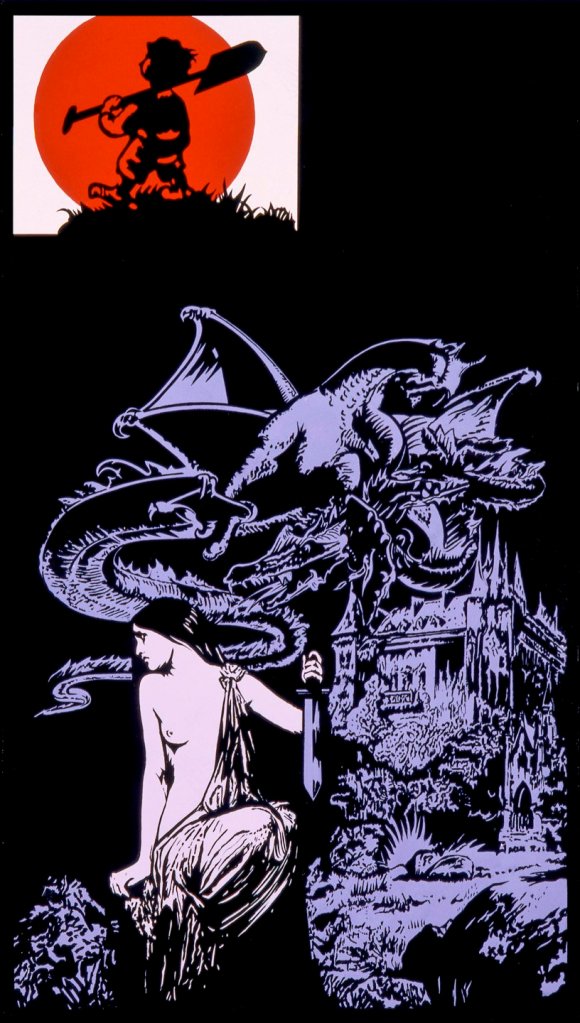





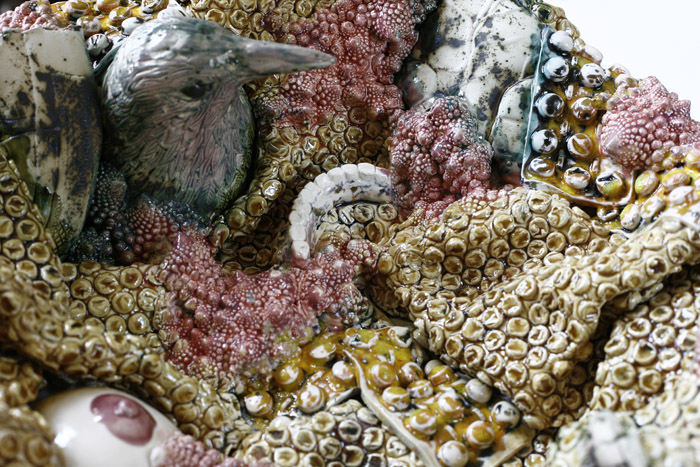
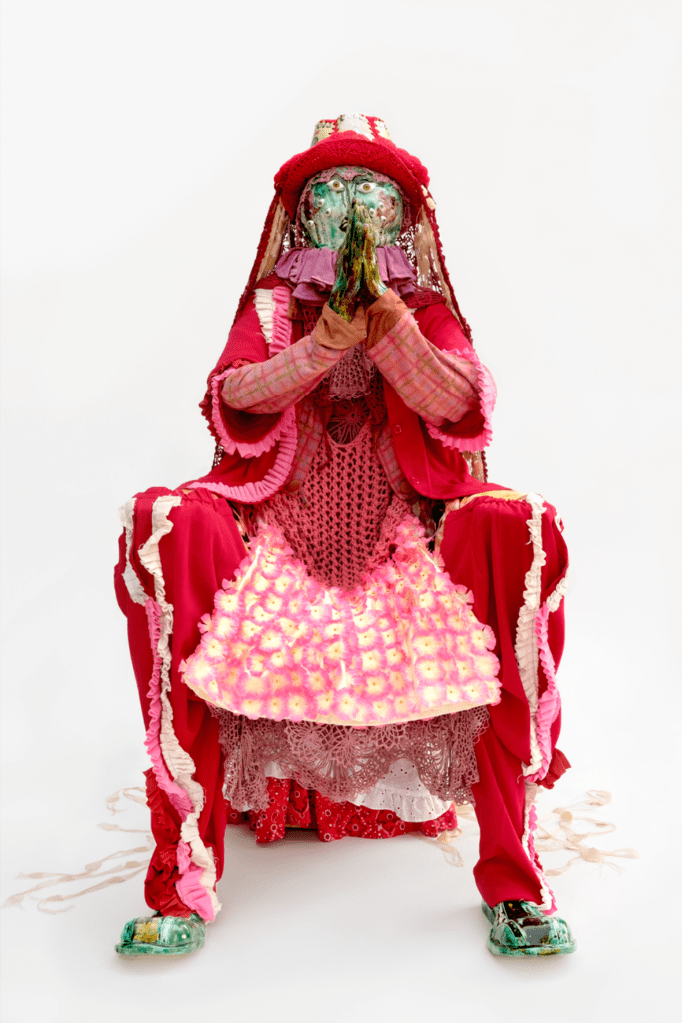
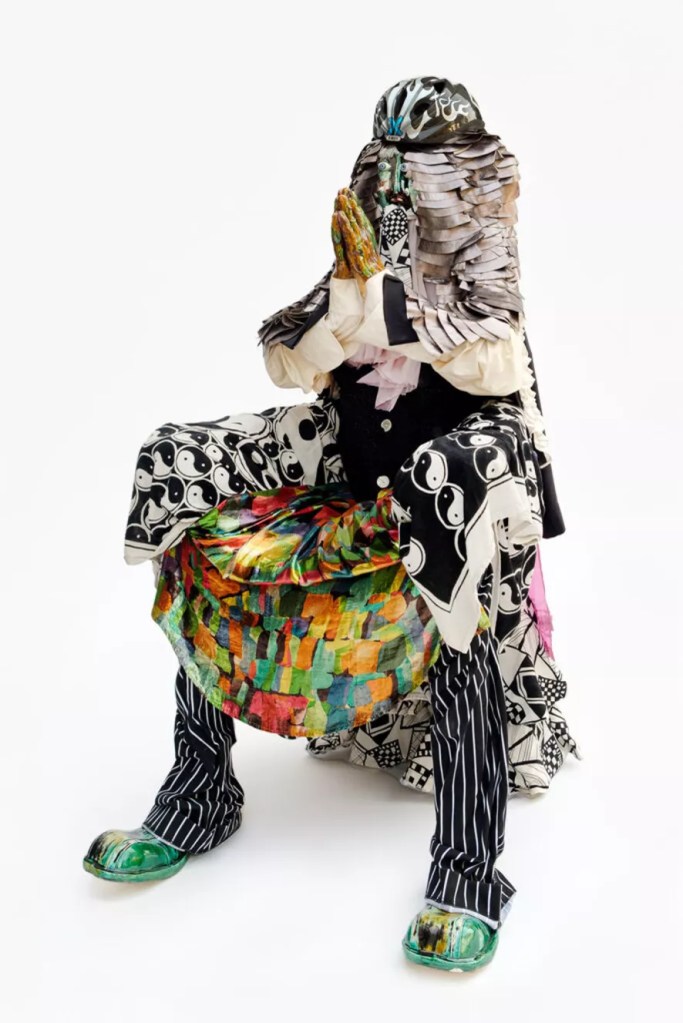


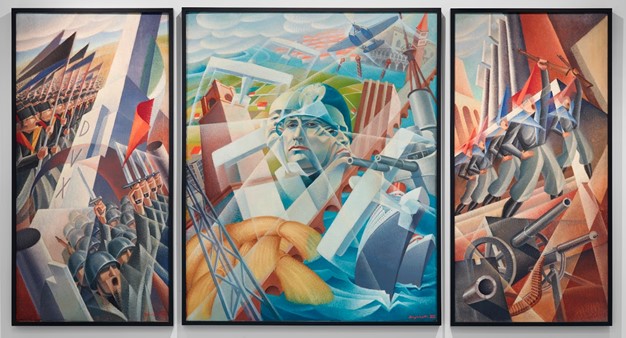
 differensmagazine.com