In the Spring of 2022, the artists Naomi Credé and the Rubber Glove Dove Collective consisting of Anna Caroline Kristensen and Astrid Haugesen presented their individual works at the Bergen-based project space NOGOODS. Both works opened up a critical reading of the historic construction of the female as a disembodied voice or “hyper presence” in relation to purity, cleaning, sweetness and the service industry.
Naomi Credé – Sickly Sweet (smile sweetly)
Sound piece with performative installation by NOGOODS.
Sickly Sweet, 2022, Naomi Credé. Photography by Mila Elisabeth Larvoll
This part of Naomi Credé’s practice and research evolves around disembodied female voices in architecture, used to control social movement, order, information and service (Alexa & Co). She works with real and fictional spaces, focusing on notions of dizziness, exhaustion and disorientation. So does the sound piece Sickly Sweet (smile sweetly), that was supported by a performative spatial installation by NOGOODS.
Upon entering the installation, a choir of soft voices creates an imaginary space of sweet tastes, textures, images, and smells. Every now and then, an eager female voice interrupts by offering her service.
“Hii how may I help you?”
Smiling.
“Have a nice day!”
The air is filled with sweet cravings and possible consumption.
Sickly Sweet, 2022, Naomi Credé. Photography by Mila Elisabeth Larvoll
The sound welcomes the audience into a space covered in pink light, with a table in the middle. Here, creamy puffs, fruits, sugary sweets, edible glitter and cream wait to be devoured. A shiny path leads the audience from the door to the table. The path made of sugary water is as sticky as the female voices and glues the audience to the floor. Squeezes of steps join the soundscape while forcing the visiting bodies to acknowledge how their presence leaves traces and activates the space. Two bodies are engaged in serving the audience, slowly heating and brewing syrupy liquid to cover the sweets on the table. The sound lingers and loops.
The disembodied female sounding voice underlines the Western social construction of the female as a sweet pleasurable object for capitalist consumption.
Servitude, trustability and an air of purity read into the female voice are highlighted to create the imaginary of a space of permission, care and safety.
Through Credés work, the performative- directive impact of ungraspable, sterile female sounding voices onto the moving body and its use becomes underlined. Its disembodied presence goes along with authoritarian anonymity read into the female tone.
A few weeks later, the space is taken over by two female-coded bodies corseted into gowns made of yellow rubber gloves. It is the performance “Clean” by the Rubber Glove Dove Collective formed by Anna Caroline Kristensen and Astrid Haugensen.
Already during the performance setup, passing people stopped, pulled out their phones, returned, filmed, and laughed. Quickly, the shopfront turned into a vitrine, exhibiting bodies in baroque dresses made of yellow rubber gloves. They cleaned the window.
Their faces: anonymous, whitened.
Their eyes: covered by 90s sunglasses.
Their lips: screamingly red.
Their presence: funny, irritating, visible.
The simple elements of this performance expressed abstractly the hidden violences imposed upon not only female bodies, but also socially marginalized cleaning service professionals. Instead of rendering a body invisible, the bright yellow gowns pushed both bodies into an unignorable hyperpresence, turning the performance into a beautiful political comment on the existing social dynamics around cleaning and female bodies.
As the performers were standing in the window, entangled in play and preparation, their bodies continuously shifted from private to public, as they were responding to the external gaze or the passing unexpecting audience. Pose here, a wave, a smile. The light, open and humorous air of these interactions almost hid the voyeristic gaze, a gaze that was captured and cemented by the audiences and the by-passers countless mobile devices. The usually invisibilized practice of women who clean was recognized and became hyper-present.
The performance combined a sound piece, a feminist reinterpretation of the Cinderella fairytale, a choreography of baroque dances and interactions reflecting on competition, support and comedy. The symbols were clear: cleaning, an invisibilized practice in public, and unpaid domestic labor of the often female body in private. Sterility, protection as well as sensations of disgust and discomfort were provoked by the gloves and their smell that lingered in the space. The baroque dresses spoke of social containment, restrictive politeness and a composed female presence. The choreography started slow and geometric, then became comic as the performers seemed to liberate themselves from their determined structure in favor of their humoristic interaction. All was anchored in a lavish 90’s vibe and a feminist deconstruction of the Cinderella fairytale.
Challenging purity, the service of cleaning and the social corset constructed around a female-coded body seemed like guiding elements of performance. Perfected, clean, untouchable, dissident through joy and laughter: the performances addressed historic patriarchal fictions.
In Naomi Credé’s work, the stickiness of sugary sweetness lured the audience into consumption, hereby subtly commenting on the capitalistic construction of pleasure relying on the female (voice) for service or care. The performance of the Robber Glove Dove Collective placed the body into the center hereby referencing to the immaterial forces of social restrictions based on historic patriarchal fictions related to the female body, service and purity.
Sickly Sweet, 2022, Naomi Credé. Photography by Mila Elisabeth Larvoll
The performances were part of the spring program at the project space NOGOODS.
NOGOODS is a moving project space for slippery ideas, repeating failures, collapsing structures, fluid narratives, and cross-disciplinary moods.
Based in Bergen, NOGOODS is a nomadic project space for performative discursive practice, spatial exploration, non-linear research, and collaboration. Our focus lies on the impact of architecture and performativity on social patterns within a queer theoretical framework. NOGOODS is interested in creative and social practices that question power dynamics through architectural interventions, performance, assemblage, and conversation.
NOGOODS is located within the social dynamics of Norway. By collaborating with international and local artists, NOGOODS aims to develop a practice that explores ongoing contemporary discourses from different perspectives. We want to get comfortable in the thresholds of imposed discomfort or insecurity in order to find words, languages and expressions that are still being formulated.
Open since April 2022, NOGOODS is run by Danja Burchard, who is dedicated to art, performance, creative production and facilitation, and Maike Statz, who works with art, writing, research and interior architecture.
On the plane back from a conference titled “Anthropocene: Arts of Living on a Damaged Planet”—a generative conference at my alma mater organized by Anna Tsing, a conference that made me remember why I love going to conferences—I washed my hands in the tiny, smelly, normal airplane bathroom. Then I took a picture of the soap, which was fancy soap for an airplane bathroom: philosophy brand, part of its “pure grace” line. It narrated, all lowercase (lowercase font is to “remind us to live life with curiosity, wisdom, and abundant joy,” as their website notes): “philosophy: with clean hands we find our grace. we realize the slate can be as clean as we allow it to be.” On the plane from San Francisco to Ottawa, using something like 5.8 tons of greenhouse gasses for my personal trip, which I had not carbon offset, although the airline offered this option to me when I was buying my ticket, I had been feeling bad about using a plastic cup to have some ginger ale—but I had had some ginger ale because airline travel is irritating, flying itself is so evil that what weight does a single plastic cup hold, and I wanted some sugar and bubbles. I had been reflecting about what it meant to travel across the continent to a state experiencing a profound drought, using fossil fuels in order to talk with other scholars, many of whom had come from further away—Europe and Australia in particular—about what it means to inaugurate a term to name the time we are living in that identifies humans as responsible for harmful planetary transformation partially through our use of fossil fuels. I had doubts about what “clean hands” could mean in this context, and also how long they’d last after I finished rinsing the pure grace soap from my hands and touched literally anything.
There have been many conferences now about the Anthropocene—what it is, what it means to name it—and many more people writing and thinking about it. Mostly the people I’ve heard talking about the Anthropocene (or Capitalocene) are aiming to mobilize a transformation in our planetary political economy. Mostly, the markers used to measure this transformation measure the effects of human behavior on the world we live in, and often these effects are externalities to economic calculations, carried as body burdens by living creatures or experienced as the entangled effects that alter or kill beings and ecosystems. Coral reefs change and die in relation to acidifying oceans, soil carries loads of lead or heavy metals from mining or automobile exhaust, new forms of rock are made out of plastic, plastiglomerates (Corcoran, Moore, and Jazvac 2014), or we acquire the radioisotope signatures of past nuclear bomb use, and we might mark these as dividing lines marking the beginning of the age we’re in. Simon Lewis and Mark Maslin suggest colonialism as an origin point, offering 1610 as a dividing line between the Holocene (the recent era that we may be leaving) and the Anthropocene. As Dana Luciano summarizes, that date was chosen because it was the lowest point in a decades-long decrease in atmospheric carbon dioxide, measurable by traces found in Artic ice cores. The change in the atmosphere, Lewis and Maslin deduced, was caused by the death of over 50 million indigenous residents of the Americas in the first century after European contact, the result of “exposure to diseases carried by Europeans, plus war, enslavement and famine.” . . . Lewis and Maslin’s proposal is compelling because it is, as far as I know, the first proposal for an Anthropocene “golden spike” to recognize genocide as part of the cause of epochal division. (Luciano 2015)
However we mark its start, thinking about the Anthropocene makes it difficult to feel that pure grace is available through hand soap used in carbon-intensive travel across borders laid down on genocidally colonized land.
I don’t want to harp too much on philosophy—the “well being beauty brand”—but it is a little as though the person writing their marketing copy is writing directly for me in my concern about the evocations of purity and cleanliness, so let’s look at one other product: purity made simple: one-step facial cleanser. Here is the company’s copy:
philosophy: purity is natural. we come into this world with all the right instincts. we are innocent and, therefore, perceive things as they should be, rather than how they are. our conscience is clear, our hands clean and the world at large is truly beautiful. it is at this time we feel most blessed. to begin feeling young again, we must begin with the most basic step of all, the daily ritual of cleansing. (“Purity Made Simple | One-Step Facial Cleanser | Philosophy Cleansers” 2015)
I turn to this product in part because the hand soap from my plane trip isn’t listed on the philosophy website, and I want to talk about ingredients. But also this copy constellates brilliantly an ethos I believe we could—if it were measurable in geologic time—use to mark the beginning of the Anthropocene: roughly, the moment that humans worry that we have lost a natural state of purity or decide that purity is something we ought to pursue and defend. This ethos is the idea that we can access or recover a time and state before or without pollution, without impurity, before the fall from innocence, when the world at large is truly beautiful. This is a time of youth, blessing, but also, interestingly, a natural state that precludes or resists education—we perceive things as they should be, rather than how they are. A piece of this ethos is perhaps also the sense that we can buy a product that brings this natural state of purity back, though particularly in certain left scenes, ideological purity seems to behave as a one-step facial cleanser.
To dig into this, let’s look at the ingredients in the “multitasking” (it cleanses, tones, and moisturizes!) face wash, purity made simple:
Most of these ingredients are not actually so bad—other soaps in the philosophy line, for example, use sodium laureth sulfate, here replaced by sodium trideceth sulfate. Both are surfactants, helping to make soap foamy, and emulsifying oils. Sodium laureth sulfate has gotten a bad rap, partly because even industry classifies it as a harsh soap, and partially because it is frequently contaminated by 1,4-dioxane, which does seem to be a carcinogen; sodium trideceth sulfate doesn’t raise any particular flags in the usual databases of cosmetics toxicity. More worrying, perhaps, are the methyl- and propylparabens, both of which have studies indicating associated endocrine disruption and possible reproductive-system effects. Imidazolidinyl urea, often derived from urine, is a formaldehyde-releaser, which works as an antimicrobial agent by forming formaldehyde in our long shelf-life cosmetics without having to list formaldehyde on the ingredients list. Most of us are familiar with the smell of formaldehyde if we dissected frogs in high school biology classes. It is classified as a “known” or “potential human carcinogen.” I’m focusing on the ingredients with chemical-ish names, but of course there is no particular reason to assume that the “natural” oils are so wonderful— the entire world is chemical, after all. If philosophy, as a brand, can teach us anything, it is that in this world purity is never made simple. Aspirations to purity are, perhaps, usually exactly what this cleansing-toning-moisturizing face wash offers: misleading ad copy on one level and secret carcinogens as a cell boundary-crossing material reality on another.
The delineation of theoretical purity, purity of classification, is always imbricated with the forever-failing attempt to delineate material purity—of race, ability, sexuality, or, increasingly, illness. The imbrication of failure with attempt is a feature of classification itself. More significantly, the world always exceeds our conception of it. Despite this, we can still pursue changed worlds. Living well might feel impossible, and certainly living purely is impossible. The slate has never been clean, and we can’t wipe off the surface to start fresh—there’s no “fresh” to start. Endocrine-disrupting soap doesn’t offer a purity made simple because there isn’t one. All there is, while things perpetually fall apart, is the possibility of acting from where we are. Being against purity means that there is no primordial state we might wish to get back to, no Eden we have desecrated, no pretoxic body we might uncover through enough chia seeds and kombucha. There is not a preracial state we could access, erasing histories of slavery, forced labor on railroads, colonialism, genocide, and their concomitant responsibilities and requirements.
There is no food we can eat, clothing we can buy, or energy we can use without deepening our ties to complex webs of suffering. So, what happens if we start from there?
I am interested in the usefulness of thinking about complicity and compromise as a starting point for action. Often there is an implicit or explicit idea that in order to live authentically or ethically we ought to avoid potentially reprehensible results in our actions. Since it is not possible to avoid complicity, we do better to start from an assumption that everyone is implicated in situations we (at least in some way) repudiate. We are compromised and we have made compromises, and this will continue to be the way we craft the worlds to come, whatever they might turn out to be. So, I interpellate myself into Donna Haraway’s modest yet difficult framing of situatedness as a place to start. Speaking about knowledge, she writes:
So, I think my problem and “our” problem is how to have simultaneously an account of radical historical contingency for all knowledge claims and knowing subjects, a critical practice for recognizing our own “semiotic technologies” for making meanings, and a no-nonsense commitment to faithful accounts of a “real” world, one that can be partially shared and friendly to earth-wide projects of finite freedom, adequate material abundance, modest meaning in suffering, and limited happiness. (Haraway 1991, 187)
Thinking about politics, my problem in this piece, and “our” problem in this world, is how to have simultaneously an account of radical historical contingency of the conditions under which we take ethical and political action, critical practices for accounting for our own situatedness in histories that have shaped the conditions of possibility for our actions, and a no-nonsense commitment to the kind of real, possible world Haraway describes. That world is partially shared, offers finite freedom, adequate abundance, modest meaning, and limited happiness. Partial, finite, adequate, modest, limited— and yet worth working on, with, and for.
Purity, and What the World Deserves
The not-simple “purity made simple” soap is one knot in a tapestry of products and ways of talking about the world. A hot-yoga studio franchise in my town, “Pure Yoga,” enjoins people to become “pure yogis,” offering a dizzying array of styles of yoga unmoored from any yoga tradition in particular; the owners of the studios have opened a vegetarian restaurant that served killer gluten-free, vegan onion rings. Hot yoga, they say, “not only helps you to detox flushing toxins out of the skin through sweat, but heats up the muscles allowing you to approach the postures from a safe place” (“Discover Pure Yoga Ottawa” 2015). The shelves of ordinary food stores—let alone stores that self-identify as health-food stores—offer various products to de- toxify our bodies. Cleanses, juice fasts, detox diets, ionic foot baths that draw poisons out through our feet, foot detox patches that you apply and that work overnight using herbs that activate “far infrared energy,” bottles that offer pure spring water (with or without fluoride), and Himalayan pink salt-rock lamps—all offer ways to manage something, something experienced by consumers as a toxin that we can be free of. There is a clear and growing concern about material toxins accumulating in human bodies even as there is little clarity about what a toxin actually is, if ionic baths actually cleanse anything, or how we practically might personally manage the complex systems that affect the air we breathe, the water we drink, and the substances we touch.
Purity politics arise not only in our response to potential physical contamination; it is also an issue for our ethical and political situation in the world. How might our response to physical and political impurity be connected? Consider. Many of us are settlers living on unceded native land, stolen through genocidal colonial practices. We feed domestic animals more food than starving people lack, and spend money on the medical needs of pets while eating factory farmed meat and spraying our lawn with pesticides that produce cancer in domestic animals. We pay for cosmetic surgeries in a time when many people can’t access basic health care. We recycle but take plane trips to Alaska. We worry about global warming and turn on the air conditioning. We think slavery is wrong, but eat chocolate and fish produced in contexts that meet every definition of nonchattel slavery. We believe that people deserve good working conditions but buy clothing produced in sweatshops and maquiladoras because we couldn’t afford equitably sourced clothing even if we could find it. We cannot look directly at the past because we cannot imagine what it would mean to live responsibly toward it. We yearn for different futures, but we can’t imagine how to get there from here. We’re hypocrites, maybe, but that derogation doesn’t encompass the nature of the problem that complexity poses for us. The “we” in each of these cases shifts, and complicity carries differential weight with our social position—people benefiting from globalized inequality are for the most part the “we” in this paragraph. People are not equally responsible or capable, and are not equally called to respond. But however the bounds of the “we” are drawn, we are not, ever, pure. We’re complicit, implicated, tied in to things we abjure. This is a kind of impurity implied in the sense of “compromised living” that involves making concessions.
In addition to making ethical compromises, we are also, as a recent self-help book about responding to toxins in our bodily environments puts it, “born pre-polluted” (Lourie and Smith 2013, 3). Our bodily boundaries are penetrated and traversed by viruses, chemicals, microbes. This way of being compromised names the sense in which we are liable to danger, vulnerable, potentially or actually damaged or sickened. Under contemporary regimes dictating individualist responses to pollution, we are made responsible for our own bodily impurity; we are called on to practice forms of defense against our own vulnerability. Charting the space between complicity and pollution, between righteousness and compromise, is difficult. If hypocrisy were the problem, really it wouldn’t be much of a problem; at least on the surface, it is something we could give up. In contrast, being co-constituted with the world, ontologically inseparable, just seems to be our condition. And yet, contemporary imperatives to detox, to eat clean, to defend against pollution, or to avoid inflammation-causing foods imply the possibility that we could be pure in the relevant sense. I juggle a knee-jerk reaction to such personalized purity pursuits (individualizing, “not in my backyard”/NIMBY, capitalist, accepting of injustice in the distributions of harm) with the recognition that, indeed, there are substances in the world that none of us should, if we want to live, be co-constituted in relation to. Environmental racism is real, workers’ bodies are wrongly incorporated as the detritus of capitalism, and militarism shapes the bodies and minds of everyone involved in war in the mold of trauma.
The “moves” involved in the not-simple “purity made simple” face wash, in NIMBY politics, in avoiding BPA, in eating organic (or vegan or paleo or sugar-free), or in doing monthly detoxifying “cleanses” may seem very different from each other. There are obvious real differences involved, but they are threaded together. Let’s call the line that links them “purity politics,” or “purism.” What’s needed, instead of a pretense to purity that is impossible in the actually existing world, is something else. We need to shape better practices of responsibility and memory for our placement in relation to the past, our implication in the present, and our potential creation of different futures.
I should say—since I try not to use the unsupported yet urgent imperatives so prevalent on the left (“we need,” “we must”), instead shifting from categorical to hypothetical imperatives—if we want a world with less suffering and more flourishing, it would be useful to perceive complexity and complicity as the constitutive situation of our lives, rather than as things we should avoid. The action that comes out of the rather undefined idea of wanting a world with less suffering is, perhaps needless to say, a moving target, and one that raises more questions than it answers. Less suffering for whom? How is suffering measured? Who has the capacity to perceive entanglement, and who has the capacity to respond? To say that we live in compromised times is to say that although most people aim to not cause suffering, destruction, and death, simply by living, buying things, throwing things away, we implicate ourselves in terrible effects on ecosystems and beings both near and far away from us. We are inescapably entwined and entangled with others, even when we cannot track or directly perceive this entanglement. It is hard for us to examine our connection with unbearable pasts with which we might reckon better, our implication in impossibly complex presents through which we might craft different modes of response, and our aspirations for different futures toward which we might shape different worlds-yet-to-come.
In this book, I argue against purism not because I want a devastated world, the Mordor of industrial capitalism emerging as from a closely aligned alternate universe through our floating islands of plastic gradually breaking down into microbeads consumed by the scant marine life left alive after generations of overfishing, bottom scraping, and coral reef–killing ocean acidification; our human-caused, place-devastating elevated sea levels; our earth-shaking, water poisoning fracking; our toxic lakes made of the externalities of rare-earth mineral production for so-called advanced electronics; our soul-and-life destroying prisons; our oil spills; our children playing with bits of dirty bombs; our white phosphorus; our generations of trauma held in the body; our cancers; and I could go on. I argue against purism because it is one bad but common approach to devastation in all its forms. It is a common approach for anyone who attempts to meet and control a complex situation that is fundamentally outside our control. It is a bad approach because it shuts down precisely the field of possibility that might allow us to take better collective action against the destruction of the world in all its strange, delightful, impure frolic. Purism is a de-collectivizing, de-mobilizing, paradoxical politics of despair. This world deserves better.
Living after Disturbance, Being Already Polluted
All of us on this earth are part of what Anna Tsing calls a disturbance regime—we’re all living in blasted landscapes (Tsing 2014, 92). As she argues, referencing mushroom-growing in the shadow of the 2011 nuclear meltdown at Fukushima:
We need to be able to differentiate between forms of disturbance that are inimical to all life and those that offer multispecies opportunities. One place to start is by recognizing that not all human-shaped landscapes are as deadly as those spread by the Fukushima power plant. It is in the patchy difference that we can look for hope. Blasted landscapes are what we have, and we need to explore their life-promoting patches” (108).
Living in a disturbance regime means that we are all living after events that have changed, and frequently harmed, ecosystems and biospheres. Change is not the same thing as harm, and harm is not evenly distributed—famously, many forms of plant life only grow in the wake of forest fires, and the example Tsing engages is that matsutake mushrooms require disturbed forest to flourish—but mushrooms also happily take up radiation, and that is part of their response to the nuclear meltdown in Fukushima. They are signals for “exploring indeterminacy and the conditions of precarity, that is, life without the promise of stability” (Tsing 2015, 2). The question becomes, for Tsing and for me, how to delineate forms of disturbance in relation to what forms of life they sustain or proliferate. We can look for normative guidance for life-promotion to the concept of flourishing—situated, historically placed, contingent. How we pursue flourishing will always involve an in-process, syncretic, speculative fabulation, an improvisational engagement with emergence. The blasted landscapes of disturbance regimes are part of our everyday experience, and aiming for a more open field of the patchy differences where we might find hope is also going to have to be an everyday practice.
Responses to herbicides and pesticides are very much like responses to radiation; though they are disparate discourses, they articulate a kind of purism. In these contexts the desire for purity is understandable and even politically activating. These examples show that being against purity does not mean being for pollution, and they illuminate key reasons we might sympathize with in the urge to find purity. The question is going to be how we conceive of and practice our relation to a world and a self suffused with otherness. Co-constitution with parts of the world we might want to protect ourselves from—parts of the world like radiation or herbicides or parabens—is difficult to disentangle conceptually or practically from co-constitution with the microbial others that populate our gut and allow us to digest food or the viral others whose descendants allow human placentas to function. We are in and of the world, contaminated and affected. As Eula Biss argues:
If we do not yet know exactly what the presence of a vast range of chemicals in umbilical cord blood and breast milk might mean for the future of our children’s health, we do at least know that we are no cleaner, even at birth, than our environment at large. We are all already polluted. We have more microorganisms in our guts than we have cells in our bodies—we are crawling with bacteria and we are full of chemicals. We are, in other words, continuous with everything here on earth. Including, and especially, each other. (Biss 2014, 75–76)
Being continuous with everything on earth is a starting point for critical inquiry, rather than an explanatory end. That we are co-constituted and thus polluted and impure hails us to make continually contingent and unsettled decisions about how to be in relation to the world, with no predetermined answer.
Biss’s generative book On Immunity: An Inoculation is on one level about vaccination, starting from her thinking about vaccinating her own child, which always involves a decision about how to be in relation to the viral world and the other bodies who live here with us. On another level, it is a book about the impossibility of purity, and about how to reckon with realizing our entanglement and vulnerability in the world. Biss’s book came out in a moment of increased attention to questions around vaccination and contagion in 2014 sparked by the rapid spread of Ebola and by a spike in measles cases that started with purposefully unvaccinated children at Disneyland. There is, as yet, no vaccine that protects against Ebola, and so responses to its resurgence centered not around who ought to be vaccinated but instead on the questions of whether (and how) to close borders to travelers who had been in infected areas (often framed simply as “Africa”), and what steps people could take to protect themselves individually against infection. Measles, by contrast, is an illness against which we have a standard and effective vaccine. Bundled with vaccines for mumps and rubella, it is one of the vaccines parents in North America first confront when they have young children. Biss begins by reflecting on her own process of deciding which vaccines to give her child, but she turns quickly toward a complex discussion of toxicity and purity.
It is easy to analyze vaccination discourse in relation to purity. Consider a report from CNN on a measles outbreak in Arizona, focusing on a pediatrician (Dr. Tim Sacks) who was appealing for people to vaccinate their children in part in consideration of his own child, ill with leukemia and thus with an immune system vulnerable to illnesses like measles and who could not be vaccinated. CNN focused on a doctor, Jack Wolfson, who argues against vaccination. In the interview, Wolfson affirms his commitment to not vaccinate his children, even if that refusal spreads diseases that make other children very, perhaps fatally, ill. He says: “I’m not going to sacrifice the well-being of my child. My child is pure… It’s an unfortunate thing that people die, but people die. And I’m not going to put my child at risk to save another child” (CNN Report on Measles in Arizona 2015). The belief that vaccinations introduce toxins that would make a child no longer pure is here closely allied with a species of defensive individualism, the sense in which the self is imagined as a fortress, separable from the world and requiring defense against the world.
Though she is not talking directly about this case, Biss articulates the two sides of thinking about impurity that Wolfson invokes here. She writes:
Fear of contamination rests on the belief, widespread in our culture as in others, that something can impart its essence to us on contact. We are forever polluted, as we see it, by contact with a pollutant. And the pollutants we have come to fear most are the products of our own hands. Though toxicologists tend to disagree with this, many people regard natural chemicals as inherently less harmful than man-made chemicals. (Biss 2014, 39)
Toxicity is often framed as dose-dependent; the classic formulation is that the “dose makes the poison.” In purity discourse, pollutants are rendered as a different kind of toxicity—mere contact makes the poison. As Biss notes, the conception of the violable but delimited individual body that undergirds this conception of a being who can be pure and protected from pollution is long-standing. She writes:
Our contemporary belief that we inhabit only one body contained entirely within the boundaries of our skin emerged from Enlightenment thinking, which celebrated the individual in both mind and body. But what defined an individual remained somewhat elusive. By the end of the Age of Enlightenment, the body of a slave was allowed to represent only three-fifths of a person. Some people remained parts of a whole while others enjoyed the novel illusion of being whole unto themselves. (125)
In this way as in others, possessive individualism is densely racialized; the core idea that our selves are owned by us functions as a categorical move to lay out a map of who can own others.
I follow Biss in understanding the desire for purity as a wrong-headed response to the understanding that toxicity might just be our condition. This wrong-headedness is expressed in Wolfson’s fiction that his child is pure, and his ready acceptance of the possibility that his faithfulness to that imagined purity might cause children to die. This move toward purity, as Biss frames it, appears in many other contexts:
Purity, especially bodily purity, is the seemingly innocent concept behind a number of the most sinister social actions of the past century. A passion for bodily purity drove the eugenics movement that led to the sterilization of women who were blind, black, or poor. Concerns for bodily purity were behind miscegenation laws that persisted more than a century after the abolition of slavery, and behind sodomy laws that were only recently declared unconstitutional. Quite a bit of human solidarity has been sacrificed in pursuit of preserving some kind of imagined purity. (Biss 2014, 75–76)
I am concerned about the sacrifice of human solidarity in pursuit of purity, but I am concerned also with what we might think of as political solidarity with ecosystems, critters, bugs, microbes, atoms. Elsewhere I have forwarded a conception of aspirational solidarity—a “solidarity based on collective conceptions of worlds that do not yet exist”—as a norm that might guide action toward humans but also toward worlds in which all sorts of beings flourish (Shotwell 2013, 105).
“We” Has Never Been Pure
Purity practices—in ideology, in theory, and in practice—work to delineate an inside and an outside; they are practices of defining a “we.” Mary Douglas’s 1966 book Purity and Danger: An Analysis of Concepts of Pollution and Taboo remains an important touchstone for thinking about purity. Fifty years on from its first publication, the book does throw up frictions for the anti-oppression critical theorist; Douglas refers consistently to “primitive cultures,” by which she means mostly Indigenous non-Western cultures, and there are certain hiccups in her discussion of gender and sexuality. The book is usable in part because Douglas applies an ethnographic eye also to purity practices of the Christian Bible and critiques contemporary texts that attempt to use “primitive cultures to buttress psychological insights” (Douglas, 115). Douglas’s investigation is at least in part structured around the idea that observing practices of purity can help us understand the symbolic work of social relations that stitch together society. She writes, “I believe that ideas about separating, purifying, demarcating and punishing transgressions have as their main function to impose system on an inherently untidy experience” (4). This imposition, in her analysis, is contingent and shifting—she does not think that cultural practices of purity indicate a timeless or iron-clad set of classifications. Rather, on her account, “rituals of purity and impurity create unity in experience… By their means, symbolic patterns are worked out and publically displayed. Within these patterns, disparate elements are related and disparate experience is given meaning” (2–3). She frames managing “dirt” as a key move in creating these unities:
As we know it, dirt is essentially disorder. There is no such thing as absolute dirt: it exists in the eye of the beholder. If we shun dirt, it is not because of craven fear, still less dread or holy terror. Nor do our ideas about disease account for the range of our behavior in cleaning or avoiding dirt. Dirt offends against order. Eliminating it is not a negative movement, but a positive effort to organize the environment. (2)
Concepts and practices of purity and impurity, in relation to dirt as well as other things understood as dirty, tell us something about how people understand the world they live in, and thus how they can imagine the world becoming. In other words, purity practices are also productive normative formulations—they make a claim that a certain way of being is aspired to, good, or to be pursued. Concepts matter for what we do and how we are in the world. As Donna Haraway puts it, “‘Ideas’ are themselves technologies for pursuing inquiries. It’s not just that ideas are embedded in practices; they are technical practices of situated kinds” (Haraway 2008, 282). While current practices may well be connected to the forms of primarily religious purity practice Douglas discusses, I am more concerned with the practices that characterize and structure key modes of life today. Both sorts of practices, though, deploy a particular idea-as-technology of parsing, cleansing, and delineating.
We can trace these practices back to a certain formulation of modernity, and from there to the practices of racialization that emerged with and in some ways coproduced the age of colonialism as in part a project of monitoring and managing the newly discovered realm of microbes and their effects. John Law, Geir Afdal, Kristin Asdal, Wen-yuan Lin, Ingunn Moser, and Vicky Singleton offer a productive manifesto for what they call “Modes of Syncretism,” a way of being against purity (and, indeed, a way of being against the purity implied in being against purity!). They read Bruno Latour’s claim that “we have never been modern” as in part a set of claims about the production of purity practices. They say: “[Latour’s] argument is that modernity presents itself as gleaming, consistent and coherent; as something that is pure. Not fuzzy” (Law et al. 2014, 172). Law et al. argue that for Latour purity is a quintessentially “modern apparition”; the impossibility of purity is one reason that we have never been modern. So, “modernity presents itself as pure” even as “it isn’t pure at all”—rather, “modernity is a both-and” (173). I follow one strand of the STS (Science and Technology Studies) genealogy which they characterize as cultivating “a bias to impurity or fuzziness; or if not a bias, then at least a sensitivity to that which doesn’t cohere; and, as part of this, [STS] has a high degree of tolerance of mess” (175). Syncretism names a way to understand the way that different ways of being, traditions, priori- ties, and practices come to get on together—syncretisms are, for them, necessary to thinking about all practices in the real world, because practices always manage constitutive noncoherence—the fact that the world is made up of things that seem to hang together but that require work to hold in place. The possibility that attention to the various modes of syncretism by which noncoherence is lived “will be useful in a world in which it appears that the will to purity—and the conditions of possibility for purity—are in decline” (177). The stakes of purity discourses, and the theoretical conviction that things are more coherent than they actually are, remain significant, even so.
It is commonplace now to understand the idea of natural purity as a racialized concept, particularly if we trace debates about the nature of human races back to questions that animated and justified the Atlantic slave trade— questions of monogenesis or polygenesis. These questions are of whether humans all descend from a single gene line (in which case some of us are less pure expressions of the line than others) or from many origins (in which case some of us may be made by nature for enslavement). As many philosophers have articulated, Kant’s lectures on anthropology and race laid out one founding expression of racialization as centrally a project of purity, and to the extent that they forward a conception of pure reason as accessible only to the white race, they also delimit a racialized understanding of not only personhood but also rationality, descent, and the conditions for counting as human (Bernasconi 2000; Mills 1998; Eze 1997). But the formulation of racialization can be read, following Denise Ferreira Da Silva’s generative work, in part through the tools (the “knowledge arsenal”) used to measure the racial, which, as she writes, “institutes the global as an ontoepistemological context—a productive and violent gesture necessary to sustain the post-Enlightenment version of the Subject as the sole determined thing” (Silva 2007, xiii). As Alexander Weheliye argues, in line with Da Silva’s point, “There can be no absolute biological substance, because in the history of modernity this field always already appears in the form of racializing assemblages” (Weheliye 2014, 65). Markers of racial purity are in turn entangled and co-constituted with biopolitical practices aiming to reduce or eliminate disability, poverty, and queerness at the population level.
To be against purity is, again, not to be for pollution, harm, sickness, or premature death. It is to be against the rhetorical or conceptual attempt to delineate and delimit the world into something separable, disentangled, and homogenous. With and following María Lugones, I am “firmly planted against the logic of boundedness.” I follow her argument “for intercommunalism from the midst of impure subjects, negotiating life transgressing the categorical understandings of a logic of binaries that produces hard-edged, ossified, exclusive groups” (Lugones 2003, 35). Lugones critiques a metaphysics of purity, understood as separability, fragmentation, and standing outside culture and situatedness. The Man of purity, as a figure, “shuns impurity, ambiguity, multiplicity as they threaten his own fiction. The enormity of the threat keeps him from understanding it. So, the lover of purity remains ignorant of his own impurity, and thus the threat of all impurity remains significantly uncontaminated” (132). The metaphysics of purity is necessarily a fragile fiction, a conceit under constant but disavowed threat— to affirm a commitment to purity is in one move to glance at the entanglement and co-constitution, the impurity, of everything and to pretend that things are separate and unconnected. Kim Tallbear’s important critique of the politics of DNA testing as a guarantor of Native American identity begins from the claim that “of course, mixing is predicated on the notion of purity. The historical constitution of continental spaces and concomitant grouping of humans into ‘races’ is the macro frame of reference for the human-genome-diversity researcher” (TallBear 2013, 5). Speaking of queer disability food politics but in a mode that we could take up more broadly, Kim Q. Hall argues instead for a “metaphysics of compost” since “there are no pure bodies, no bodies with impermeable borders. Because reality is not composed of fixed, mutually exclusive, or pure bodies, a metaphysics of compost is more conducive to food politics that remains accountable to real bodies and real foods/relationships” (Hall 2014, 179). A great deal of harm is done based on a metaphysics of purity; since it is false and because it is harmful, we do better to pursue metaphysics that do not aim to preserve fictions of integrity.
Being against purity in this way—having a “no”—involves also the Zapatismo invocation of the possibility of “many yesses.” In this sense, I am allied with John Holloway’s conception of “the scream.” As he says, this is our starting point, this “rejection of a world that we feel to be wrong, negation of a world we feel to be negative” (Holloway 2010, 2). For Holloway, the scream “implies a tension between that which exists and that which might conceivably exist, between the indicative (that which is) and the subjunctive (that which might be). We live in an unjust society and we wish it were not so: the two parts of the sentence are inseparable and exist in constant tension with each other” (6–7). There is a forever unsettled collectivity involved in the scream (who is the “we”?) and an unpredicted outcome to wishing about the world that it were not so. To invoke the foundational “no” of being against purity means that when we talk about impurity, implication, and compromise we are also foregrounding the fact that we are not all equally implicated in and responsible for the reprehensible state of the world. But wherever we stand in relation to the world, we can scream “no!” and open the space for many yesses. And further, to say that we live in an unjust world is to hold a clear recognition that there are people who gain immense power and profit from this situation—and in real ways the people who benefit from the lie of purism are the ones who reiterate it.
Bibliography:
Bernasconi, Robert. 2000. The Idea of Race. Indianapolis: Hackett.
Biss, Eula. 2014. On Immunity: An Inoculation. Minneapolis: Graywolf Press.
Eze, Emmanuel Chukwudi, ed. 1997. Race and the Enlightenment: A Reader. Cambridge, Mass.: Blackwell.
Mills, Charles W. 1998. Blackness Visible: Essays on Philosophy and Race. Ithaca: Cornell University Press.
Corcoran, Patricia L., Charles J. Moore, and Kelly Jazvac. 2014. “An Anthropogenic Marker Horizon in the Future Rock Record.” GSA Today, June 4– 8. doi:10.1130/GSAT-G198A.1.
Douglas, Mary. 1966. Purity and Danger: An Analysis of the Concepts of Pollution and Taboo. London: Routledge & Kegan Paul.
Hall, Kim Q. 2014. “Toward a Queer Crip Feminist Politics of Food.” philoSOPHIA 4, no. 2:177–96.
Haraway, Donna J., 2008. When Species Meet. Minneapolis: University of Minnesota Press.
Holloway, John. 2010. Change the World without Taking Power. London: Pluto Press.
Law, John, Geir Afdal, Kristin Asdal, Wen-yuan Lin, Ingunn Moser, and Vicky Singleton. 2014. “Modes of Syncretism: Notes on Noncoherence.” Common Knowledge 20, no. 1:172– 92. doi:10.1215/0961754X- 2374817.
Silva, Denise Ferreira da. 2007. Toward a Global Idea of Race. Minneapolis: University of Minnesota Press.
TallBear, Kimberly. 2013. Native American DNA: Tribal Belonging and the False Promise of Genetic Science. Minneapolis: University of Minnesota Press.
Tsing, Anna Lowenhaupt., 2014. “Blasted Landscapes (and the Gentle Arts of Mushroom Picking).” In The Multispecies Salon. Edited by Eben Kirksey. Durham: Duke University Press.
Tsing, Anna Lowenhaupt., 2015. The Mushroom at the End of the World: On the Possibility of Life in Capitalist Ruins. Princeton: Princeton University Press.
Weheliye, Alexander G. 2014. Habeas Viscus: Racializing Assemblages, Biopolitics, and Black Feminist Theories of the Human. Durham: Duke University Press.
What Was Seen, Could Be Seen, 2018-2019, Lisa Torell
Föreställningen om Sverige som ett land där rasismen aldrig slagit rot har blivit svår att upprätthålla. Istället för att förneka rasismens del i den svenska moderniteten vill det samtida Sverige göra upp med sitt förflutna, rentvå sig från historien – något som flera förslag om att byta namn på gator och salar vid Karolinska Institutet nyligen vittnat om: rasforskaren Gustaf Retzius, tillika kvinnorättsförespråkare och god demokrat, är ett namn som tvättas bort från gator och torg. Begäret efter renhet, som många under Retzius tid var så upptagna av, har med andra ord inte avtagit i samtiden – men innehållet, själva objektet för ett sådant begär, tycks ha genomgått en radikal förändring: till skillnad från gångna tider gäller problemet idag inte bara längre en smuts som antas komma utifrån, från de hotfulla djurliknande varelserna (raserna) som bara väntar på att kasta sig över oss, eller långsamt infiltrera oss, ta “våra kvinnor” och befläcka vår avkomma, späda ut vårt rena blod tills det degenererar och blir oigenkännligt, oidentifierbart. En sådan ångest lever förvisso kvar (i litterär form hos till exempel Houellebecq), men den har fått sällskap: hotet i samtiden, så som det artikuleras i olika diskussioner om Sveriges koloniala och rasbiologiska förflutna, kommer nu även från historien själv – en historia som i sig har blivit obekväm, hotfull och smutsig. Försöken att rentvå sig från det förflutna uttrycks visserligen inte längre i termer av att skydda och stärka “den hvita rasen” (en okontroversiell beteckning fram tills andra världskriget), men man kan likväl fråga sig om begäret efter renhet inte alltjämt artikuleras i syfte att stärka och skydda, om inte den vita rasen, så åtminstone ett svenskt vi – från att befläckas. Det finns därmed anledning att även fortsättningsvis ställa sig frågan: vad visar och vad döljer begäret efter renhet?
*
Ordningen som flätar samman föreställningar om ras och renhet – folket och farorna som det måste skyddas från – är emellertid inte begränsad till artonhundratalets så kallade fysiska antropologi, statens institut för rasbiologi, eller tvångssteriliseringarna i folkhemmet. Redan under det svenska 1600-talet förekommer en tankemodell som, även om den med tiden modifieras och tar sig olika uttryck beroende på område (litteraturen, de statliga institutionerna, ekonomin, konsten), går att känna igen på sitt sätt att föra samman rasbegreppet med begäret efter renhet: hovmålare Ehrenstrahls tavla Vanus labor (“Fåfäng möda”) är i detta avseende talande. Verket gestaltar några kerubliknande vita barn i färd med att tvätta en liten svart pojke – i någon mening tjänar de honom. Men rösten som uttalar verkets titel bryter av mot betraktarens blick, och det uppstår en klyvning mellan det sagda och det sedda som pekar på en konflikt, en omöjlighet. Om vi föreställer oss att titeln fåfäng möda är orden som Ehrenstrahl uttalar vid åsynen av den skildrade scenen, så är vad som sägs att ett svart barn aldrig kan bli vitt, hur mycket de välvilliga små keruberna än försöker. Smutsen man vill rentvå det svarta barnet från ligger i dess natur (och tanken på synd är inte långt borta), eftersom det svarta sitter i huden. Keruberna lider således av en illusion: de tror att smutsen kan avlägsnas med tvål och vatten. Deras begär efter renhet är med andra ord en fåfäng möda.
Historiskt sett både föregriper och återspeglar den ehrenstrahlska konflikten mellan det sagda och sedda en tudelning i Europa, en klyvning i förhållandet till ett av villkoren för byggandet av den moderna världen: det handlar om den transatlantiska slavhandeln. Frågorna man under lång tid ställde sig återfinns överallt i den historiska, filosofiska, och vetenskapliga litteraturen: går det att förbättra det svarta subjektet, slaven, den koloniserade eller primitiva människan? går det att utveckla henne, att införliva henne i civilisationen, att rentvå henne från sin ondska och lathet? eller är alla dessa projekt i grunden en fåfäng möda, dömda att misslyckas eftersom de felaktigt antar det omöjliga, nämligen att det primitiva kan civiliseras? Detta är frågor som klyver Europa i å ena sidan konservativa krafter som obstinat hävdar att svart är svart, vit är vit, och lapp-ska-vara-lapp, och å andra sidan liberaler i vid mening som vädjande uppmanar sina meningsmotståndare till att acceptera tanken på att svart kan bli vitt, och att vildarna, muslimerna och alla de andra, om de bara får rätt förutsättningar att integreras, kan bli som oss. Det är kerubernas heroism i Ehrenstrahls tavla: att ta sig an den fallne brodern för att tvätta honom ren.
Det som framträder i Vanus labor är således två motsatta positioner, som dock båda, om än på olika sätt, präglas av begäret efter renhet. I det ena fallet artikuleras begäret som ett assimilationsbegär, som ett försök att tvätta bort den andres smuts, att överskrida gränsen (eller åtminstone att få den andre att överskrida den gräns som definierar dess “annanhet”), för att denne därmed ska kunna integreras i vad som historiskt omtalats som en vit/västerländsk/europeisk gemenskap. I det andra fallet, som återspeglas av den ehrenstrahlska rösten, består begäret tvärtom i att upprätthålla gränserna, att aldrig överskrida dem, att nitiskt och polisiärt övervaka och förkasta varje uppbåd till sammanblandning mellan det ena och det andra, det rena och det orena, det svarta och det vita. Det senare begäret är ett begär efter apartheid i bokstavlig bemärkelse, ett begär att segregera, att skapa hierarkier och exkludera som kanske alltid funnits i civilisationerna som människorna byggt, men som under moderniteten utmärks av att i allt större utsträckning börja ordnas efter rasmässiga principer (slav-, ras-, och koloniallagstiftningar). Apartheidbegäret och assimilationsbegäret: två konkurrerande begärsformationer som dock båda återspeglar renhetsbegäretet, och som under moderniteten artikuleras som ett förhållande till (ras)skillnad. Den ena formationen vill upphäva skillnaden genom att göra sig av med en varsebliven smuts, medan den andra inte ser någon lösning i att avlägsna smutsen, utan istället försäkrar sig om att den stannar på sin plats.
*
Det råder inget tvivel om att den historiska konjunktion som utvecklades efter Ehrenstrahl kom att domineras av apartheidbegäret på bekostnad av assimilationsbegäret, vilket inte minst framgår av institutionaliseringen av de svenska raslagarna på Saint-Barthélemy under 1780-talet. I det svensk-karibiska tidsrummet byggde den juridiska apparaten på ett klassifikationssystem som delade in befolkningen i tre huvudsakliga subjektskategorier: det som fanns var vita, svarta, och “mulatter”, vilka var och en i sin tur indelades i en rad underkategorier. Lagstiftningen systematiserade rättigheter och straff utifrån den rasidentitet som subjektet tillskrevs av myndigheterna. Platsen man intog i ordningen var mer eller mindre slutgiltig: att vara (definieras som) vit innebar att aldrig kunna förslavas, medan att vara svart, även om det inte per se gjorde en till slav (det fanns fria svarta), likväl gjorde att möjligheten att förslavas aldrig slutgiltigt kunde upphävas (till exempel om individen begick ett brott, eller om den helt enkelt inte genom skriftligt intyg kunde bevisa att den inte var slav).
Lagstiftningen på Saint-Barthélemy var samtidigt ett uttryck för rasernas inbördes ordning och det som skapade denna ordning. En central strategisk manöver var att ordningen lyckades ställa varseblivningen i sin tjänst: alla visste plötsligt vem som var vem, eftersom hudfärgen ställdes i omedelbar förbindelse till lagen. Konsekvenserna av denna uppfinning är svåra att överskatta, och man glömmer allt för ofta idag – vilket i sig är symptomatiskt för hur framgångsrik strategin blev – att svart och vit, i den mån dessa termer alls existerade som varseblivningskategorier före transatlantiska slavhandeln, åtminstone betecknade något mycket flyktigare och betydligt rörligare. Men när rasen skrevs in i lagen som en grundläggande kategori för den klassificerande identifikationsprocess som skulle strukturera produktionen av de sociala relationerna, så skrevs lagen in i subjektets blick, och detta oavsett om subjektspositionen ifråga sedan råkade vara herrens eller slavens. Från sina olika utblickspunkter ser herren och slaven förvisso olika saker, men vad de ser är betingat av lagen. Med andra ord kommer alla att veta, instinktivt och omedelbart, när lagen överskrids, när något (någon) hamnar på fel plats, när ett rum riskerar att smutsas ned av en oönskad närvaro. På så vis kom “ras” med tiden att återspegla vad Foucault kallar ett historiskt a priori, och på den nivån upphör distinktionen mellan å ena sidan den “socialt konstruerade” symboliska ordningen (där fysiska attribut omedelbart varseblivs som förkroppsligad mening) och å andra sidan det reella, att ha någon som helst relevans. Gallret faller ner, och den ehrenstrahlska rösten har till synes besegrat de vita småänglarnas försök att rentvå, integrera, och assimilera den förment nedsmutsade brodern. Var och en på sin plats är tidsandans devis, och det börjar klarna vad Achille Mbembe kan ha menat när han skrev att “livet under rasens tecken alltid motsvarade livet på ett zoo.”
Men något komplicerar förhållandet. Lagen som skrev in rasen i blicken, i syfte att strukturera den enligt en svartvit logik, visste nämligen sedan innan att det fanns mer än svart och vitt. Tidiga befolkningsregister från Saint-Barthélemy visar att den europeiska svenska befolkningen inledningsvis mycket väl kände till den afrikanska mångfalden av identiteter (tillhörande ett annat vetande) som fanns närvarande på ön. Dessa identiteter hamnade dock snart i skymundan och ersattes rakt av med rasidentiteterna. Givet “glömskan” av de afrikanska identiteterna kan man följaktligen fråga sig om de ehrenstrahlska änglarna ändå inte varit verksamma i sitt arbete, i det att de afrikanska identitetsvariationerna assimilerades till en ordning där denna mångfald reducerades (rentvåddes) till den svarta slavens position.
Att en assimilationsprocess varit verksam motsäger emellertid inte det tidigare påståendet att apartheidbegäret historiskt vunnit företräde genom att upprätta en ordning som ristar in definitiva gränser för “annanheten”. Det svensk-karibiska förhållandet ger anledning att ställa frågan om i vilken mån apartheidbegäret kan sägas stå i motsats till assimilationsbegäret: bör inte de två polerna snarare förstås dialektiskt, som en samverkan genom konflikt? Vad man från ett sådant perspektiv skulle se är hur den ena polen suddar ut, “rentvår”, stryker bort smutsen med glömskans våta trasa (utraderingen av afrikanska identiteter), medan den andra ordnar, “städar”, sätter upp hågkomstens etiketter och ser till att var sak förblir på sin plats (svart och vitt). Snarare än att motsäga varandra vore assimilation och segregation, integration och desintegration, delar av en komplex process som i dialektisk samverkan både skapar och upprätthåller en given ordningen.
*
Det inledande påståendet om apartheidbegärets historiska dominans kan också problematiseras från ett annat håll genom att beakta följande förhållande: tiden för institutionaliseringen av de svenska raslagarna sammanfaller historiskt sett mer eller mindre med franska revolutionen och därmed med den liberala demokratins födelse. Demokrati och koloni är emellertid som bekant inga främlingar för varandra, men givet deras historiska samexistens, vars principer likväl står i en radikal motsats till varandra, uppstår frågan om hur deras förhållande ser ut: kan detta begripas med utgångspunkt i dialektiken mellan de två begärsformationerna?
Man kan säga att den liberala demokratins politiska form, i dess formella motsats till kolonin (som radikalt förnekar alla demokratiska principer), återskapar konflikten mellan de två renhetsbegären, skillnaden mellan det sagda och det sedda i Ehrenstrahls tavla. För vad är demokratin, åtminstone för det så kallat primitiva subjektet (och det förslavade eller koloniserade subjektet kallas alltid primitivt), om inte löftet (eller hotet) om en integration begripen som en rening genom eld (eller vatten), en återfödelse till en ny gemenskap där man renats från sitt smutsiga förflutna, med målet att bli en like? Det är drömmen om att upphäva “annanheten”, så som den artikulerats av missionärer, filosofer och demokrater, samt av de subalterna subjekt som anslutits (eller anslutit sig) till denna dröm. Och åt andra hållet, vad är kolonin, om inte hotet (eller löftet) om en värld där var och en intar sin plats i en definitiv och rigorös hierarki, en värld där gränser och skillnader är det väsentliga, och där tillfredsställelse nås genom att varsebli ordningens renhet? Eftersträvar inte både demokratin och kolonin renhet, men enligt variationer som framställer vägen till graalen på ömsesidigt uteslutande sätt, samtidigt som de förutsätter varandra? Dialektiken rör sig från ena extremen till den andra, ibland på mycket kort tid och inom en och samma fråga (den svenska “samepolitiken” under 1900-talet, som pendlade mellan å ena sidan en aggressiv assimilationspolitik, och å andra sidan den så kallade lapp-ska-vara-lapp-politiken, är ett exempel på detta), samtidigt som det går att urskilja hur de två polerna samverkar i frambringandet av en given ordning just genom sin konkurrens (som på Saint-Barthélemy, där assimilationsbegäret resulterade i ett förkastande av de afrikanska identiteterna, som istället ersattes med apartheidbegärets rasidentiteter).
*
Även om man i dagens Sverige inte längre talar om ras som man gjorde förr, eller ens vill kännas vid den historiska betydelse som rastänkandet och dess korrelerande praktiker kan ha haft för den svenska eller mer allmänt västerländska moderniteten, tyder mycket på att renhetsbegäret i samtiden alltjämt lever och frodas. Men Sverige har med tiden blivit antirasistiskt. I den mån man hör talas om rasbiologin och slavhandeln indigneras man, och det förflutna, som framstår som alltmer oacceptabelt, har snarast kommit att stå för smutsen i ordningens utkant, något som inte längre stämmer överens med utan tvärtom hotar tidsandan. Men i den mån man inte längre kan förneka det förflutna, så fördömer man det: så återvänder det förflutna från sin bortträngda plats, bara för att förkastas. Det förflutnas kall tenderar i detta sammanhang att besvaras med en utraderingsprocedur, där man stryker namn som Retzius från gator och torg, stryker allt man inte längre vill kännas vid, stryker rasbegreppet från diskrimineringslagen. Frågan är om detta tvättande, som låter glömskan dra fram över det intorkade blodet på golvet, verkligen kan rädda ordningens begärsobjekt från att befläckas. Räcker den svenska antirasistiska hängivelsen, som sträcker sig över de politiska partigränserna, för att göra upp med renhetsbegären och dess ordnande processer, eller står vi inför en ny variation av renhetsbegär, lika mån om att uppvisa sin egen fläckfrihet som någonsin förut? Syftet med att instifta en nationell minnesdag för att högtidlighålla avskaffandet av svensk slavhandel, eller med att resa ett minnesmärke över dess offer (två saker som ännu inte hänt), skulle förlora sin relevans i stunden den antogs bekräfta en egen förträfflighet uppställd i motsats till ett förflutet som anses daterat och därmed kan förpassas till historien (en historia som blir synonym med en sophög: historiens sophög). Den verkligt kritiska potentialen i en sådan minnesinrättning vore snarare att åskådliggöra hur det rena inte finns, och att smutsen följaktligen är något oreducerbart som man har att förhålla sig till och att lära sig leva med. Där renheten slutar tar ansvaret vid, eftersom det inte finns något rent att svara an på: det förflutna är alltid uppblandat.
Bibliografi:
Foucault, Michel, Les mots et les choses (Paris: Gallimard 1966)
Fanny Ambjörnsson is a renowned social anthropologist and professor in gender studies at Stockholm University. In 2018 she published Tid att städa: Om vardagsstädningens praktik och politik (Time to Clean: On the Practice and Politics of Everyday Cleaning) on Ordfront förlag. In this book, she investigates the state of cleaning in contemporary society, inquiring into the source of the practice’s low status. She does this through a temporal lens, concluding that cleaning has a timeline that goes opposite to that of modernity. If the latter points forwards, upwards, cleaning points backwards, downwards. This, she argues, is important to investigate in order to understand ourselves and the contemporary.
Ale (A): Cleaning is interesting in that it is simultaneously mundane and charged with symbolism. It seems to me that it should be a natural area of interest for the social sciences and the humanities. Still, you report that there is a lack of research about cleaning. Has this changed since 2018, when Tid att städa was published?
Fanny (F): No, there is no field of research about cleaning. However, I do think that we talk much more about cleaning as a practice today than we did around seven years ago, when I started this project. I think that it has to do with the Zeitgeist, in terms of the attention that is being paid to climate and environment, the importance of recycling, and taking care of what we have. We seem to have a resistance towards it, but it lies there as a kind of next step on the way: if we are to take care of what we have, we need to look after our own house, turn the gaze backwards instead of forwards. I think that it is interesting that it is an area that is quite unexploited commercially. Lifestyle magazines are sold about almost everything, but not about cleaning – but this is slowly changing as well. There still are no lifestyle magazines, but there are books about cleaning. And then of course one has to mention Marie Kondo, who has made a huge success with her TV-shows about arranging and sorting one’s things. However, I think the least sexy part about cleaning is the dust, the dirt, and the stickiness. Organizing one’s things can still be associated with prosperity and a kind of orientation towards the future, while dust is just a reminder that we are all mortal, kind of.
A: Right. Marie Kondo is about getting rid of stuff, decluttering, resulting in having less things. Not necessarily taking care of things.
F: Indeed. So I think that we are on our way, but we are not really there yet.
A: Why do you think that the sciences, and society at large, have so far failed to acknowledge cleaning?
F: Of course, there are various reasons for this. I think that it has a lot to do with its association with the female sphere and femininity. Household cleaning is seen as private rather than public, which has always been a sphere that has not been recognized as interesting, serious or universal. It also does not count as productive, in the sense that it doesn’t produce anything new. Since the Industrial Revolution and the system of commodity production, housework has come to count as so-called reproductive labor. And cleaning is per definition the least productive of those chores, since it doesn’t produce anything at all, but rather faces backwards and downwards, toward that which we leave behind. I also think that it has to do with this thing about time, which I try to explore in the book. In our world it is seen as meaningless since it doesn’t face forwards and doesn’t climb upwards, but rather goes in circles and slowly downwards, and needs to be repeated ad infinitum, is never finished.
Our resistance towards it has to do with all of these factors taken together. It might not be very surprising that mainstream science has ignored cleaning, but also the feminist discussion has been reluctant to touch on these matters. One doesn’t want to get dragged down in the dirt, and get stuck in this place to which one has been limited historically. However, this is a bit strange for a scientific gaze, since this is exactly what should be interesting to explore: what is this place? what does it look like? what can we take from it and what not? how has it been constructed? of what does it consist, and all that. It has been imbued by a fear of contact from a diverse array of directions.
A: You said that recently, society starts to take interest in cleaning. How about feminism, it is ready to revalue cleaning as a practice?
F: I think so. Feminism is so broad and multifaceted today with a plurality of branches and movements within it, and I definitely think that there are possibilities to avoid the trap of merely reappropriating an old housewife lifestyle. I mean, that is where the risk lies for feminists: when talking about the small life and trying to revalue it, one risks being locked into the household again. I definitely think that there is a potential here, not least in some form of alliance with the environmental movement and also with some kind of radical critique of work. How much do we want to sacrifice, producing our way right into death? What do we want to do with our lives? Here, cleaning is central.
A: In the book you mention a lesbian couple – you name them Annika and Stacey – who argue a lot about cleaning. Annika ends up doing all the household cleaning since Stacey seems both unable and unwilling to do it. While fighting about this, they seem to agree on one point: Annika’s is the extreme, neurotic position, whereas Stacey’s refusal to clean is associated with something healthy and progressive. You discuss this case in relation to a discourse of gender equality in Sweden. Could you say something about that?
F: Yes. It wouldn’t have been possible for a man to take Stacey’s position without being seen as a male chauvinist, disqualifying oneself as a modern Swedish citizen. But since she is a woman, it is possible to claim that she is more visionary and less bound to antiquated gender ideals. In the modern project of gender equality, women are first and foremost encouraged to move their focus away from the household, progress and personal success being measured by these ideals. This is understandable since, through the centuries, women have been bound to the household and the tasks there. Simultaneously, for no one to do these things is an unsustainable way to live – unless you have a slave doing them for you.
It also becomes clear in this case that you just can’t solve the problem in the way that they do. Because they haven’t solved the problem, that’s why they fight all the time. They have tried to solve it in a way that is very modern seen from a Swedish perspective: they have a RUT-person coming to clean every second week. [1] But this doesn’t mean that they solve the everyday problem of cleaning – it actually has more of a symbolic value. They can pay a little for someone to come every second week.1 But this doesn’t do away with the sand in the hallway or the breadcrumbs on the dinner table. It is a kind of chimera; it doesn’t solve life. It was exciting to try and explore this change in the discourse around having a cleaner in the house.
In the Swedish context, traditionally valuing both gender- and economic equality, it has not been considered okay to hire cleaning services in one’s own home. It has been understood first and foremost in relation to a class project. And when household cleaning services once more become a legitimate solution to a hectic life, I wanted to explore what exactly it is that is solved, other than creating a middle class and an idea about the independent woman. But it doesn’t actually solve the problem of cleaning. The task is still there. Even before the cleaner comes, people are cleaning for this person to be able to do their job. Not much can be done by someone else, unless you actually have a maid living in your home.
A: Right. You also write that economic inequality is a prerequisite for there to be a market for household services like at-home cleaning.
F: Yes. Or else people can’t afford it. The person who cleans can very seldom themselves afford to have someone else cleaning their house.
A: But still the RUT reform has been integrated in a discourse of gender equality by liberal politicians. And by some of your informants, it is understood as a solution to their private conflicts.
F: Yes, a solution to the problem of gender equality, which of course it isn’t.
A: Initially, the reform was controversial, the debate about it at times even emotional. But already when Tid att städa was published in 2018, it had become naturalized in Swedish society. Today even more so, I would say?
F: Absolutely. When I conducted the interviews, people were still quite torn, feeling like it was a bit embarrassing. Now I would say that people don’t really feel like they need to explain themselves for having a cleaner anymore. Rather, this is just something you do if you can and want. I also interview another couple who try to divide the housework by making lists and so on to make it fair, but it doesn’t work, they just fight anyway. One of them, the woman, is tasked with doing what they both agree is the dirty work, which makes her depressed. She might not think that it is worse to wipe the window frames than it is to put things in the fridge or whatever, but it is something with the symbolic intensity, and this might be helped by hiring someone else to do it. Politically, this does not sound very attractive, but I can imagine that this is an aspect of it.
A: Hiring a cleaner just feels better?
F: Yes, exactly.
A: You discuss the implementation of this reform in relation to the Swedish context, which is a bit different seen in a European perspective, with statist individualism and ideals around gender- and economic equality. In this context, you mention the trope of “Taking care of one’s own shit,” which has been seen as a virtue in Swedish culture. Would you say that this is about to change?
F: Yes, I think that it might be changing. I believe that these ideas exist on several different layers. They are not only about a kind of 1970s struggle for equality and solidarity with women, but also about a kind of working-class ideal about being clean and proper; you take care of your own shit, and you don’t let others do the work for you. So, in different ways it is probably deeper than that. But I think that the moral-political basic view is disappearing among the broader masses. We are approaching a more European culture in relation to household services.
A: Handling both cleaning and private conflicts in this way, what consequences might it have?
F: This is difficult, because there is also the perspective of “Why shouldn’t this count as a job?” It’s a balancing act. Some of my informants expressed something like “I can’t clean because I never learned to. I might be upper middle class, but if a working-class woman comes into my house to help me clean, this is because she has learned how to do it and is good at it, and this is a profession that I respect.” In this way it is not so easy. We hire people to do a lot of things and to hire people for example for window cleaning is not at all as sensitive a topic. Services that are not as controversial to pay for are mostly coded masculine, like “Of course a man has to come and make a mess with his shoes, not cleaning afterwards, quickly fixing the dishwasher, and we just pay him for that, because we don’t know how to do it ourselves.” Cleaning, on the other hand, is considered to be something that all of us should be able to do ourselves, because it is something that women do. In this way there is an alternative interpretation of it having to do with an idea about professionalizing everything – cooking, childcare, elderly care – and then why not also cleaning? Cleaning used to be in a kind of limbo here. It fell between the cracks one might say, in the sense that it was neither the state’s responsibility, nor something that women wanted to take responsibility for, nor something that was okay to hire other women to do. It wasn’t seen as solidaric or progressive.
If we ignore that the question is not at all a simple one, I simply don’t think that it is possible to hire someone to do everything for us. Life needs to be lived and if you don’t live life in your immediate vicinity, I don’t know where it could be lived. Life is not only eating your sandwich but also putting away the plate after eating it. But hiring people to do these tasks, I think that you lose meaning as well as connection to the present. Here there is always a risk of becoming moralizing, since it is considered more dignified to be someone that cleans, whereas it is seen as a bit sloppy to be someone that doesn’t. We need to avoid these kinds of moralizations.
A: You mean judging a person merely for their inability to clean, regardless of whether they hire a cleaner or not?
F: Right; I mean, it is easy for me to say since I am a person who cleans. One of my informants talked about cleaning as a way of taking care of her things. Cleaning is often seen as routine household work that people would rather hire someone else to do. Other kinds of household work, like cooking or childcare, is considered to be care work, and these chores we have somehow decided that we should not hire someone else to do. But I consider cleaning to be much more about care work than it is usually understood to be. If this would be recognized, maybe we would also see that it connects us to the material world in another way. And if we want to be a bit pompous, it can also allow us to simply be present, something we often lack today. To, like this informant describes, be with and feel your things, asking: “What does this chair need? – It requires that I wipe it in a certain way.” This would imply that we would work much slower because it would be so time consuming. Which goes against our times.
A: Yes. It is not productive. I wonder if cleaning as care work is a threat against productivism?
F: Absolutely, I see that potential. However, since I am situated in a feminist movement, and in feminist research and discussions, I know how easy it is to fall prey to moralism, that one “ought” to clean in a certain way or something. There is a danger in romanticizing the cleaning person too much in feminist contexts. I do not think that this discussion will necessarily end up there. But I do understand if many would feel like that since historically, women have been told that they need to clean more. It is as a society we need to recognize these kinds of chores and this kind of being-in-the-world. Of course, people can choose for themselves how to live. It is more about how we take care of what we have around us.
A: You mentioned time, which is one of the central themes of the book. Why cleaning and time? Can you talk about your itinerary toward this perspective?
F: I ended up there because I tried to explore the kind of naïve question of why cleaning as a chore is so undervalued, unrecognized, trivialized and swept under the carpet. I found a number of reasons for this, like classic feminist analyses of why this might be. But repeatedly, I saw it boiling down to this thing with timelines, a time pointing upwards and ahead, and it was exciting to ponder upon what in this way seemed like the kernel of it all. And, like you say, the potentially subversive and disturbing, what is uncomfortable for the contemporary individual are exactly these movements that go in the opposite direction, downwards and backwards. It is probably the worst thing that we can imagine today to appear as if we are stuck in the past or that we are moving backwards and aren’t forward-looking individuals. Therefore, I wanted to explore the aspect of time further, because I saw in it a kind of explosivity, or a kind of radical potential.
A: You mentioned a labor-critical perspective before, and you finish the book with a labor-critical section. Why?
F: I arrived at labor criticism through the analysis of time, the concept of time that I landed in by analyzing not only what cleaning is, but also what care work is, and that care work simply can’t be integrated in a linear concept of time. It can neither be analyzed, nor commercialized, nor exploited in a simple linear idea about past, present and future, because it goes in circles. It is much messier and more difficult to delineate, much harder to make profitable, less exploitable. Considering this, not least in relation to earlier feminist discussions about care as a kernel of existence and broadening this also to care for the material surroundings and environment and the like, it gets quite clear that ideas about what is productive and effective and considered a real work must be rethought. An alternative to this would be to find a sustainable way to exploit care commercially. Through the different analyses in the book of cleaning as care work, I can’t see that it would be possible, or even desirable. And then you end up in some kind of critique of the production-oriented society as it is now constructed.
A: I appreciate your book partly because I think it is original in its perspective on cleaning as potentially subversive. It is more common in critical research to focus on ideals of purity being associated with oppression, but you write about cleaning as care. These perspectives are probably compatible, in that both are about accepting, handling, and living with dirt, but your perspective seems new to me.
F: Yes, one needs to guard against hygienism. Rather, one needs to learn to live side by side with, and together with, the perpetual decay. Taking care of it, removing it, recognizing that it will soon reappear. It is like living with others and living with animals and plants that grow. Living with life, so to speak.
A: Has the research on cleaning changed you as a researcher?
F: Yes. Seemingly, I shift quite radically between different topics and cleaning doesn’t have a lot to do with the color pink, or teenage girls’ sexuality, or whatever it might be. So, in a way it is a track that I’ve started to take that is quite different from earlier ones about queer theory and constructions about femininity. At the same time, I do think that it also has to do with different forms of femininity. I have gone from an interest in individual constructions of corporeality and identity to a focus on care work. That’s where I’m at now. This might partly have to do with age, but also it is about a shift of interest. As it is now, I will probably continue to write more about care work. I’ve written now about functionality, not least in relation to unlicensed assistive personnel and substituted judgment.
A: The book Om Nadja, about your sister?
F: Yes, exactly. And I think that everything is connected and that these are actually similar questions, but on the surface, they look quite dissimilar. I am always interested in questions that are ubiquitous and in your face, but still unexplored. In the book about the color pink, I use a similar dramaturgical approach, where there is something about which everyone can have an opinion, but still no one has bothered to investigate it a bit closer, since it seems trivial. And the same goes for cleaning. But Tid att städa definitely had more to do with an interest for the repetitive and slow, another type of direction, where I’d say there are connections to the Nadja book. And I feel like this is what I am more interested in doing now.
A: One last question. As we posted the call for contributions for this issue of Differens on Instagram, we mentioned Mary Douglas’ idea about dirt as something relative. Journalist Kajsa Ekis Ekman made a comment on this post, saying: “I remember that thought seemed cool at the age of 19. Now being a single mom taking care of 3 kids fulltime, dirt is not a ‘relative idea’”. What is your opinion, is dirt relative or absolute?
F: I am an anthropologist by training and at heart and in this question, I am very much an anthropologist. I definitely think that dirt is relative and is a matter of socialization. And perhaps I think so even more after having children, since you get very aware that you have different ideas about what is dirty and not. I live together with a teenager and my partner – one of my kids just moved from home – and every day I am reminded of “Right! That kind of order is also possible”. The order of my teenager is very different from my order, and this is not because she is a particularly immoral or dirty person or wrong somehow. I mean, she has her order in check. I come into her room and think “Oh fuck, this is messy”, wanting to clean up. But then I realize that when I am on my way to clean up – because I think that as a mother, I have a right to do so – I have actually displaced things that she has put in their different strange places to know where she has them. She simply has a different order. And the same goes for my partner, who is a bit of a hoarder. That’s an order that I just have to adapt to, because that is her life and her hobby, to collect a lot of things that according to my opinion just lie around, gathering dust. So, I think that cohabitation really makes one realize that dirt is relative, and that order is relative, and that there are all kinds of reasons for having it in one way or another.
A: Relative, and relational, it sounds like? Negotiating, sometimes simply having to accept each other’s differences.
F: Yes, indeed. We live in several places, and now that I arrived at our part-time home, my partner had already been here a week. Since I am more, well, have another order, she tries to clean before I come, because she knows that otherwise I will feel that it’s messy. But what happens is that I come into the room and immediately, I start to clean up, putting things in places where I think that they should be, automatically somehow. Which is kind of rude. So, I try to not do this, and she tries to remind herself that this is not a rude gesture, but merely my way of taking possession of the space. There are so incredibly many ways to exist in relation to objects that don’t necessarily have to do with being orderly or not. It has to do with our relations with materiality and togetherness.
References:
[1] RUT-avdraget is a Swedish reform that was implemented in 2007, enabling buyers of household services like cleaning and gardening to make a tax deduction of up to 50 % of the costs.
insyn i det purpurfärgade _________då också i puritansk _________________mening förflyttad från sin enhet till en annan värld
en uppenbarelse under från ett sovrumsfönster inplacerad koagulerande så många andemeningar
anhalt för det sista
varje dag att bevara sin skepsis bhudda bar och i triangelnätet sin lyster
ser du kordial mening även om det förflyttar sig glasramen omsluter glasets form vi raderar ut alla ord exempelvis bassäng kåthet lavalampa regn och reproduktion
ängel spindel timvisare för första gången tillgjord av sitt eget det som reliken över tillintetgjord medusa
häftad dragkedja trädörr träport korrekturen över ditt anlete kan du vänta litet
varje dag
cisternen invid Sankt Eriksplans nedsänkta tjeckisk hämtandet mot mening konstgjord damm av blått kakel vitt och sprickor
jag var lysande i natten ett andetag bort, från och med idag kommer även nuet_________(bort)
varje dag glänser nu vr ser du inte det
stannar i uppförsbacken med mobilen i hand att sluta upp med skurkögon inte ens membranet borta kollegium suverän leverans
av
droppar sitter av tiden skålen hårstrån i den glöda ur handen vem levererar handen
Med postironisk ton och konstnärlig skärpa har Pralin Magasin på några få år erövrat den svenska poesiscenen och blivit till en samlingsplats för en ny generation av lekfulla poeter.
Den digitala nättidskriften grundades 2018 av poeten Ida Mirow, nu aktuell med sitt debutverk Den mjukaste vännen, och My Roman Fagerlind, poet och dramatiker. Sedan det fjärde numret har även poeten och journalisten Maria Bodin varit med och stakat ut vägen för tidskriften.
Efter nu femton utkomna nummer börjar läsaren kunna ana ett mönster. Tidskriften verkar antingen värja sig mot konstlade poetiska stämningar, teman och språk eller göra den postmoderna gesten att överdriva dem till filosofisk absurditet. Den tar poesin både till platser den vanligtvis inte besöker och tvingar oss att stanna vid sånt som poesin i förbifarten kallar “Hjärta”, temat för tidskriftens fjärde nummer. I nummer med teman som “Monster”, “Skolning”, “Anime” och “Snusk” kastas poeterna in i sammanhang som sätter språkets spontanitet och flexibilitet på prov. Här blir det annars glömda, fula, brutala eller sexiga föremål för poetens gehör. Med en glupsk gränslöshet utforskar tidskriften poesins gränser.
Inför #III. pure danger / dangerous purity, har Differens Magasin fått äran att intervjua Ida Mirow och Maria Bodin om rummen där poesin och smutsen beblandar sig.
Differens Magazine (D.M):Kan man tänka på redaktörsrollen i termer av städning, rengöring – eller tvärt om nedsmutsning?
Ida & Maria (I & M): Vi börjar med att bestämma var smuts är, eller? Det är materia på fel plats, enligt antropologen Mary Douglas. Nu är ju text inte riktigt materia, men om det skulle vara det, då sysslar ju redaktören med att skyffla runt, flytta textmateria från en plats till en annan, ta bort, lägga till. Vad som är på fel plats, ja, det hör man ju själv är subjektivt.
Kanske att redigering är skrivandets hushållsarbete, det reproduktiva osynliga gnoendet mot författandets produktiva arbete. Säger inte detta för att vara martyr.
Är frågan en subtweet? Känner ni att en redaktör smutsat ner er text? Typ gått in och dammsugit med skorna på, så att det blev fotspår överallt där dammsugaren varit framme.
Ibland talar man om att rensa i en text, men då brukar det syfta på korrekturnivån: att ta bort dubbla blanksteg och konsekvensfel. Redaktörer talar oftare om att “tajta till”. Det associerar mindre till hushållsarbete, mer till hudvård. Anti-agingprodukter.
Tänker däremot mer på redaktörskap som konstgjort åldrande. Ett sätt att snabba upp författarens väg genom olika utkast. Ett äpple som läggs i en påse omogna tomater.
D.M: Är poesin särskilt lämpad att ta sig an det snuskiga eller smutsiga? Det man städar undan eller på annat sätt döljer?
I & M: Dikten är ett bekvämt format för smuts eftersom den saknar lukt, smak och sticker inte i ögonen. Om lämplighet innebär att på det mest övertygande sättet förmedla snusket, då står sig dikten inte ens mot en gif (av en klämd böld, analt framfall etc).
D.M: Vad händer i relationen mellan litteraturen och smutsen eller snusket? Försköning? Uppvisning?
I & M: Uppvisning absolut. Och om inte försköning så är att skriva om smutsen ett sätt att ta kontroll över den, nagla fast den i dikten, göra ordlöst skräp till språk. Men som vi brukar säga på pralinredaktionen, memento mori. (Brukar vi verkligen säga så? Kanske inte.) Du har ingen kontroll. Den glada nyheten är att dikter sällan blir bättre av kontroll.
D.M: Hur snuskigt är Pralin Magasin? Är ni hygieniska? Hur ser det egentligen ut på redaktionen?
I & M: Redaktionen har genom åren tyvärr inhyst flera sorters ohyra: spindlar, myror, mjölbaggar, redaktörer.
Foton av Pralin Magasins redaktion, 2023, Ida Mirow och Maria Bodin
D.M: Tankar om litteratursanering, bokbål och allmän bortrensning av litteratur genom historien? Hur ska man förhålla sig till det?
I & M: Vänta nu… Det känns som att ni försöker lura oss att säga något vi kanske ångrar senare… Nej men såhär. En gång i tiden hade man kanske kunnat bränna en bok utan att det var nazism. Vet inte. Oavsett om man kunde det förut kan man inte det nu. Bokbål är estetiskt sammanlänkat med nazism till den grad att det är nazism. Men bortrensning av litteratur i andra format än bål, pratar vi då Tintin i Kongo? För den sortens städning är definitivt okej. Böcker är inte heliga, de är till för människor och människor är heliga och ska inte få sin värdighet kränkt av en jävla bok.
D.M: Så man får slänga böcker?
I & M: Ja, man måste acceptera döden och fördärvet. Däremot är det förbjudet att lukta på böcker.
D.M: Men litteratursanering idag då? Var ser ni sådana processer?
I & M: Här är eventuellt en lista med öppna dörrar som slås in, med det är också en kort lista på sådant som rensar litteraturen:
Klassamhället: Ser till att alla inte har samma förutsättningar från början att hålla på med litteratur.
Kapitalismen: Den fria marknaden rensar bort det som inte genererar vinst.
Det kollektiva medvetandet/minnet: Man kan inte hålla jättemånga tankar i huvudet samtidigt, så saker faller obönhörligen bort.
Skrivarskolorna och förlagen: Den här är dubbel. Ja, självklart sker sanering, trendkänslighet, kvalitetssållning. Ibland blir det bra, ibland blir det dåligt. Men tänk hur jobbigt det varit att öppna en bok om ingen gjort åtminstone kvalitetssållningen åt en på förhand? Alla som skriver borde verkligen inte skriva. Samtidigt: Tveksam till idén om “bokfloden” – att förlagen finns till för att läsarna inte ska drunkna. Det är en lögn förlagen sprider för att göra sig nödvändiga. Tidskrifter är förstås en helt annan sak.
D.M: En fråga vi ställt oss är om smutsets och snuskets kraft har urholkats. Vad är det mest förbjudna man kan skriva om idag?
I & M: Inget är förbjudet idag! Det är väldigt osexigt.
D.M: Vad borde förbjudas?
I & M: Att maila oss bidrag med filnamnet “Pralin tema X”. “till_pralin.pdf.”, “Pralin.pdf.” “bidrag_till_pralin.docx”. HUR FAN TROR NI VI SKA HITTA RÄTT FIL?
D.M: Apropå det: ni ska snart publicera ett nummer med tidigare refuserat material – vad refuserar ni och varför? I beskrivningen av ”refuserat”-numret förbinder ni er till att publicera allt som skickas in – vad vore riktigt svårt att publicera?
I & M: Det mesta vi refuserar refuserar vi för att vi inte tycker att det är så bra. Det är vår subjektiva åsikt. Därför ger vi sällan konstruktiv kritik till refuserade bidrag. Att vi refuserar en text innebär just det: att den inte publiceras i numret. Därefter existerar den bortom vårt smakomdöme, och författaren eller andra redaktioner bedömer bättre själva vad texten ska bli.
Ibland refuserar vi något av andra anledningar. Vid närmare eftertanke refuserar vi nog en majoritet av de texter som är väldigt långa eller väldigt korta. Jättelångt och jättekort ökar kraven på textens kvalitet. Skriv inte jättelångt eller jättekort om du vill komma undan med att inte vara fullständigt genialisk. Det vore knepigt att publicera min exflickväns refuserade dikt. Mest för att det skulle bli pinsamt på releasen.
Vad som definierar fragmentet som just romantikens genremässiga urtyp är inte minst dess koppling till den moderna idén om litteraturen som något till sitt väsen oavslutat. Individualiteten i de romantiska fragmentens innehåll, skriver Philippe Lacoue-Labarthe och Jean-Luc Nancy i L’absolu littéraire (1978), ligger just i dess mångtydighet; som helhet är fragmenten, från början och för varje ny läsning, enskilda. Fragmentens centrum ligger inte i någon mittpunkt, utan tvärtom i totaliteten av fragment och i varje enskilt sådant på samma gång. Denna totalitet är alltså inte något som står utanför eller över de enskilda fragmenten, utan ligger snarare i dessas samexistens. Vad fragmentet utkristalliserar och presenterar – darstellen, som den tyska termen lyder – är alltså något som på samma gång ligger bortom och är centralt för verket.[1] ”Bara det ofullständiga kan begripas – kan föra oss vidare”, sammanfattar Friedrich von Hardenberg – mer känd som Novalis, ”romantikens profet” – i ett postumt utgivet fragment från 1798. ”Det fullständiga avnjuts bara. Vill vi begripa naturen, måste vi fatta den som ofullständig, för att på så vis nå fram till ett okänt och växlande led.” [2] Fragmentformen utpekas på ett annat ställe som den som mest framgångsrikt kan möjliggöra ett sådant begripande, likt en ”litterär sådd”: ”Det kan visserligen finnas ett och annat ofruktsamt korn bland dem: men likväl, om bara något spirar!”[3]
Denna form, för att återkomma till Lacoue-Labarthe och Nancy, för med sig vissa implikationer för hela den romantiska litteraturen. Snarare än att begränsas till de verk som strikt kan inordnas i fragmentgenren, så verkar även de ”kontinuerliga” texterna bära spår av en fragmentarisk poetik. Även i dessa så förblir ju en genuint systematisk gestaltning omöjlig: gestaltningen kan helt enkelt inte luta sig på en fast princip eller grund, just eftersom att denna ”fasta princip” består i synen på litteraturen som till sitt väsen inkomplett och organisk.[4] För att få ett praktiskt exempel på hur detta kommer till uttryck kan man med fördel undersöka Novalis kanske mest kända, och enda ”avslutade”, verk: diktsviten Hymnen an die Nacht, ursprungligen publicerad i Athenäum år 1800, året innan hans död i tuberkulos vid 28 års ålder.
På en grundläggande nivå kan beskrivningen av denna diktsvit som just fragmenterad kanske verka märklig; dikten verkar trots allt löpa i en relativt linjär kronologi vad gäller handlingen, och utan några större brott eller avvikelser med avseende på formen. Men på samma gång är det ett verk där författaren verkar vända upp och ner på motsatspar som natt–dag, ljus–mörker, vetande–ovetande och kropp–själ, genom kombinationen av ett hyllande av döden och ett förnekande av den egna kroppens begränsningar. I den första hymnen beskrivs ljuset och dagen som förbundna med vitalitet, lycka, seende och renhet, i en stycke som kan vara värt att återge i sin helhet:
Vem bland alla, som lever och känner, älskar ej främst bland världsalltets under det glädjebringande ljuset – med dess färger, dess strålar och vågor; dess milda allnärvaro som gryende dag. De rastlösa stjärnornas väldiga värld andas in ljus som vore det livets innersta själ och simmar i dans i sitt blånande hav – andas det gör ock den glimmande evigt vilande stenen och plantan som dricker med slumrande sinnen; det vilda trängtande djuret i skiftande skepnad – framför allt dock den härliga främlingen med de tankfulla ögonen, den svävande gången, de milt slutna välljudande läpparna. Likt en konung över den jordiska naturen manar det varje kraft till tallös förvandling, knyter och löser oändliga förbund, smyckar vart jordiskt väsen med sin himmelska bild. – Blott i dess närvaro uppenbaras all världens rikens sällsamma under.
Ljuset tycks här å ena sidan förknippas med det bildliga och visuella, smyckandes allt omkring sig med ”sin himmelska bild”. Men på samma gång som seendet intar en central och underförstådd position i förhållande till ljuset, verkar det löpa över andra delar av ett sinnligt register, både internt och externt i världen: de som väntas älska ljuset är de levande och kännande, och ljuset ”andas” genom de omgivande stjärnorna, stenarna och plantorna. Precis som i fallet med ”den härliga främlingen” konsumerar världen ljus, och ”de tankfulla” ögonens position kompletteras av ”de milt slutna välljudande läpparna”. Lika mycket som något visuellt, så verkar ljuset vara något som ligger utanför och transcendent för samtliga känsloorgan – ljuset blir på så sätt en slags uregenskap.
Från att inledningsvis hylla detta ”glädjebringande” ljus, så utvecklar sig dikten alltså därefter vidare i sin motsats – redan i samma inledande hymn vänder sig författaren bort från den upplysta dagen och fortsätter nedåt, till ”den heliga, outsägliga, hemlighetsfulla natten”.[5] I Novalis natt befinner sig världen på ett oöverbryggbart avstånd, ”nedsänkt i en djup grav öde – och enslig är dess plats”. Men på samma gång som natten får beteckna det fundamentalt annorlunda så väcker den en immanent strävan hos diktaren, som nu vill ”sjunka ditned och blanda [sig] med askan”. Natten befinner sig visserligen ”nedåt” och ”fjärran”, men är uppenbarligen mycket nära på samma gång. I den första hymnens tredje rad adresseras natten konsekvent med ett familjärt ”du”, trots dess väsensskildhet: ”Hyser även du behag till oss, dunkla natt? Vad är det du döljer under din mantel, som med osynlig kraft tränger in i min själ?” Dagen och dess ljus, som alldeles nyss framstod som den högsta, mest grundläggande och renaste av krafter, beskrivs snart som ”fattigt och barnsligt”, otillräckligt och fördunklande.[6] Om ljuset är något som genomsyrar och upplyser den omgivande världen från en extern position, så tycks mörkret snarare vara en fundamental, immanent del av densamma.
Omöjligheten att med ljusets hjälp ta in omgivningen, utan att samtidigt göra våld mot densamma, gör att medlet för att inta måste sökas någon annanstans; dunkelheten och mörkret kvarstår därmed som det enda som kan upphöja omgivningen till ett oförmedlat plan av renhet. Om det litterära fullständiga, i den romantikhistoria som tecknas av Nancy och Lacoue-Labarthe, enbart kan nås genom en fragmenterad, ofullständig form, så kan en liknande paradox sägas existera i den tematiska relationen mörker–ljus hos Novalis: i ljuset är det omöjligt att nå en ren, oförmedlad bild av verkligheten, varför lösningen måste bli att söka densamma i mörkret. Men en annan av diktens motrörelser rör just dualismen mörker och ljus, samt de implikationer som följer av denna. Trots att dikten till en början verkar avsäga sig den traditionella metafysiken kring ljus, seende och renhet, så finns inget fullständigt brott med detsamma. Tvärtom fortsätter den, om än inte innehållsligt, så väl i diktens metaforer, liknelser och bilder: ”Mer himmelska än dessa gnistrande stjärnor tycks oss de oändliga ögon, som natten öppnat i oss.”[7] I synnerhet framträder detta i den tredje hymnens inledning, då diktjaget beskriver hur han i en dröm träffar sin döde älskade. Evigheten – vilken tycks tillgängliggöras för diktaren just i dunkelhetens oändliga potential – vilar här ”i hennes ögon”, och det är drömmen som ger diktjaget en evig tro på ”nattens himmel och dess ljus”.[8]
Bakgrunden till denna paradoxala relation spåras av Daniel Birnbaum i efterordet till den svenska nyutgåvan av Hymnen an die Nacht från 2020. På ett tematiskt plan hyllas visserligen döden och natten, men samtidigt filtreras själva hyllandet av det solära som dikten vill bryta mot. ”Poesin besjunger natten och döden, men dess troper är beroende av ett solärt centrum av klarhet. Språket och själva fenomentaliteten tycks oskiljaktiga från en primär luminiscens – ett legitimerande högsta ljus kring vilket poesins blommor vrider sig.”[9] Detta solära centrum härleds av Birnbaum till såväl en platonsk ljusmetafysik och den klassiska aristoteliska retorikens ordnande, där solen tar plats som ”det sinnliga föremålet par excellence” och ”den högsta av alla bilder, alla metaforers metafor”.[10] I den aristoteliska retoriken framstår solen som samtliga analogiers och metaforers centrum; ”en första, icke-analogisk relation som undandrar sig allt ytterligare analogiserande, en första direkt refererande term.”[11] Det solära blir här något bortom representationen, en fullständigt ren aktivitet med förmågan att visa oberoende av metaforer och troper. ”[A]tt sprida ut säd kallas att så (speirein), men att sprida ut ljus från solen har inget ord.”[12]
Ämnet är inget som Novalis är ensam om, i synnerhet inte bland författarskap som genom litteraturhistorien har karaktäriserats som just romantiska. Som inledande exempel i essäsamlingen Den romantiska texten lyfter Horace Engdahl fram ett utdrag ur Johan Gabriel Oxenstiernas diktcykel Dagens stunder från 1785, där ett händelseförlopp bestående av gryningen och solens ankomst skildras. Precis som Novalis kommer att göra så använder sig Oxenstierna flitigt av grepp som allegori och personifikation, och även här adresseras solen i familjära termer: ”När du ger lif, när du förtär, / Din lågas Kraft Hans allmagt målar; / Ock när du sprider värmans strålar / Du vittnet af Hans godhet är.”[13] Läsaren verkar uppmanas att dyrka solen, som här ännu får symbolisera det rena, pånyttfödda och öppna: med Engdahls ord så ställer dikten solens ”oföränderliga kraft i motsats till människornas verk och föreställningar”.[14]
Trots vissa tvetydiga avsnitt, som för tankarna till en våldsamhet lik den hos Novalis – exempelvis då solen dödar ”Månans bleka fakla” – så skriver sig alltså Oxenstierna in i en traditionell metaforik kring ljus och mörker, där ljuset och solen ingår i kategorin ”det goda”. Men kanske är det inte främst det tematiska stoffet som förenar de två exemplen, utan snarare sättet att skriva. Eller, ännu hellre, relationen mellan skrivsätt och tematik. Frågan om vad man faktiskt laddar det solära med blir därmed mindre relevant, i linje med Engdahls slutsats kring hur den romantiska texten fungerar:
Egentligen är det först i det ögonblick jag vill meddela en föreställning, som jag blir tvungen att välja ett modus för den: presentera den som antingen verklighet, fri inbillning, dröm, liknelse, trossymbol, ideal eller något annat bestämt. Till sin konstruktion är det romantiska diktandet ett försök att kringgå dessa val. Språket försätts i ett svävningstillstånd. Bättre än att tala om den romantiska textens ”mångtydighet” vore att säga att den i sin radikala form arbetar utan fixa meningsplan.[15]
Solmetaforiken är därmed intressant på ännu ett plan i sammanhanget: det solära verkar som sagt kunna inta en icke-referentiell position, bortom metaforik och betecknande. I detta kan solen också relateras direkt till romantikens projekt, som Engdahl definierar det: att skapa ett radikalt ”poetiskt språk”, en litteraritet som existerar på sina egna villkor och inte pekar tillbaka mot något annat: ”[E]tt språk som vore poetiskt i sig (oavsett vad man säger på det), som redan i och med att det talas utsäger livsprincipen. I ett sådant språk kan det egentligen inte finnas några metaforer. Det skulle, om det existerade, vara ”själens”, det vill säga det obeskrivbara subjektets sanna modersmål.”[16] Det som diktas är med andra ord aldrig där, i egentlig mening; men det är samtidigt just denna ickenärvaro som gör det romantiska språket oändligt och absolut, som gör det till något som aldrig kan förpassas till ett enbart representationellt plan. Soltematiken i Novalis dikt är därmed intimt förbundet med en nyuppkommen autonomi i diktandet, som nu börjar skriva sig bortom tidigare påbjudna mönster och ordningar.
Som bekant är det också denna nya skrivpraktik som lägger grunden för en ny slags renhet i litteraturen, där texten aldrig avslutar sig själv – genom litteraturens autonomi och gränslöshet blir det enskilda verket alltid en katalysator för något annat, som bjuder in läsaren att fortsätta det skrivna bortom den fysiska bokens pärmar. I praktiken är dock ett sådant förhållande långt ifrån rent; som Anders Johansson uppmärksammar i en essä, så verkar varje bok i den moderna litteraturens utveckling bli ett slags löfte om en ytterligare, något som blir synligt inte minst i kritikens ständiga beskrivningar av debutanter som ”lovande”: ”Den ofrånkomliga fortsättning som i en bemärkelse garanterar förnyelse, omöjliggör också den mest radikala förnyelsen, såtillvida att fortsättningen är utstakad i förväg. Det implicita löfte som möjliggör det hittills osedda, avväpnar samtidigt litteraturens immanenta oregerlighet genom att tvinga in den i en färdig riktning.”[17] Samtidigt som romantiken slår sig fri från klassicismens regelverk, så underkastas litteraturen i samma stund en subjektifiering, där den vilda friheten och renheten hos den text som strömmar ur den romantiske diktarens själ ”berövas sin exklusivitet och stängs in i en konventionell yrkesroll”; den nya världen som öppnas med romantiken villkoras alltså just på grund av att den geniala, fria, autonoma författaren stelnar till en funktion.[18]
Den fråga som Johansson ställer i sin essä kan sägas kretsa kring om det överhuvudtaget går att skriva utan att inhängnas i just den författarfunktion som lika mycket utgörs av bokmässor, författarintervjuer och förlagsbudgetar som faktisk litteratur? Den närmast tänkbara lösningen, menar han, skulle i så fall vara att sluta skriva. Johansson går här tillbaka till Rimbaud – precis som Novalis ett exempel på ett författarskap som av eftervärlden mytologiserats till en intensivt brinnande och tidigt utslocknad låga, även om det inte är döden som tvingar Rimbaud att sluta skriva. Frågan är dock om inte den senares öde är lika ofrånkomligt: efter att först ha bidragit till att revolutionera och frigöra litteraturen, framstår den snart som precis lika omöjlig som den gjorde innan, instängd i sig själv som institution.
Men är situationen verkligen fullt så hopplös? Inte nödvändigtvis, för trots denna institutionalisering så verkar det litterära ännu kunna erbjuda något nytt – även om detta nya måste vara svåråtkomligt. ”Att skriva innebär inte att bygga ett verk, än mindre ett författarskap”, är den slutsats Johansson drar. ”[A]tt skriva innebär först och främst att, på Rimbauds vis, uppenbara det flytande, accelererande, blivande i allt det till synes statiska och välkända. … Det ligger i sakens natur att ett sådant uppenbarande bara kan sluta i det minimala, omärkliga, osynliga.”[19] Med den bakgrunden blir alltså inte själva skriftens upphörande inte ett egentligt slut, och det som kommer efteråt för Rimbaud – resandet, projekten, pseudonymerna – utgör istället en slags logisk följd av de strömmar och flöden som inleds med dikterna. ”Rimbaud förlorar sig, försvinner, blir bokstavligen omärklig, dyker upp igen någon annanstans (i London, Bremen, på Java, på Cypern, i Aden…), nu som någon annan (”Edwin Holmes”, ”John Arthur Rimbaud”, ”Karani”, ”Abdo Rimbo”). Han fortsätter alltså, visserligen med andra medel, men på samma plan av rastlöshet som det litterära verket etablerat.”[20]
Försöket till avsubjektifiering kan, ett drygt halvsekel senare, sägas få en slags fortsättning hos en annan fransman: Georges Bataille. Precis som Rimbaud intar Bataille en rad identiteter och namn, men spelet är här definierande för själva författandet – främst genom hans erotiska skrifter. Histoire de l’œil, den kanske mest bekanta av dessa, utgavs 1928 av ”Lord Auch”; därefter följer verk som L’Amitié av ”Dianus”, Madame Edwarda av ”Pierre Angélique”, och Le Petit av ”Louis Trente”. Mångfalden av namn lär delvis ha varit ett sätt att undvika straff och skandal, men i kontexten verkar dess funktion delvis vara större än så. ”Litteraturen är inte oskyldig, och då den är brottslig måste den till sist tillstå att den är sådan”, skriver Bataille i förordet till La littérature et le Mal;[21] denna brottslighet och oförsvarbarhet ligger just i den radikala potentialen till suveränitet, något som i sin tur hade gjort verken mer eller mindre omöjliga att rättfärdiga inför världen. Detta har inte främst med det erotiska och skandalösa innehållet i böckerna att göra, utan snarare med deras själva vara som litteratur. Litteraturens värde ligger i själva verket just i den suveränitet som gör det möjligt att skriva ett skandalöst och gränslöst verk. Bataille kommer senare att publicera ett antal essäsamlingar och studier – den tidigare nämnda La littérature et le Mal, L’Érotisme, La part maudite – som visserligen berör liknande teman som hans erotiska romaner: ritual, extas, överträdelse och förlust. Separationen mellan subjekt och objekt i en text med vetenskapliga anspråk gör dock att innehållet trots allt går att rättfärdiga. I det litterära blir en liknande uppdelning omöjlig – lösningen blir, för Bataille, att anta nya namn och placera detta i en ändlöst förgrenande labyrint.
Den självutplånande rörelse som alltid verkar vara närvarande i Batailles skrifter betecknas, precis som hos Novalis, av solen – men uttrycket intensifieras, perverteras och förvrängs. Solen kvarstår som livgivande princip, men det liv som alstras av solen verkar ständigt röra sig i riktning mot sitt upphävande:
En människa reser sig upp likt en vålnad som hastigt stiger upp från sin kista och sjunker sedan ned på samma sätt. Han reser sig upp några timmar senare och sjunker ned på nytt, och samma sak inträffar dagligen: detta stora samlag med den himmelska atmosfären regleras av jordens rotation runt solen. Även om jordelivet således får sin rytm av denna rotation är bilden för denna rörelse inte den roterande jorden, utan lemmen som penetrerar honan och som nästan fullständigt träder ut innan den återvänder in. [22]
Samlaget och rotationen, båda frammanade av samma solära impuls och fångade i ständiga förvandlingar, framstår i Birnbaums läsning som universums mest fundamentala rörelser. Ur detta energifält föds en idé om ett nytt varande, bortom förnuftets och sanningens domäner: acefalen, den huvudlösa människan. ”Solen har ofta mytologiskt framställts som en människa som sliter av sin egen strupe, eller som ett antropomorft väsen utan huvud.”[23] Acefalen möjliggör en ny relation mellan människan och den omgivande världen, där sensationer kan intas direkt, utan förmedling: sinnesorgan som smak, syn, hörsel och lukt blir lika omöjliga som överflödiga, något som även verkar gälla för tabun och förbud. Acefalen existerar istället i ett slags evigt tillstånd bortom liv, död och subjektivitet i allmänhet: ”Han är inte en människa. Han är inte heller en gud. Han är inte jag, utan han är mer än jag: hans mage är den labyrint i vilken han förlorar sig, förlorar mig med sig, och i vilken jag återfinner mig som honom, med andra ord som ett monster.”[24]
”Hyllningen av nattens mysterium”, sammanfattar Birnbaum i slutet av sin essä, ”övergår i ett obscent uppror mot det ljusa, rena och sanna. Hos Bataille har poesins solära kraftfält […] förvandlats till ondskans och det absoluta brottets geografi. Den romantiska dödskulten brutaliseras till en fruktansvärd eklips. […] Hyllningen av nattens mysterium övergår i ett obscent uppror mot det ljusa, rena och sanna.”[25] Men likväl finns likheter, även i stilen: intensiteten, mångfalden av sensationer och affekter, ordningens uppbrytande, och kanske framför allt: en oupphörlig växelverkan mellan fasta ögonblick och flytande tid.
Anders Olsson resonerar i en essä om Novalis kring hur ögonblicket ständigt intar en undflyende karaktär i hans författande, utan att kunna fångas och hållas kvar av förnuftet. På samma gång som just ögonblicket verkar vara grundläggande för Novalis, så är det redan någon annanstans i samma stund som han försöker fånga det: att skriva om ett ögonblick är oundvikligen också att förtingliga detsamma, samtidigt som den rena, överflödande potentialen förblir omöjlig att nå. Den förening Novalis söker är isåfall ”att med fiktionens hjälp överskrida tiden i tiden och finna den springa, som låter oss göra språnget undan alla fixeringar. Att tiden ytterst saknar begreppslig bestämning får Novalis att glida mellan tid och evighet, ändligt och oändligt. Den punkt som koncentrerar hans strävan blir just ögonblicket. Och ögonblicket visar sig kunna rymma alla tider.”[26[ Både Novalis och Bataille förenas härmed av ett sökande efter någonting som ständigt verkar fly undan begrepp och språk, men utan att förtingliga det och tvinga det till underkastelse under det välbekanta. I bästa fall skulle denna impuls även kunna destabilisera författarsubjektet och omförhandla det från dess institutionalitet.
Referenser:
[1] Philippe Lacoue-Labarthe och Jean-Luc Nancy, L’Absolu littéraire. Théorie de la littérature du romantisme allemand, Paris: Éditions du Seuil, 1978, s. 64–69.
[2] Novalis, Fragment, övers. Daniel Birnbaum och Anders Olsson, Lund: Propexus, 1990, s. 65.
[3] Ibid, s. 27.
[4] Lacoue-Labarthe och Nancy, s. 64.
[5] Novalis, Hymner till natten, övers. Gunilla Bergsten och Daniel Pedersen, Stockholm: Faethon, 2020, s. 81. Novalis dikt finns i två versioner, som båda ingår i Faethons utgåva: dels en handskriftsversion, som växlar mellan poesi och prosa, och dels den version som publicerades i Athenäum, där texten bearbetats av tidskriftens redaktörer till en lång prosadikt. De två versionerna skiljer sig alltså främst till formen, men vissa innehållsliga skillnader finns också. Jag använder mig här huvudsakligen av versionen från Athenäum, bland annat då det verkar vara denna som stora delar av den tidigare Novalisforskningen utgår ifrån.
[6] Ibid, s. 83.
[7] Ibid.
[8] Ibid, s. 87 f.
[9] Daniel Birnbaum, ”Himlensavgrund. Novalis, Nietzsche, Bataille”, i Novalis, Hymner till natten, övers. Gunilla Bergsten och Daniel Pedersen, Stockholm: Faethon, 2020, s. 124 f.
[10] bid, s. 125.
[11] Ibid., s. 126
[12] Aristoteles, Om diktkonsten, Stockholm: AlfaAnamma, 2005, s. 57 [1457 b]. Citerad efter Birnbaum, s. 126.
[13] Citerad efter Horace Engdahl, Den romantiska texten, Stockholm: Bonniers, 1986, s. 21.
[14] Engdahl, s. 20.
[15] Ibid, s. 265.
[16] Ibid, s. 266.
]17] Anders Johansson, ”Att inte bli författare”, i Nonfiction, Göteborg: Glänta, 2008, s. 20.
[18] Ibid, s. 25.
[19] Ibid, s. 27.
[20] Ibid, s. 28.
[21] Georges Bataille, Litteraturen och det onda, övers. Hans Johansson, Stockholm/Stehag: Brutus Östlings Bokförlag Symposion, 1996, s. 9.
[22] Georges Bataille, ”Solärt anus”, övers. Gustav Strandberg, i Essäer 1927–1939, Stockholm: Faethon, 2021, s. 11.
[23] Georges Bataille, ”Soleil pourri”, i Œuvres complètes, bd. 1, Paris: Gallimard, 1970a, s. 232. Citerad efter Birnbaum, s. 144.
[24] Georges Bataille, ”La conjuration sacrée”, i Œuvres complètes, bd. 1, Paris: Gallimard, 1970b, s. 445. Citerad efter Birnbaum, s. 144.
[25] Birnbaum, s. 146.
[26] Anders Olsson, ”Novalis och övergången”, i Novalis, Fragment, övers. Daniel Birnbaum och Anders
‘Waste’ means: (a) Things that we discard (rubbish, litter, garbage); (b) Bad (wasteful) use of resources; (c) An area not fit for human habitation (wasteland, desert).
These different meanings of ‘waste’ hang together, as will be explained; this paper is about all of them, but mostly about the first one. The central point I wish to highlight is that the meaning of a word stands in a logical or internal relation with the kind of life that surrounds it. What ‘waste’ is in a given culture is an aspect of its general type of world-view, economy and ecology. In a trivial sense, the word certainly ‘stands for’ something once its context of use is clear; when the background is familiar to you, you can point to objects or materials called ‘waste’. However, the meaning of ‘waste’ is not clarified that way. Rather, it is profitable to look at words and concepts as tools. Like any tool, conceptual tools help us cope with problems. At the same time, they also contribute to the rise of new problems as the tool directs our perceptions and activities in one direction and closes off others.
In order to clarify the meaning of waste in its cultural background I will also be considering data from linguistics and ethnology. It is often philosophically informative to follow the history of words, because that history interacts with cultural developments that give rise to concepts and transform them. The point is not, however, to unveil the original, real meanings of words, and even less to advocate for a return to an original meaning. On the contrary, linguistic history demonstrates that words in themselves have no fixed meanings. As life changes, the possible uses of words change as well.
An obvious point of reference here is Ludwig Wittgenstein’s view on linguistic meaning and, specifically, his idea of a form of life. I start by presenting that idea and then trace the developing form of life connected with waste – culminating in the emergence of the modern concept of ‘general waste’.
Wittgenstein’s Forms of Life
Wittgenstein introduced ‘forms of life’ as a way to highlight the interdependence between concepts and practices. In that respect, it is very similar to his idea of language-games, which he employs much more frequently. Wittgenstein does not actually define ‘form of life’ – any more than ‘language-game’. Rather than an oversight, this appears to me a natural consequence of the function of those notions in his overall approach. He introduced ‘language games’ and ‘forms of life’ as useful objects of comparison (Wittgenstein 1953, PI: I, §§ 130–131, 23), not as constructive elements of a general theory of language.
Nevertheless, the interpretive literature is replete with attempts to define Wittgenstein’s ‘forms of life’, often explicitly in order to work out a Wittgensteinian theory of language. The most frequent suggestion is to equate forms of life with ethnolinguistic units (such as ‘the Italians’, ‘the Elizabethans’ – Moyal-Sharrock 2015: 33; Hacker 2015: 11; cf. Glock 1996: 125), the idea being that sharing a language means sharing a world view – which ushers in questions about cultural relativism. The other currently debated suggestion is that Wittgenstein wanted to distinguish ‘the human form of life’ from animal life-forms (see Forsberg 2012). I have argued elsewhere that there is little textual evidence for either interpretation (Lagerspetz 2020).
Here I will try to follow what I take to be Wittgenstein’s dominant usage. I am thinking of ‘forms of life’ as regular, established patterns of thinking and doing (Wittgenstein 1993, CE: 396), in this case cutting across cultural divides.1 His use of the phrase, ‘form of life’ is an invitation to look at patterns of activity, large and small, culturally specific or not, under the aspect of the interplay between action, language and concept formation.
Wittgenstein’s most elaborate analysis of a form of life was his discussion of causation in the manuscript published as ‘Cause and Effect: Intuitive Awareness’ (Wittgenstein 1993, CE). Wittgenstein suggests there that we get an overview of the role that the notion of causation plays in life, if we focus on specific, idealised ‘prototypes’ or forms of activities. He thinks of himself as a follower of Goethe, who, in his Metamorphosis of Plants, created a prototype of what a ‘plant’ is (Goethe 1926–1934, XVI: 199–383). Goethe proposed the idea of a primal plant or Urpflanze: the plant in its most basic and universal form. As Wittgenstein would put it, the primal plant was a connecting link creating a ‘perspicuous representation’ (ubersichtliche Darstellung) of the vegetable kingdom (cf. Wittgenstein 1993, RFGB: 132–133, Wittgenstein 1980, RPP I: § 950). Taking the cue from Goethe, Wittgenstein wanted to identify the “prototype”, Urform of the ‘cause-effect game’ (Wittgenstein 1993, CE: 397). Wittgenstein’s ‘prototypes’ are simplified instances of doing, of someone looking for a cause. The question they answer is not: What kind of a thing is a cause? but: How do we go about identifying something as a cause? Among his examples, Wittgenstein considers a situation he calls ‘”tracing” the cause’: Someone feels a tug at the end of a string and follows the string to see who is pulling in the other end (Wittgenstein 1993, CE: 385–387). Other kinds of case involve conducting experiments. ‘Causation’ specifies, not a fact of nature but a form that our inquiry takes. Ideas of causation draw on the basic form of looking for a cause.
A bottom line is this: We have a notion of causation because we are not satisfied with the idea that things simply happen. We look for a culprit: someone or something pulling at the cord. Another form of life might go with the opposite idea of ‘a chance occurrence’, i.e., when we refrain from looking for the cause.
Some aspects of these activities are culturally specific and others are universal. The form of life of looking for a cause is not strictly tied to one culture, because it is inevitably present whenever humans manipulate the environment: when they change things in order to get effects they want. On the other hand, different cultures assign different places to it. Some cultures are keener than others to find causal antecedents of things that happen. And they would accept different kinds of antecedents as filling the role of a cause.
A question here might be: Should we say that cause and effect are a form of life, or rather that the activity of looking for causes is a form of life? Considering Wittgenstein’s approach, this does not look like a pressing question. He does not look at causation as an ontological natural kind. What interests him is the concept of a cause, i.e., what we mean by ‘cause’, and his conclusion is that causes are present to us in our activity of looking. To have a command of the concept of a cause is therefore to be a competent participant in games of ‘looking for the cause’. To put it bluntly, the concept of a cause is the form that such inquiry and manipulation will take.
Waste as a Form of Life
Waste – the concept of waste – constitutes a form of life in this sense: it is one of the forms that life takes; it is a form – a conceptual tool – for understanding a crucial aspect of our thinking, responses and behaviour. In other words: If you want to understand what ‘waste’ means, consider our shared life around it. Look at how the concept emerges from how we live, and on the other hand, look at how the concept in its turn modifies life: how it creates both solutions to problems and new problems.
One basic form of our relation to physical objects is to think of what uses we can make of them. What we cannot use, we discard as ‘waste’. Several things follow: (1) ‘Waste’ is something that might be useful but in fact is not. It implies the original act of considering whether a thing is useful or not. (2) ‘Waste’ is the by-product of our engagement with things which are useful. It depends on the process of separating the useful from the useless. (3) The measure of the ‘usefulness’ of a thing is its contribution to the activity with which we are presently engaged. Someone might use bones from cooking for making glue. From that new point of view, bones are no longer waste but a raw material. (4) Hence, there is no ‘absolute’ waste. Waste marks the point where we give up on the usefulness of something. (5) This basic conception of waste in terms of usefulness does not give any crucial role to the notions of impurity, taboo and threat, or to spontaneous disgust. In these ways, the present analysis is different from treatments inspired by Douglas (1966) and Kristeva (1980). On the other hand, it agrees with Douglas in the basic contention that we should think of waste in the general context of a culturally created world order.
In conclusion: Operating with a concept of ‘waste’ is a universal form of life in the sense that it comes into play any time we consider the usefulness or uselessness of a thing. Insofar as ‘culture’ implies material culture – humans working on the environment – there will be some concept of things to discard. It is predicated on the idea that the world is not the way we want it to be, and that we can do something about it. There will be some concept of waste, but ‘the’ concept of waste is culturally specific. Different economies consign different objects – and different amounts of them – to the category of ‘waste’.
Preindustrial Economy
In current usage, ‘waste’ is typically synonymous, or almost synonymous, with a number of other words like ‘rubbish’, ‘garbage’, ‘trash’, ‘litter’, ‘junk’, ‘debris’ etc.. They are more or less umbrella concepts for just everything we don’t need and which we ‘throw away’ (Strasser 1999: 29). In an historical context, such an umbrella concept is a relatively new phenomenon. Its introduction coincides with changes of economic life in the last couple of centuries. The central contrast here is that between an industrialised society and a subsistence economy.
A key work here is Waste and Want (1999) by historian Susan Strasser. She starts her book with a peculiar archaeological find that surfaced on the North American East Coast. Archaeologists discovered the neck of a ceramic bottle from the 1620s. By chance, they realised that the fragments fit exactly with the lower part of the same bottle, dug up earlier in a different part of the area. How was it possible for splinters of the same broken object to end up in different places? Did it explode mid-air, scattering the bits and pieces all over? The answer was that someone had apparently saved the upper part and used it as a funnel. The lower part got a new lease of life, now as a bowl. This kind of recycling was completely normal at the time. Dutch paintings, with depictions of 17th Century well-to-do bourgeois homes, show broken ceramics on kitchen shelves, in happy coexistence with new ceramics (Strasser 1999: 21).
Throwing away stuff in the colonial subsistence economy was practically unheard of, or at least it was a sign of bad housekeeping. Getting new stuff required hours or days of work, or using up the scarce money of the family. Any worn-out object could always have some use. You could repair it, re-sew it, you might use it for making glue or you could give it to the animals. If nothing else, you might use it for fuel or plough it into the fields as fertilizer. Strasser points out that recycling is still the normal practice everywhere where people live in scarcity – which applies to most parts of this planet.
Also in Europe, the change was rather slow. Finnish historian Henry Nygård has analysed a Finnish guidebook for waste management from 1969. The assumption was still in practice that no waste existed in the countryside. Moreover, the ‘waste problem’ in towns and cities was, for a long time, the opposite of what one might imagine. The most important worry was that the cities did not deliver sufficient amounts of waste for fertiliser (Nygård 2004: 109).
A student of mine, who worked as an electrician told me this:
… I remember that, when I was dismantling the landline telephones in the ‘outer’ archipelago [of Southwest Finland], an old man who lived there permanently burst out, ‘it might come in handy’, and decided to keep some bundles of the telephone wire we had cut loose. The mentality that you should never throw out anything was still alive at least somewhere in the peripheries… (e-mail, 15.11.2021, my translation).
Etymologies of ‘Waste’ and ‘Rubbish’
The German word for rubbish or waste is ‘Abfall’. It has direct equivalents in other European languages, such as the French ‘déchet’ and the Czech ‘odpad’. In Scandinavian languages it is rendered as ‘avfall’ or ‘affall’. Literally, it means ‘something that falls off’.
A dictionary entry from 1678 still only knows ‘affall’ in its old meaning – as ‘apostasia’ (Florinus 1678/1976: 38), falling away from the (right) religion (in Czech, similarly, ‘odpadlík’ is the word for ‘renegade’). Affall, or Abfall, or déchet could generally mean a person falling away from something (change of loyalties in a conflict, demotion, loss of prestige) or a product’s loss of retail value; or it could mean water that runs down a ditch, fruit falling from a tree or hair falling from one’s head. In the eighteenth century, a connection with manufacturing was added. Abfall could consist of material that falls on the floor in the context of production, such as pieces of fabric or chips of wood (SAOB: A165 (affall). Cf. Harpet 1998: 50–51; Krünitz 1773: 43 (Abfall)).
In sum, ‘Abfall’ was one of many terms in existence for specific rest products, which could be of use for manufacturing new things. For a seamstress, scraps of fabric constitute leftovers in relation to the work in progress, but they can be secondary raw material for rugs or paper.
Consider some examples from the English language: ‘litter’, ‘trash’, ‘debris’, ‘rubbish’, ‘garbage’ and ‘junk’. These words currently count as near synonymous terms for whatever we throw away. However, looking at etymology, each originally indicates a specific rest product, picking up the method of its production or the way it is collected. These products were put aside for further use; the dominant relation with rest products was not that of discarding but of saving.
‘Litter’ (from mediaeval Latin lectus) originally meant ‘bed’, such as hay used for bedding (cf. ‘cat litter’). ‘Trash’ stood for twigs lopped off from trees, stripped leaves of sugarcane and so on, all with a further use as fuel. The word may have a connection with ‘thrash’ and ‘thresh’, and so may originally mean material obtained by threshing. ‘Debris’ (from Old French débriser – ‘break down’) was material broken down or broken off from something. ‘Rubbish’ comes from ‘rubble’, or ‘pieces of undressed stone’, used especially as filling-in for walls. ‘Garbage’ originally meant ‘offal’, such as entrails of chicken, used for human or animal consumption. ‘Scrap’ was ‘material produced by scraping’, as when paint is scraped off a wall or, alternatively, resources are scraped together – like bits and pieces from the yard or scarce money to repay a loan. ‘Junk’ stood for pieces (chunks) of cable, to be recycled for fibre (CODCE 1956: 307 (debris), 494 (garbage), 646 (junk), 697 (litter) 1074 (rubbish), 1327 (thrash), 1359 (trash)).
In sum, preindustrial English had little use for an umbrella term for general refuse, but it did have a wide range of terms for specific materials, variously related to what we today vaguely cover by words like ‘refuse’ or ‘waste’.
The English umbrella term for ‘Abfall’ is ‘waste’. Historian John Scanlan points out in his book On Garbage that the original meaning of ‘waste’ is ‘desolate region’ (cf. German Wüste) – i.e., desert or wilderness (Scanlan 2005: 22–3; CODCE 1956: 1395–1395 (waste)). The fact that ‘waste’ could mean both ‘wasteland’ and ‘bad housekeeping’ was an expression of the fear that a farmstead might turn to wilderness due to bad husbandry.[2]
These philological points show nicely that a certain kind of concept presupposes a certain way of life. In the age of subsistence economy, there just was no use for a concept of something that never existed, i.e., ‘general waste’. ‘General waste’ implies not only a certain material (or rather, non-specific material: anything one discards) but above all practices of storing it and of having it removed, along with the social organisation for the purpose.
The new meaning of ‘waste’ gained currency in 19th Century Western Europe and North America when an urban way of life set in. Population increase brought crowded housing, pollution and problems with logistics. Waste management became an important industry. The logistics of food industry required a new class of objects: disposable packaging, objects expressly made for throwing away.
Stewardship of Objects
Strasser describes the predominant attitude of the preindustrial household as one of a stewardship of objects (Strasser 1999: 21). She points out that there is an intimate relationship between being able to produce a thing and being able to repair it. If you can sew a dress, you can also mend it. In the preindustrial household there was a seamless dialogue between the search basket and the patch bag, and between the toolbox and the scrap box (Strasser 1999: 11).
It is much easier to discard a dress bought readymade, cut and sewn in an unidentified sweatshop, rather than a garment you have made, or one that your mother has made for you (Strasser, 1999: 12). If a wedding gown sewn by your Aunt Edna represents one end of a spectrum, a Kleenex handkerchief represents the opposite. In the last few decades, Kleenex has steadily been gaining ground from Aunt Edna. However, there are limits to how far this development can reach. You might imagine a culture where people use not only paper handkerchiefs, but also paper clothes and cardboard houses, disposable after use. However, you cannot imagine a material culture where everything is disposable. At the very least, you must imagine the machines and tools for making the items. In some sense, then, material culture must imply saving some objects for further use. One might argue that the human species started when humanlike primates not only adopted the use of tools, but saved their tools for later use.
The preindustrial prohibition against waste also had deep roots in the mentality of a unitary Christian culture that specified man’s place in a world order. The Genesis offers us a grand narrative that defines the relation between nature and culture. Before God created natural life, ‘the world was without form and void’. God, the Great Architect, created living beings and ‘saw that it was good’. He placed the first people ‘to dress and to keep’ the Garden of Eden (Bible: Gen. 1–2).
The Genesis presents the Universe as above all an organised place. We are part of the Creation, but we are also its co-creators in the present moment. The responsibility to keep the world inhabited was man’s lot: the whole point of human culture. To waste natural resources was to be oblivious of God’s calling to humanity. In the end, wastefulness was liable to cause a return to the original chaos.
In this way, the prohibition against waste acquired a moral dimension in addition to mere economy. Recycling and economising was a value in itself, even though it had to compete with other important human needs, such as the need to rest and the need of storage space. – On the other hand, the Christian tradition, too, includes a powerful counter-current, persistently warning us against exaggerated care for material belongings.
The Collector and the Reformer
Any object can constitute waste for someone – or not. Even a useless item can be important to its owner if it is a valuable souvenir (and hence it is not really useless). On the other hand, consider a passport ‘photo of a completely unknown person. It may have cost money to make it, but for you it is worthless, unless you decide to save it as a souvenir or as material for an artwork. The object that we decide to keep or to discard belongs to a life. In the end, either we die or we get rid of the object, perhaps when we clear the house and move away – and the object falls outside life.
Here I am quoting Egyptian journalist Ahmed Nader, describing a documentary he made for the Al-Jazeera TV channel:
I grew up in Alexandria, where my house is full of different types of old and useless stuff that we call clutter, or in Arabic ‘karakib’. Some of it is toys that we used to play with when we were young, and some of it belongs to my father, my uncles and my grandmother. We no longer need these things but, like all Egyptians, we never get rid of them. Until I made the film Karakib, I didn’t know the real reason for keeping old, useless stuff. Clutter makes us tell stories about the occasion we bought something or about a situation associated with the use of this thing or that, which has always attracted me to record stories and memories that aren’t erased by time (Nader 2019).
Nader believes it is part of the national character to collect karakib. Hussein, journalist, has saved two hundred dried-out ballpoint pens in a drawer. Laila, lawyer, keeps a broken TV set under a table. The family bought it once to celebrate the birth of their first daughter. A balcony or an entire room in a flat may be completely overtaken by karakib.
The collector and the hamster are one end of a spectrum. At the other end, there is Japanese cleaning apostle Marie Kondō and before her, the architect Le Corbusier and his functionalist aesthetics of the 1920s.
Le Corbusier decries what he calls the contemporary ‘cult of the souvenir’. People turn their private homes into museums, themselves taking up the role of the museum curator (Le Corbusier 1925/2008: 191; see also von Moos 2003). The cult of the souvenir is ultimately rooted in carelessness and fear of change. An author has compared museums with ‘a toilet bowl you can’t flush’. [3] We use museums for placing things that have outlived their usefulness but which we are afraid to throw away.
It is interesting to note that the motivations for these opposite attitudes lie in both cases in a moral approach to the world of objects. To save an object represents, on the one hand, loyalty and respect for the life that once surrounded it, on the other hand the fear of responsibility. To throw away a thing represents either sloppiness or the courage to take control of one’s life.
But you might also say: a place where there is clutter is a place where people live; a place without clutter is a place without life. A room where books and toys lie around on tables and the floor may look untidy, but it may also look like a place where ongoing projects invite completion.
Culture and Heterotopia
Waste is currently defined (legally) as whatever material we throw away – objects ‘which the holder discards or intends or is required to discard’ (Directive 2006/12/06). [4] But the last few decades have changed this equation once more. Where is ‘away’, this mythical ‘elsewhere’? Among the blessings and curses of globalisation is the insight that no place is definitely ‘away’.
Every cultural effort to create a well-kept and pleasing environment also implies the exclusion of (ex-) objects and spaces. The cultural utopia of freedom from natural decay contrasts culture not only with nature, but with heterotopia, the negative mirror image ‘elsewhere’ of cultured landscapes (Ahlbäck 2001: 107–177). It takes the shape of industrial no-man’s lands of oil fields, arising from our need of energy, and landfills, arising from our need of a living space without waste. The landfill becomes a visible symbol of our thrown-off responsibilities. Meanwhile we keep dreaming of a safe elsewhere, the ultimate repository of our most hazardous waste products.
Some residential areas are literally drowning in refuse. We slowly learn that nothing ever disappears. Much like Tolkien’s One Ring, our waste products keep reappearing in unexpected ways. We can now find microplastics everywhere, even in the bellies of fish.
Conclusion
‘Waste’ or the concept of waste is a form of life in this sense: waste is not a specific material but an indication of our relations with the environment. No object – not a human corpse (cf. Kristeva 1980: 11–12), not a dried-out ballpoint pen – is waste in itself. The human life that surrounds it defines its status. Our ability to recognise waste is rooted in the fact that we work on nature and distinguish between materials we keep and ones we discard.
Waste is universal in this sense: insofar as all culture implies material culture, the concept of waste is implicit in its very possibility. The Bible story of the Creation is an articulation of the relation between nature and culture. It spells out the idea that culture creates a sense of shared responsibility towards the created world.
Waste is historically contingent in this sense: The idea of ‘simply’ throwing ‘away’ anything you do not need for the moment is the product of a specific way of life, for most people hardly going back more than a hundred years in history. The historically more dominant attitude to waste is that of a stewardship of objects.
However, the general claim in this paper is not dependent on the historical thesis (true or not) that no traditional society has ever had a concept of general waste. In so far as we find that the concept of general waste has some application in a society, we should expect also to find ways of life that correspond to it. Philosophy can teach us that words and concepts have no fixed existence. Instead, a concept always gets its meaning from some specific form of interplay of language and action.
There is no reason to think that the concept of waste must survive in the specific form it has acquired in industrial societies. The fact that our current ways of life most probably face an inevitable change implies that our concepts will change as well. Perhaps we return to a kind of life where we no longer have or need an umbrella concept of ‘general waste’. There is no absolute waste but just various raw materials for recycling. [5]
Footnotes:
[1] Wittgenstein equates ‘feste[] Lebensformen’ with ‘regelmäßige[s] Tun’ (in the published translation rendered as ‘steady ways of living, regular ways of acting’). ‘Tun’, doing, seems more specific and local than ‘Handeln’, acting.
[2] The Swedish verb for ‘waste’, ‘ödsla’ similarly comes from ‘öde’, ‘uninhabited’. A farm that was unable to pay its taxes could be officially designated as abandoned (öde). The Finnish word for waste, ‘jäte’, is not derived from ‘uninhabited’ but from the verb ‘jättää’ (to leave). ‘Jäte’, leftovers or remains, was not originally something to discard; a 19th century dictionary (Lönnrot 1866–1880/1930: I: 424) uses it for relics (pyhäin jätteet).
[3] As reported by museologist Solveig Sjöberg-Pietarinen, discussion with the author circa 2005.
[4] According to ‘Directive 2006/12/ec of the European Parliament and of the Council of 5 April 2006 on waste’, ‘“waste” shall mean any substance or object in the categories set out in Annex i which the holder discards or intends or is required to discard’ (Article 1). Official Journal of the European Union, 27.4.2006, L114/9, at http://eur-lex.europa.eu/legal- content, accessed 6 May 2016.
[5] This paper was presented at the ‘Ethics of Home’ conference, 1–3 June, 2022, at The Centre for Ethics as Study in Human Value, University of Pardubice. This work has received funding from the European Union’s Horizon 2020 research and innovation programme under the Marie Skłodowska-Curie grant agreement No. 101026669 (project WC-CULT). Thanks also to a student of mine, who prefers to remain anonymous.
Bibliography
Ahlbäck, Pia Maria (2001). Energy, Heterotopia, Dystopia: George Orwell, Michel Foucault and the Twentieth Century Environmental Imagination. Åbo Akademi University, Åbo.
CODCE (1956). The Concise Oxford Dictionary of Current English. Oxford University Press, Oxford.
Directive 2006/12/ec of the European Parliament and of the Council of 5 April 2006 on Waste (2006). Official Journal of the European Union, 27 April 2006, l114/9, http://eur-lex.europa.eu/legal-content
Douglas, Mary (1966). Purity and Danger: An Analysis of Concepts of Pollution and Taboo. Routledge, London
Florinus, Henrik (1678/1976). Nomenclatura (1678). Facsimile edition. SKS, Helsinki.
Forsberg, Niklas (2012). Different Forms of Forms of Life. In: N. Forsberg, M. Burley and N. Hämäläinen, eds., Language, Ethics and Animal Life: Wittgenstein and Beyond. Bloomsbury, London, pp. 1–15.
Glock, Hans-Johann (1996). Form of Life. In: H.-J. Glock, A Wittgenstein Dictionary. Blackwell, Oxford, pp. 124–129.
Goethe, Johann Wolfgang von (1926–1934). Goethes sämtliche Werke, Band I–XVII. Insel-Verlag, Leipzig.
Hacker, Peter (2015). Forms of Life. Nordic Wittgenstein Review 4, pp. 1–20.
Harpet, Cyrille (1998). Du déchet: philosophie des immondices. Corps, ville, industrie. Editions L’Harmattan, Paris.
Kristeva, Julia (1980). Pouvoirs de l’horreur , Editions du Seuil, Paris 1980.
Krünitz, Johann Georg (1773). Ökonomisch-technologische Enzyklopädie. Bd. I (1773), electronic publication of Universitätsbibliothek Trier, http://www.kruenitz.uni-trier.de/1773
Lagerspetz, Olli (2020). Wittgenstein’s Forms of Life: A Tool of Perspicuous Representation. Nordic Wittgenstein Review 9 (2020), pp.107 –131| DOI 10.15845/nwr.v0i0.3560.
Lönnrot, Elias (1866–1880/1930). Suomalais-Ruotsalainen Sanakirja (1866–1880). Näköispainos. WSOY, Porvoo.
Moos, Stanislaus von (2003). Das Prinzip Toilette: Über Loos, Le Corbusier und die Reinlichkeit. Included in Verlangen nach Reinheit oder Lust auf Schmutz? Gestaltungskonzepte zwischen rein und unrein. Ed. Roger Fayet. Passagen, Wien, 41–58.
Moyal-Sharrock, Danièle (2015). Wittgenstein on Forms of Life, Patterns of Life, and Ways of Living. Nordic Wittgenstein Review 4, pp. 21–42.
Nygård, Henry (2004). Bara ett ringa obehag? Avfall och renhållning i de finländska städernas profylaktiska strategier 1830–1930. Åbo Akademis Förlag, Åbo.
Scanlan, John (2005). On Garbage. Reaktion Books, London.
Strasser, Susan (1999). Waste and Want. A Social History of Trash. Metropolitan Books, New York.
Wittgenstein, Ludwig (1953) (PI). Philosophical Investigations. Blackwell, Oxford.
Wittgenstein, Ludwig (1980) (RPP I). Remarks on the Philosophy of Psychology, Volume I. Oxford: Basil Blackwell.
Wittgenstein, Ludwig (1993) (CE). Cause and Effect: Intuitive Awareness, in Ludwig Wittgenstein, Philosophical Occasions 1912–1951, ed. J. C. Klagge & A. Nordmann. Hackett, Indianapolis, pp. 368–426.
Wittgenstein, Ludwig (1993) (RFGB). Remarks on Frazer’s Golden Bough, in Ludwig Wittgenstein, Philosophical Occasions 1912–1951, ed. J. C. Klagge & A. Nordmann. Hackett, Indianapolis, pp. 115–155.

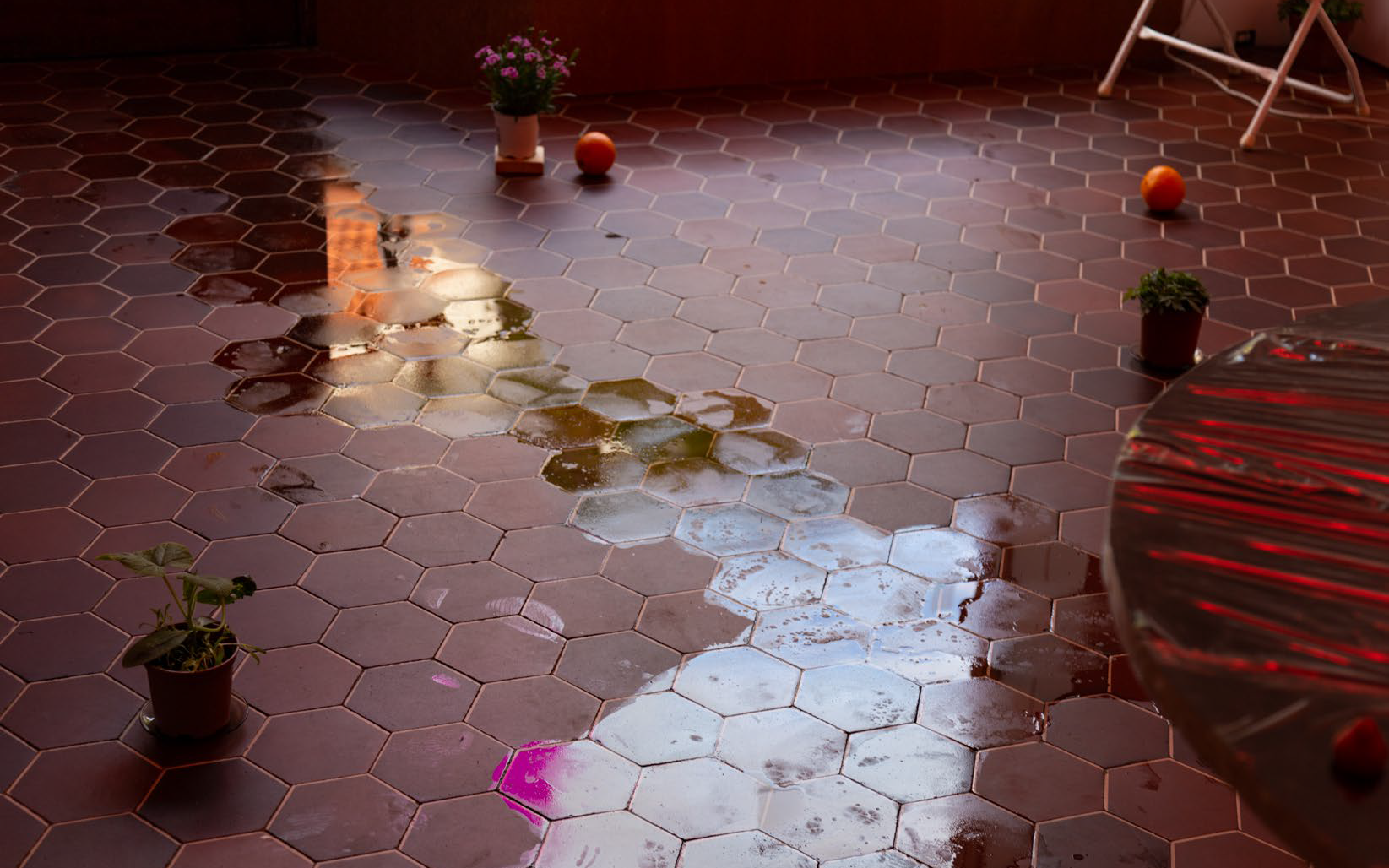



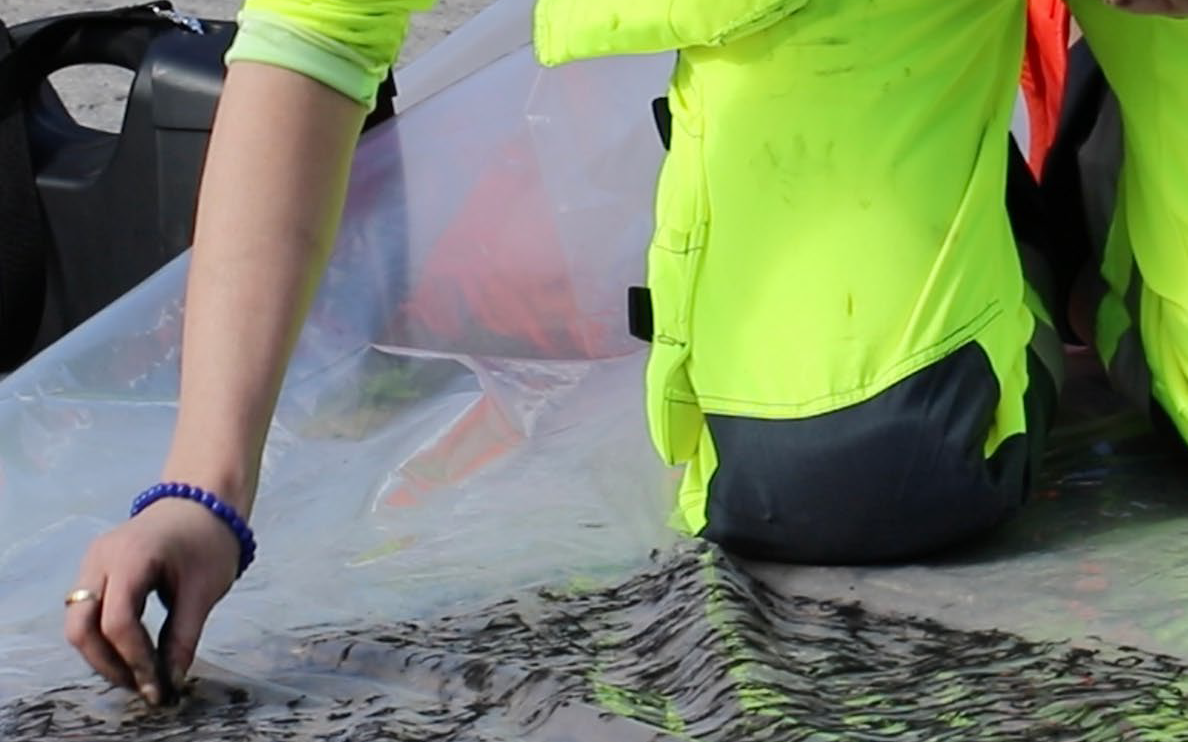

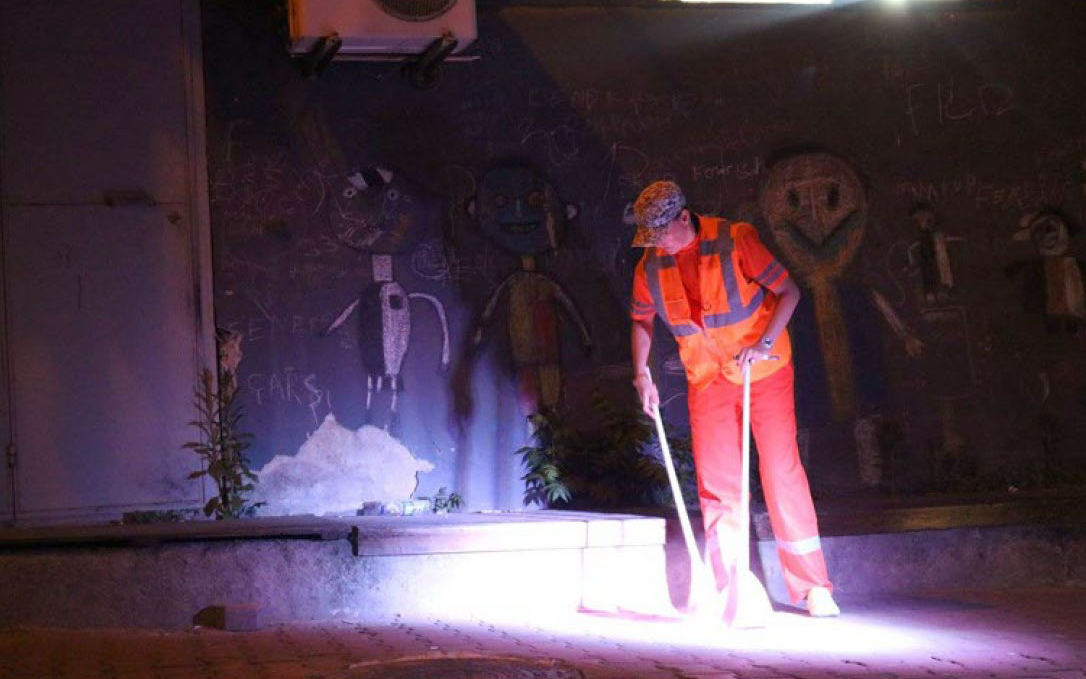
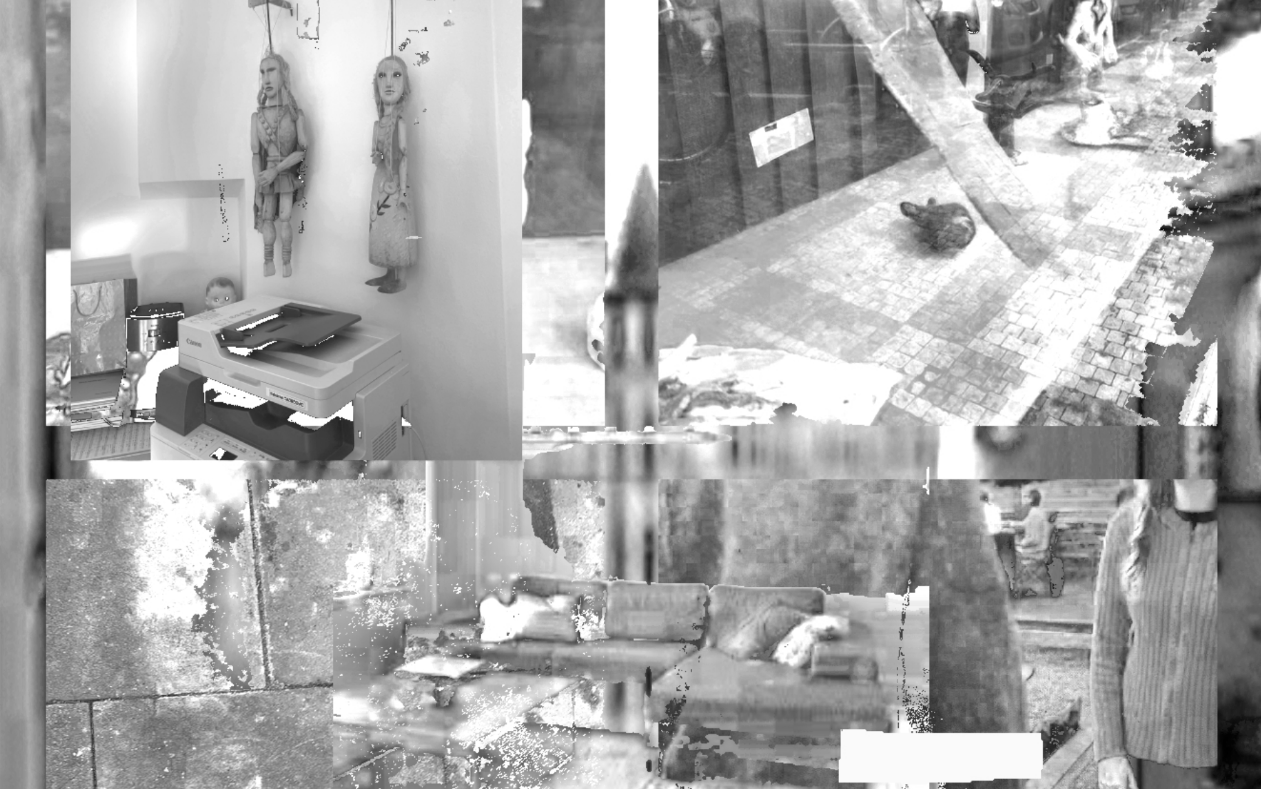


 differensmagazine.com