
#vi. miss universe

Still from ”The birth of Venus”, a performance 2010 by Kris Lemsalu
#vi. miss universe
Can the notion of universalism be (re)used for inclusive purposes, or is it never more than a beautiful surface, covering up desires to dominate? Is beauty a universal experience that enables diversity, or a limiting ideal that produces uniformity? Do we recognize beauty in what we already know, or does beauty possess a capacity to open us to the unfamiliar?
There are, indeed, many perspectives from which the intersection of beauty and universality can be viewed. In the sixth issue of Differens Magazine, we let some of them be investigated. We have gathered and developed ten contributions that explore the concepts in new and creative ways. Although often with a critical point of departure, most of them are unexpectedly optimistic about both beauty and universality, recognising in these concepts a potential to expand our experiences and unite us despite our differences.
In her contribution, master’s student in cultural studies Rosa Blens argues that universalism is a beautiful idea applied in an ugly manner. She explores the philosophical origins of universalist thinking in René Descartes and Immanuel Kant, and finds a disembodied notion that overlooks its own conditions of existence. In this, Blens sees similarities to deadly European border politics. And beauty certainly has an alluring power that can also be used for violent purposes. PhD candidate in Italian and History Mathilde Lyons examines the development of fascist aesthetics in Italy from its origins in the early 20th century to its resurgence today in contemporary far-right politics.
Kareem Khubchandani, drag artist and scholar, scrutinises the colonial origins of western gender norms, and how these are reproduced in the drag scene. Differens Magazine’s editor Ale Låke met Khubchandani for a conversation on why race has to be considered when analysing drag, and why heels can be not only limiting but also emancipating. In relation to Maiken Stæhrs Bolt heels, emancipation has a completely different significance. The Danish artist’s piece, published in this issue, is a paraphrase of some design houses’ appropriation of materials and symbols associated with precarious work.
Turning to politics, journalist and philosophy student Lapo Lappin asks for the basis for universalist thinking. He interrogates proposals from key figures of the New Left and argues that in an age of identity politics, contemporary left politics is missing an eschatological dimension. Universalism might even be read as a driving force behind a 21st century feminist Shadenfreude. In her contribution, which is an excerpt from her debut book Testosteron, cultural journalist Selma Brodrej writes about men’s experience of objectification, an experience that has hitherto been a burden mostly carried by women.
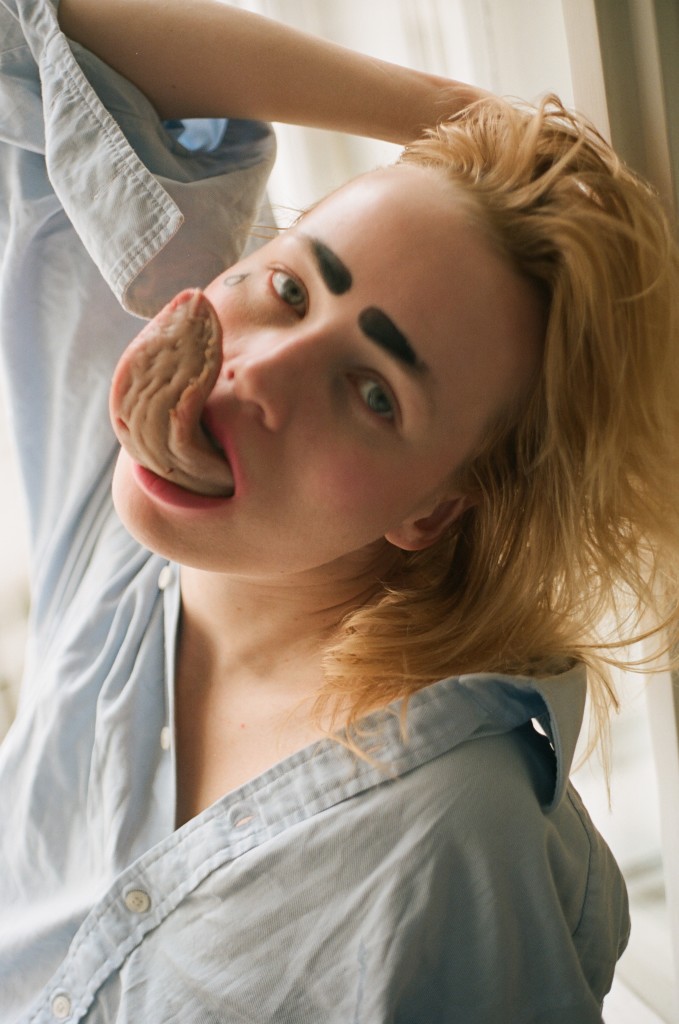
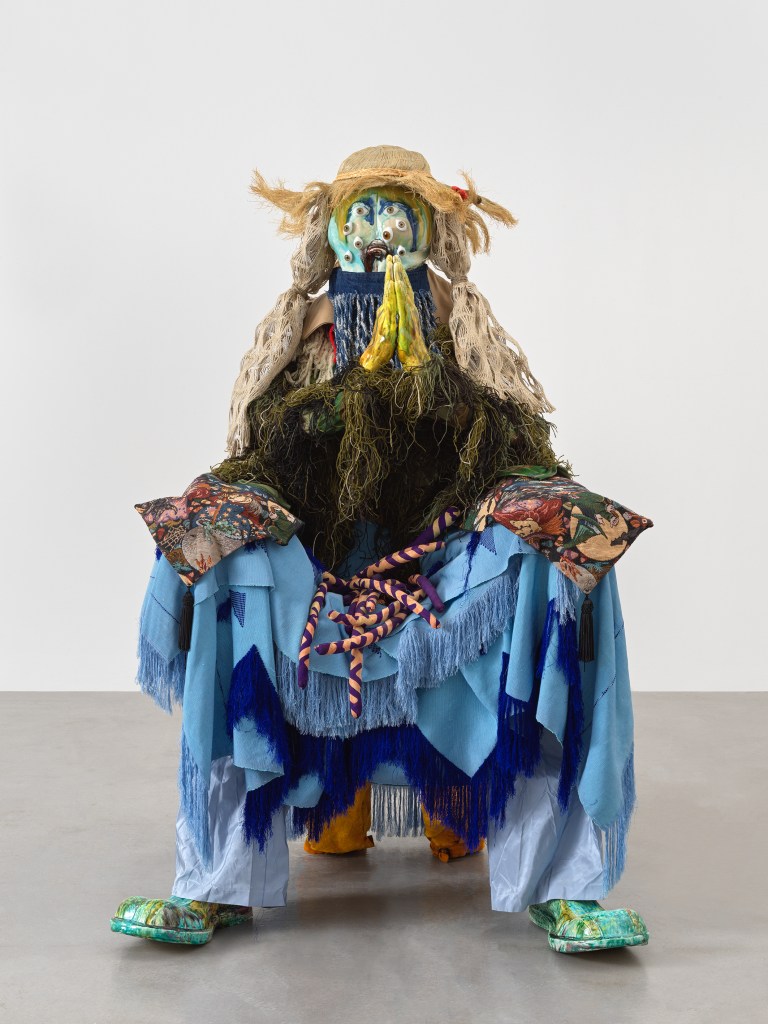
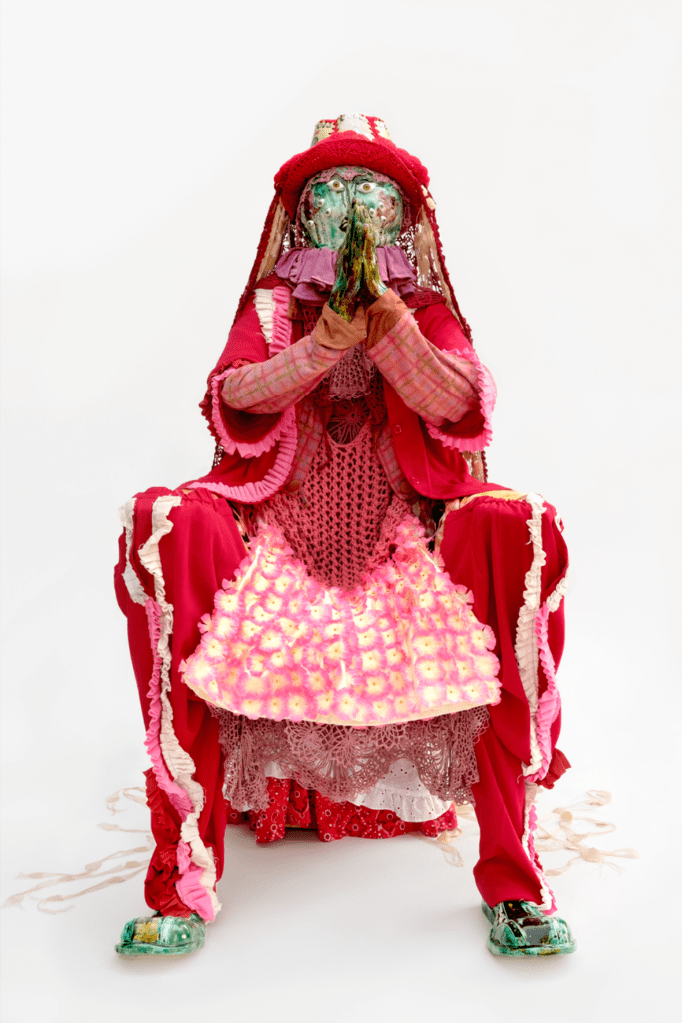
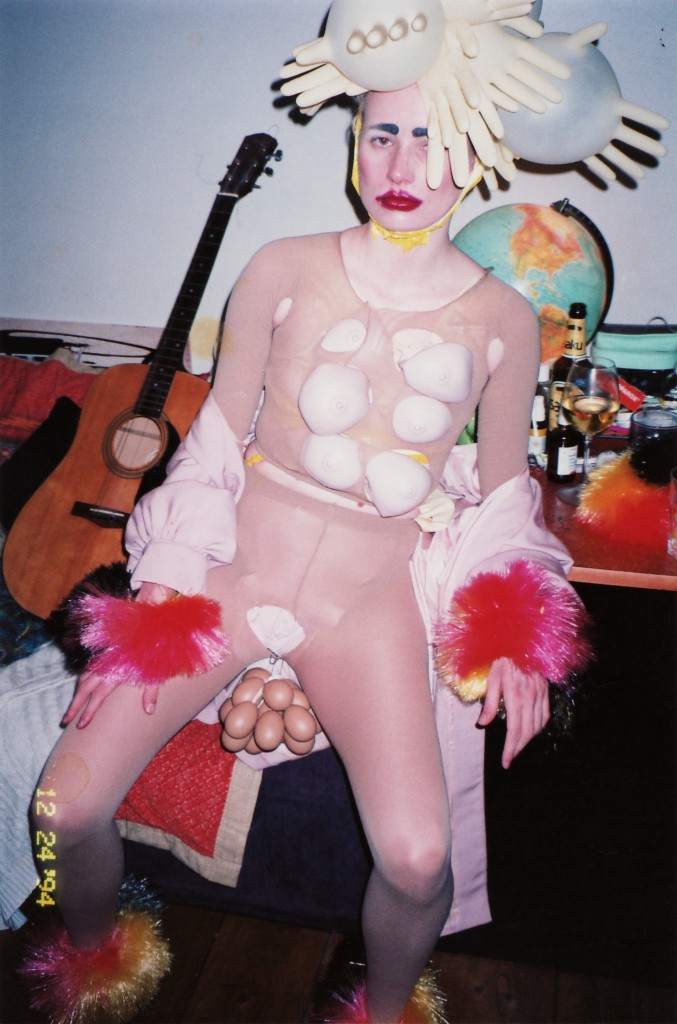
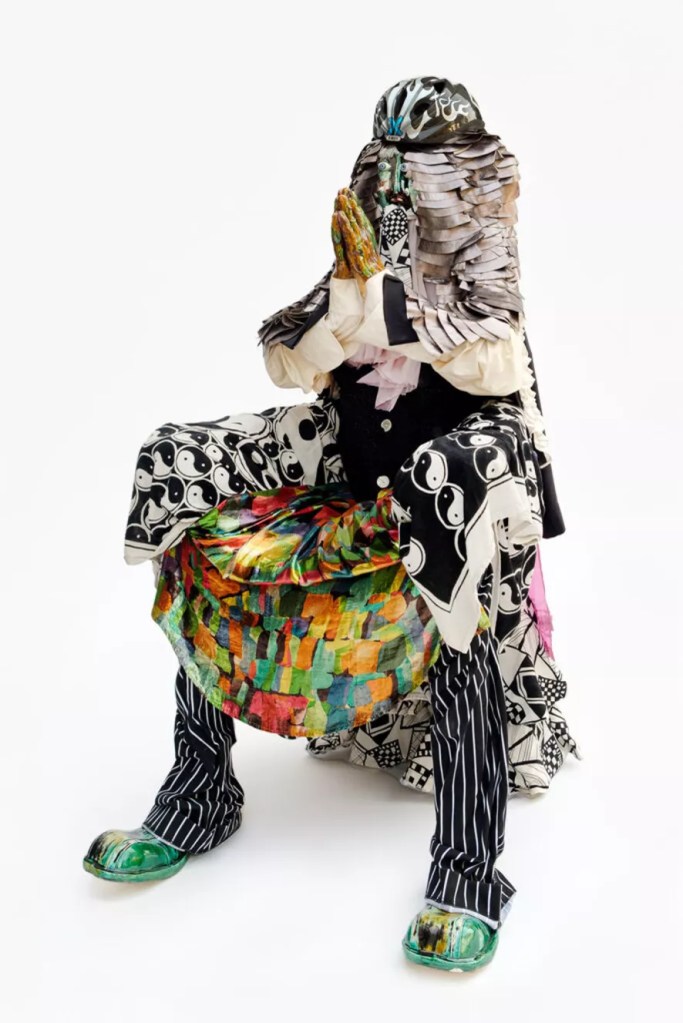
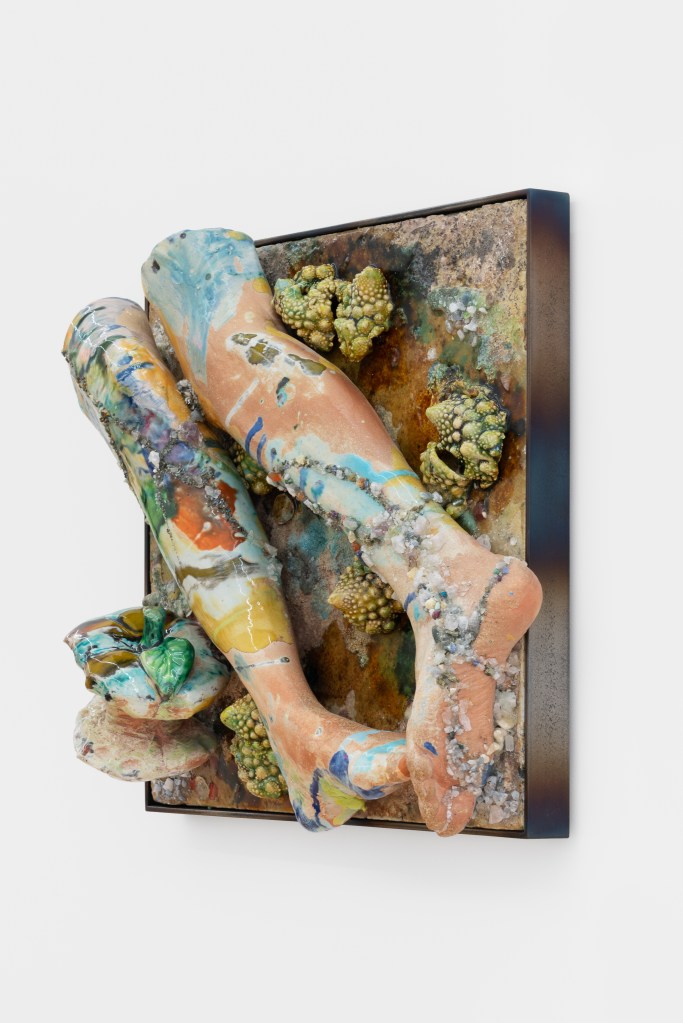
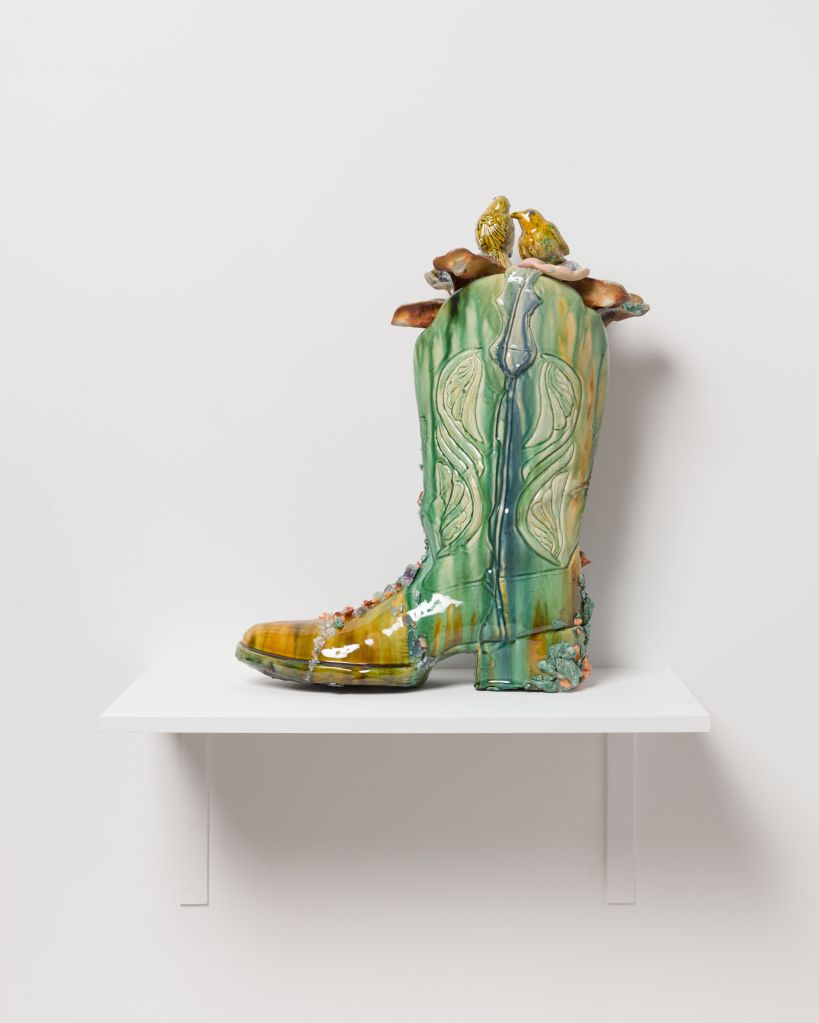
Mats Dahllöv, postdoctoral researcher in Aesthetics, revisits Charles Darwins so-called “second theory of evolution”, an overlooked theory on sexual selection that clashes with dominant reductionist and adaptationist views. According to Dahllöv, this “second” theory places animals’ aesthetic judgments at its core, finding beauty as a driving force in nature. Nature is also Estonian artist Kris Lemsalus’ answer to the question if there is something universally beautiful. Differens had the great opportunity not only to illustrate this issue with her playful and beautiful art, she also gave an interview with our editor Astrid Elander, telling us about her creative process, her beauty secrets, and how her life and art intersect. The latter is also a theme for Swedish artist Sandra Leandersson. In a mini-essay, she reflects on her experience of cancer and surgery, how it has affected her relation to normative beauty and how this experience has seeped into her artistic practice.
In a conversation with PhD candidate in aesthetics Axel Rudolphi, philosopher Keren Gorodeisky strikes a blow for universal beauty, which according to her is both true and desirable. Compared to relativistic aesthetic theories, universalism opens up the possibility of appreciating aesthetic goods from cultural spheres other than your own. Gorodeisky urges us ”to acknowledge the universal nature of aesthetic value and the claim it makes on us, wherever and however it shows up”. In other words, she sees a liberating potential in universal beauty; rather than fixing our limits, Gorodeisky argues, it transcends them.
autumn 24
art
Kris Lemsalu
contributions
SANTA’S LITTLE HELPER : A conversation with Kris Lemsalu
Selma Brodrej. The Female Gaze
Lapo Lappin. The Iridescent Shadows of the Cross: What the New Left Got Wrong About Universalism
Sandra Leandersson. Lätta moln / Small clouds
Mats Dahllöv. Beauty in Nature. Desire, Evolution, and Sexual Selection.
Rosa Blens. Ugly Universalism: Europe’s Deadly Border Politics
Kareem Khubchandani. Decolonise Drag
Maiken Stæhr. Freelance working class balance baby boss call beep beep go go
Mathilde Lyons. Transforming the Terrifying: Fascist Aesthetics Then and Now
Keren Gorodeisky & Axel Rudolphi. Let Beauty be Your Guide: A New Look at Aesthetic Universalism
editors
Astrid Elander
Klara Hjorth
Ale Låke
Jonas Thoresson
This issue is made possible with financial support from the Swedish Arts Council, Kulturrådet
SANTA’S LITTLE HELPER : A conversation with Kris Lemsalu.
Image: Kris Lemsalu, Photo by Nikolaus Weitzer.

Selma Brodrej. The Female Gaze.
Image: Kris Lemsalu. 2014, Aldonzo Lorenzo, Courtesy of the artist and Temnikova & Kasela Gallery.
Lapo Lappin : The Iridescent Shadows of the Cross: What the New Left Got Wrong About Universalism.
Image: Kris Lemsalu. Сrybaby I, 2022 Eva Presenhuber group exhibition, photo Stefan Altenburger Photography.
Sandra Leandersson. Lätta moln / Small clouds.
Image: Kris Lemsalu. Red Fox, 2023-2024
Mats Dahllöv. Beauty in Nature. Desire, Evolution, and Sexual Selection.
Image: Kris Lemsalu. Portrait. Courtesy of the artist and Temnikova & Kasela Gallery. Photo by Johanna Ulfsak.

Rosa Blens. Ugly Universalism: Europe’s Deadly Border Politics.
Image: Kris Lemsalu. Moo-Ma, 2021
Kareem Khubchandani. Decolonise Drag.
Image: Kris Lemsalu. Domestic Cat, 2023-2024.

Maiken Stæhr. Freelance working class balance baby boss call beep beep go go
Image: Kris Lemsalu. Crybaby II, 2022. Eva Presenhuber group exhibition, photo Stefan Altenburger Photography.
Mathilde Lyons. Transforming the Terrifying: Fascist Aesthetics Then and Now
Image: Kris Lemsalu. Fine Sin, 2022. Peace at 295 Church, 2022, Margot Samel Gallery, photo by Dawn Blackman.
Keren Gorodeisky & Axel Rudolphi. Let Beauty be Your Guide: A New Look at Aesthetic Universalism
Image: Kris Lemsalu. One foot in the gravy, 2024. photo by Piere Le Hors.
☺
—
For collaborations or contribution with ideas or material, email contribute@differensmagazine.com
For questions concerning the Differens Association, please email tidskriften.differens@gmail.com

Differens Magazine strives to make connections between academic aesthetics and practices within the art world, using contemporary political topics and conflicts to experiment on new ways of thinking together.
ISSN: 2004-495X
© Differens Magazine
Differens Magazine is funded by the Swedish Arts Council, Kulturrådet.
 differensmagazine.com