
#vii. lovesick
:-
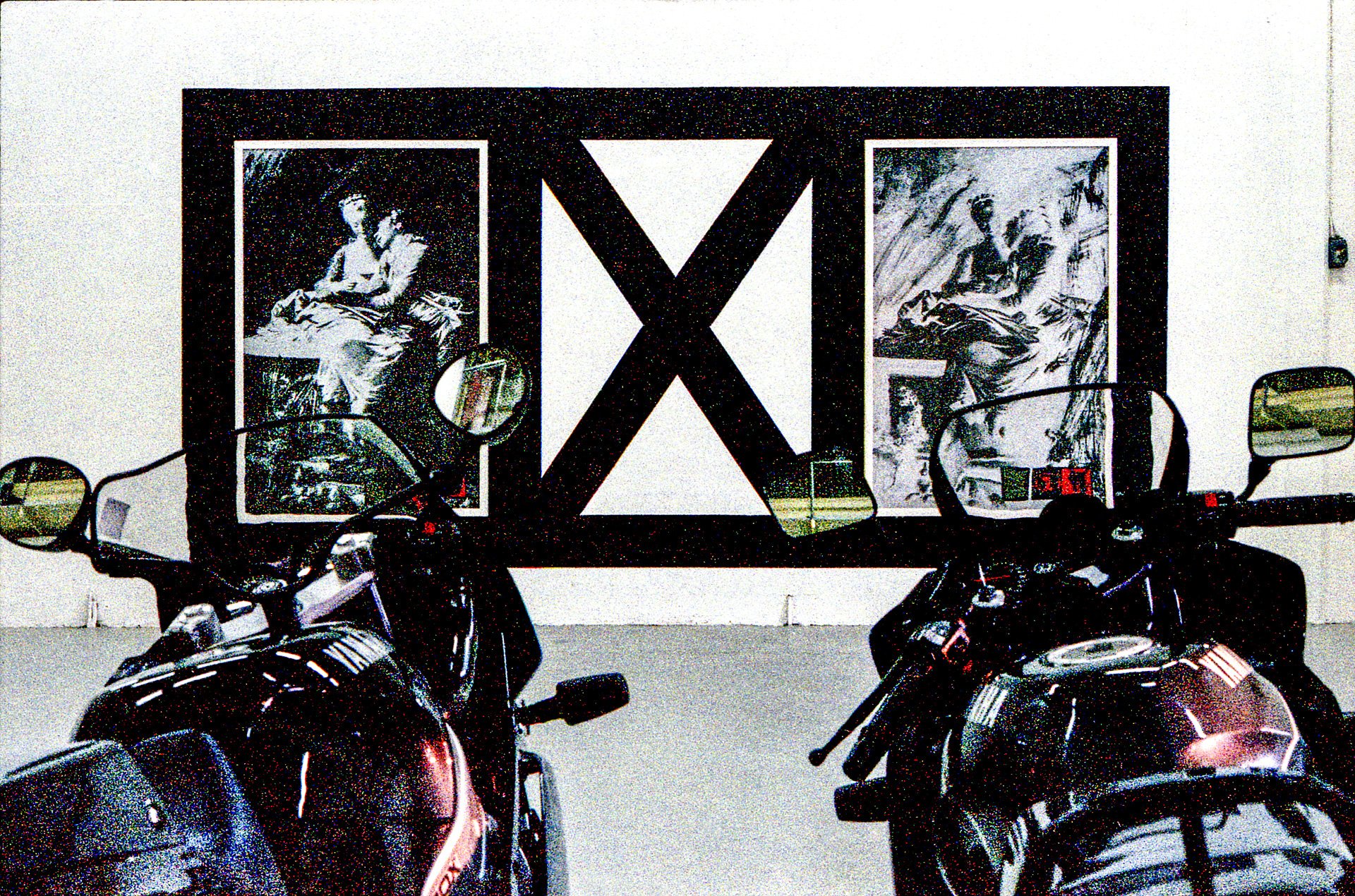
Maya Eizin Öijer. THE FRAGONARD SERIES. Installation at Konsthall Alka, Linköping, 1990. Photo, wall and floor painting, motorcycle, the Fragonard Series.
#vii. lovesick
“Love melancholy is the most frequent and most dangerous disease that threatens mortals of both sexes”, French physician Jacques Ferrand wrote in 1610.
On the one hand, love can transform us and inspire us toward moral goodness but, on the other, leave us feeling helpless, irrational, and, at worst, sick. Today, where the pursuit of love and romantic intimacy is shaped by market based dating apps, paranoia towards romantic toxicity, and blurred boundaries between pornographic ideals and reality, love itself often appears to be a sick endeavor.
This issue of Differens Magazine is named Lovesick—a term that tries to capture both the overpowering forces of love that make us sick and helpless, and the cultural and societal sicknesses love itself can be thought to suffer from.
From Plato’s Phaedrus to contemporary thought, love has been portrayed as both divine and destructive. But when does love cross the line from passion to pathology? In this issue, we explore the darker sides of love—obsession, jealousy, control, and dependency. How can love sometimes be considered to erode selfhood, autonomy, or well-being? How might romantic passion undermine our sense of self or destabilize our emotional worlds?
And on the other hand, as perhaps the Israeli sociologist Eva Illouz most famously has discussed, how do we diagnose love itself? What does the concept and experience of love today suffer from? What cultural and societal forces could be imagined to play a role in how we understand and interpret love or the absence of love around us?
In her contribution to this issue, Swedish sociologist Marie Bergström pushes back against common criticisms against online dating as a path to the death of love. Instead, she offers a nuanced perspective where love can thrive parallel to marketization. On empirical grounds, she doesn’t see ”any signs that love itself is threatened”.
Wherefore Art Thou Romeo?, the famous words from Shakespeare’s play Romeo and Juliet are used by Cecilia Sjöholm, professor of aesthetics at Södertörn University, to discuss the Lacanian concept of the Name of the Father. Love, she writes, is not inhibited by the conflict between the lovers’ families. Rather, the prohibition is a necessary condition for their love.
People may agree on what love feels like, but there is much disagreement on how we should understand the role of love in modern society. Is love currently in dissolution, threatened by market forces? Is love, on the contrary, more equal today than it was before? Or is love just in a perpetual state of chaos? In his contribution, sociologist Poul Poder outlines three different ways of conceptualising love, and offers his take on the proposed death of love.
This issue also features poetry from Anna Nygren, gesturing with dream-like movements, breaking apart mid-sentence—visceral, fragmentary, possibly troubled by girlhood, grief, and transformation. The language loops through repetition, mutism, and memory, invoking an intimate world where identity is porous and the body is a site of violence and tenderness. In this contribution, syntax splinters and reforms around ghostly images, political desire, and the small rituals of everyday life, offering a haunted voice, defiantly alive.
Zola Gorgon’s contributions, You Will Eat Like a Bird from the Palm of My Hand and Wikipedia, approach the topic with ecstatic grief and obsessive interiority. Across poetry and fragmented prose, she blends divine submission, erotic despair, and beautiful violence into a voice that is raw, imploring, and sometimes hallucinatory. Both texts move between prayer and accusation, reference to sacredness and internet detritus, building a world where pain is both ritual and revelation.
WhatsApp Baby is a sound piece by Diane Assiri, inspired by anxiety, longing, and the emotional space between euphoria and hellish emptiness. Described as a blues for babies yearning for love explosions that never happen, the work consists of audio tracks featuring the artist’s own voice, recorded and drawn from thoughts and feelings that have emerged in the limbo between physical ailments and hopeful dreams.
In Playing With Fire: A Reflection on Love in the Works of Maya Eizin Öijer, Astrid Elander reflects on the art of Maya Eizin Öijer. Moving between the surface and the depths, Eizin Öijers postmodern aesthetics and pervasive dualisms is here examined as an exploration of the essence of love.
As Jacques Ferrand set out to find a remedy for “love melancholy”, and was convinced that the primary cause of it was physical, so too did he imagine the cure. Hence, one of his treatments for women suffering from lovesickness was to prescribe “4 ounces of milk, 2 ounces of sea water and 1 ounce of honey, mix it into a clyster and insert it into the vagina.” For this issue, we’ve also asked for better remedies.
spring 25
art
Maya Eizin Öijer
https://www.mayaeizinoijer.com/
sound
Whatsapp Baby
Diane Assiri
https://www.instagram.com/odd__di/
contributions:
Maya Ezin Öijer. Playing With Fire. A Reflection on Love in the Works of Maya Eizin Öijer
Cecilia Sjöholm. Wherefore Art Thou Romeo?
Zola Gorgon. Wikipedia / You will eat like a bird from the palm of my hand
Poul Poder. Is Love Really Dead in the Digital Age?
Marie Bergström. Why Tinder didn’t kill romantic love. An interview with Marie Bergström
Anna Nygren. THIS Night I Dream…
editors
Amanda Winberg
Johannes Stenlund
Ale Låke
Jonas Thoresson
Maya Eizin Öijer. Playing With Fire. A Reflection on Love in the Works of Maya Eizin Öijer
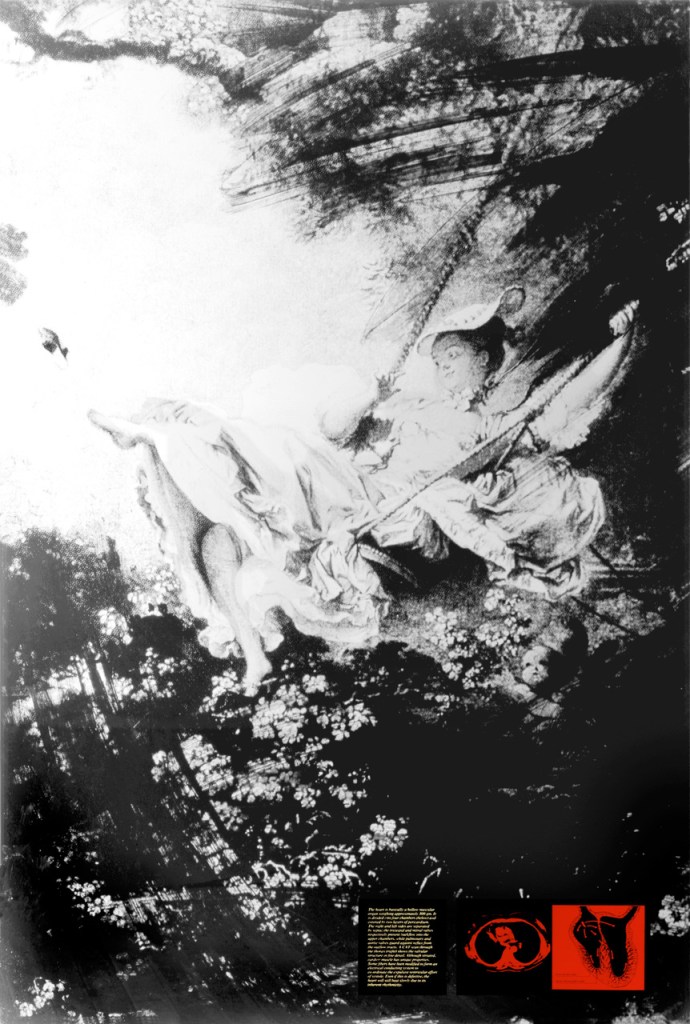
Image: Maya Eizin Öijer. THE SWING. 1990, PHOTO, SILKSCREEN, THE FRAGONARD SERIES

Cecilia Sjöholm. Wherefore Art Thou Romeo?
Image: Maya Eizin Öijer. ROMEO AND JULIET. 1991, SILK, SILKSCREEN
Zola Gorgon. Wikipedia / You will eat like a bird from the palm of my hand
Image: Maya Eizin Öijer. AMALRYLLIS FLOWER. 2022, FINE ART PRINT

Poul Poder. Is Love Really Dead in the Digital Age?
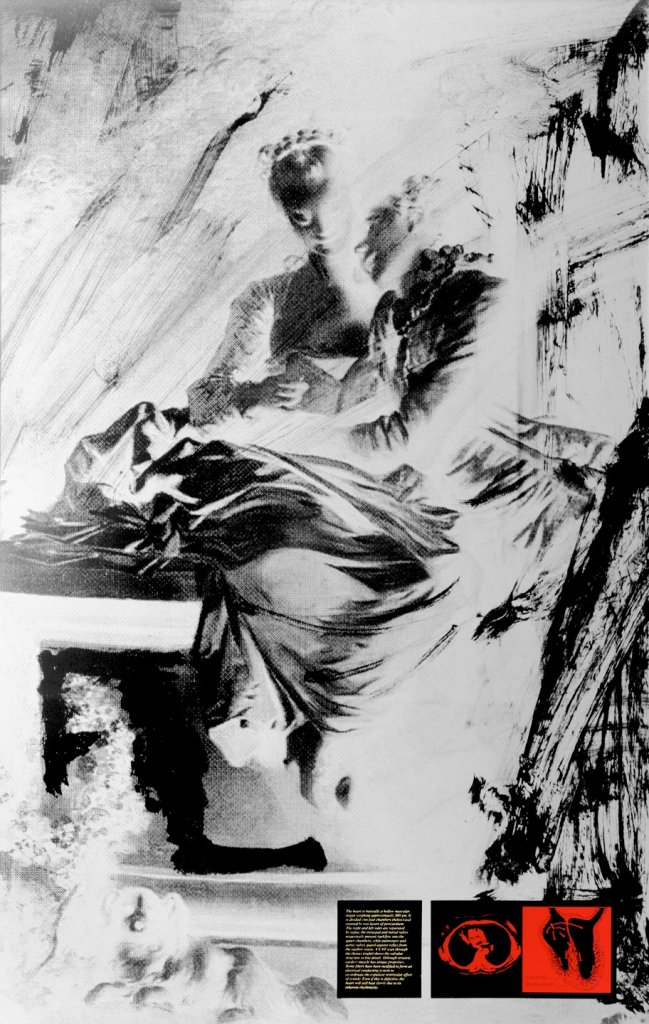
Image: Maya Eizin Öijer. THE DECLARATION OF LOVE II. 1990, PHOTO, THE FRAGONARD SERIES
Marie Bergström. Why Tinder didn’t kill romantic love. An interview with Marie Bergström
Image: Maya Eizin Öijer. THE UNDERWORLD. 1996, ACRYLIC, BOARD


Anna Nygren. This Night I Dream…
Image: Maya Eizin Öijer. REVENGE. 2018, ACRYLIC ON CANVAS
:-
:-
☺
—
For collaborations or contribution with ideas or material, email contribute@differensmagazine.com
For questions concerning the Differens Association, please email tidskriften.differens@gmail.com

Differens Magazine strives to make connections between academic aesthetics and practices within the art world, using contemporary political topics and conflicts to experiment on new ways of thinking together.
ISSN: 2004-495X
© Differens Magazine
Differens Magazine is funded by the Swedish Arts Council, Kulturrådet.
 differensmagazine.com